Clear Sky Science · en
Co-creation of an educational mobile health application prototype on oral cancer using modified delphi technique
Why a Mouth Cancer App Matters
Most of us carry powerful mini-computers in our pockets, yet there are surprisingly few reliable phone apps that teach people about cancers of the mouth. Oral cancer can affect anyone who uses tobacco or alcohol, is sexually active, or simply doesn’t know the early warning signs. This study describes how researchers and ordinary adults at risk for oral cancer worked together to build a new educational mobile app, called “Beat Oral Cancer,” designed to be easier to use, more inclusive, and more thorough than anything currently available.
The Problem with Existing Health Apps
Digital health tools are booming worldwide because they are cheap to distribute, easy to update, and can reach people wherever they are. Yet when the authors reviewed the scientific literature, they could find only two educational mobile apps focused on oral cancer. One was built for health professionals and the other for the general public, and both centered on users in India. Earlier research showed that these apps left important topics out and did not fully consider the needs of people from different backgrounds, reading levels, or countries. This highlighted a clear gap: the world lacked a high-quality, globally relevant app to help everyday people understand and prevent oral cancer.
Designing with Real Users, Not Just for Them
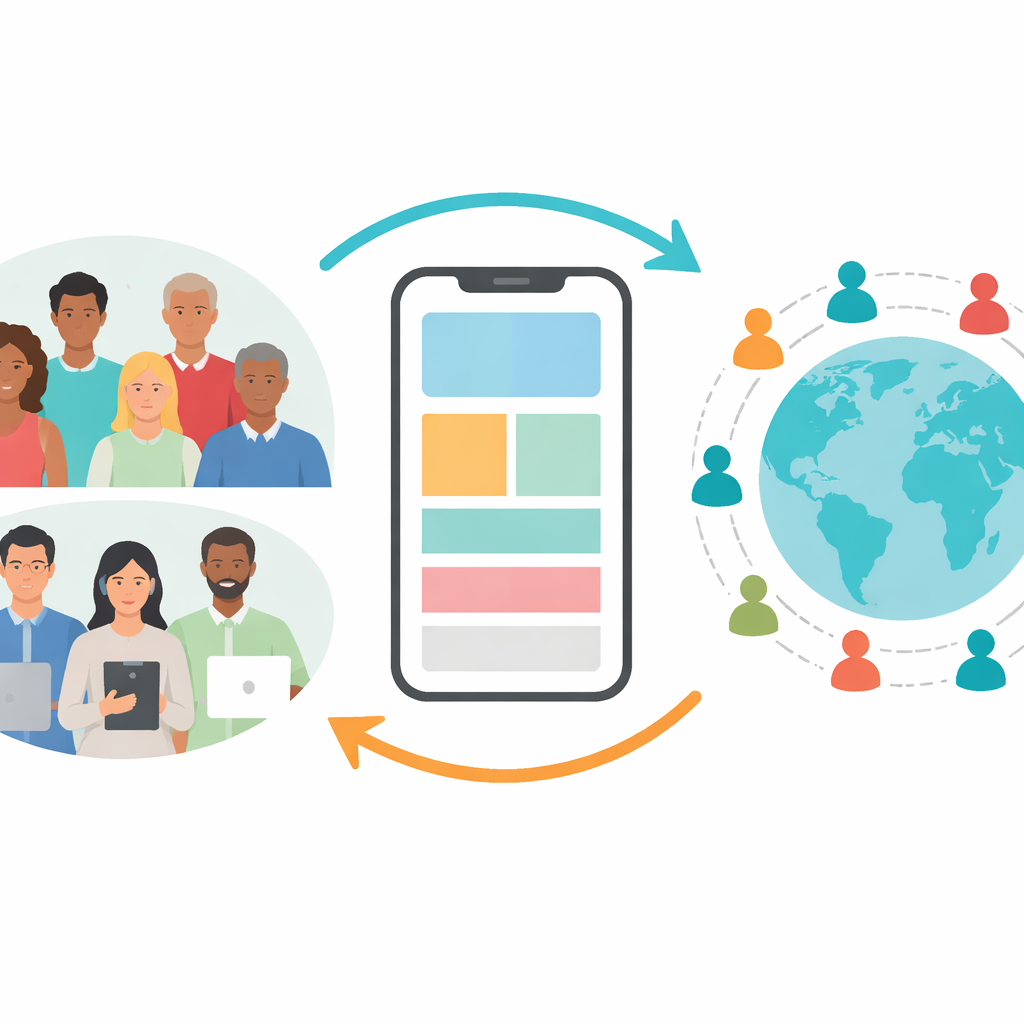
To close this gap, the team used a collaborative research approach that treats future users as partners instead of passive recipients. Seventeen volunteers from five countries took part: digital communication experts who know how apps work and adults who had habits or histories that put them at higher risk for oral cancer. Over three rounds, the researchers asked these participants what features mattered most in an ideal app and then repeatedly tested and refined early versions. Group discussions in the first round revealed what people wanted—and did not want. Participants asked for clear, trustworthy information, simple navigation, no pop-up ads, and the ability to control how much information they saw at once. They rejected clutter such as social media feeds and unnecessary notifications.
From First Draft to Final Prototype
Using this feedback, the researchers built an initial prototype on an app-design platform. It included a home screen, a learning section covering seven key topics about oral cancer—from what it is to how it is treated—and a “more” section with information about the creators and the scientific sources behind the content. In later rounds, participants used the prototype on their phones and scored it with a standardized rating tool that measures how engaging, attractive, functional, and informative an app is. They also left open comments. The second version of the app, updated in response to these scores and suggestions, added features such as adjustable text size and a clearer landing page showing the app’s name. Users rated this new version as more entertaining, more interactive, easier to use, and better designed overall than the first one.

What Makes the New App Different
The final prototype of Beat Oral Cancer kept the core structure but polished the learning experience, adding simple forward and back controls within lessons to make it easier to move through the material. Participants consistently judged the app’s information as high in quality and credibility and felt it could boost awareness, increase knowledge, and encourage people to seek help to prevent oral cancer. The app still has limitations: it is currently only in English and does not yet include audio, meaning some people with low vision or literacy may find it harder to use. Still, its flexible text size and carefully crafted content make it more inclusive and comprehensive than the earlier apps in this field.
What This Means for Everyday Health
For non-specialists, the key message is that a better oral cancer app is on the way—and that involving real users in every stage of design can dramatically improve digital health tools. Beat Oral Cancer is not yet a finished product on app stores; it first needs to be tested in a clinical trial to confirm how well it works in everyday life and then pass regulatory checks. But this study shows that when experts and at-risk community members co-create technology, the result is a clearer, more user-friendly tool that has real potential to help people recognize risks and warning signs early, when oral cancer is most treatable.
Citation: Kanmodi, K.K., Jayasinghe, R.D., Jayasinghe, Y.A. et al. Co-creation of an educational mobile health application prototype on oral cancer using modified delphi technique. Sci Rep 16, 10147 (2026). https://doi.org/10.1038/s41598-026-41276-x
Keywords: oral cancer, mobile health app, health education, participatory design, Delphi study