Clear Sky Science · en
Green synthesis of silver nanoparticles from Eichhornia crassipes and evaluates their antimicrobial properties against multidrug-resistant UTI pathogens
Turning a Troublesome Weed into a Helpful Ally
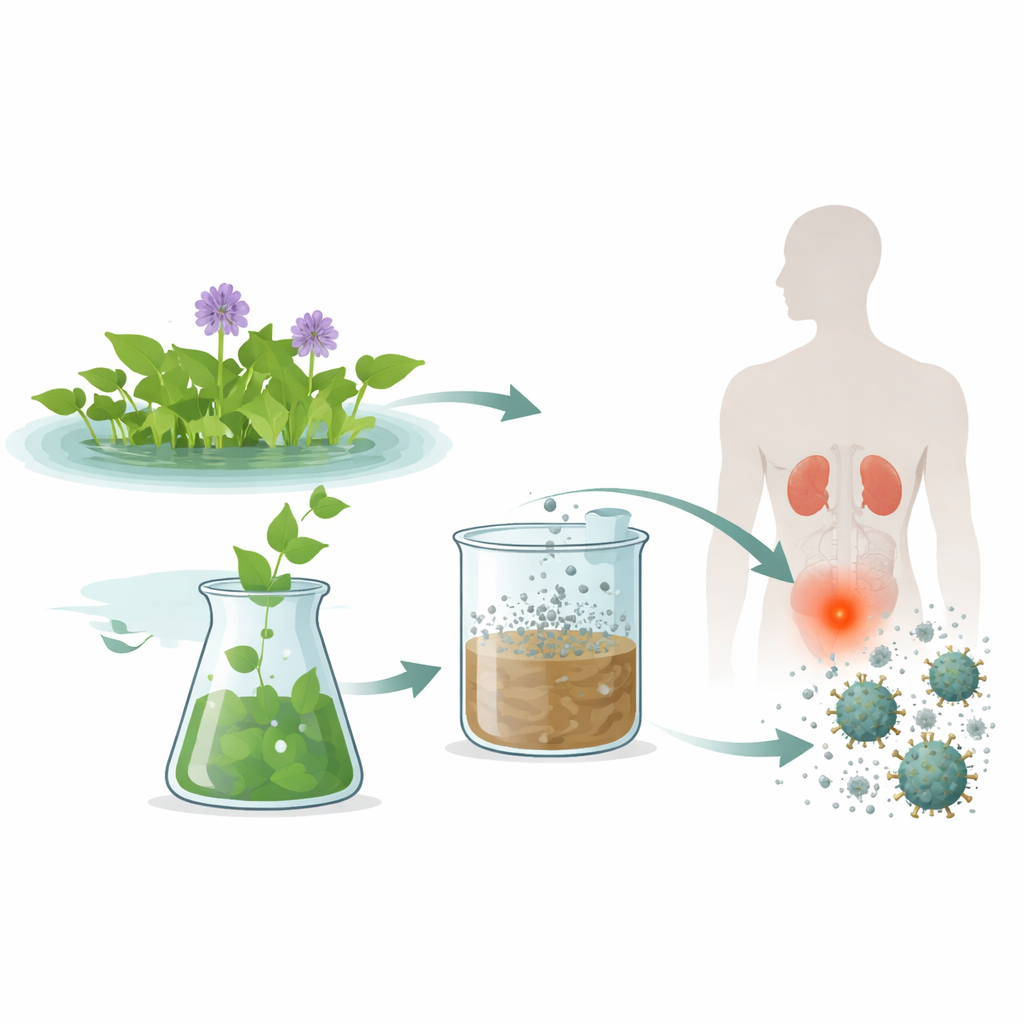
Urinary tract infections are among the most common infections worldwide, and many of the germs that cause them are no longer stopped by standard antibiotics. At the same time, waterways in countries like Bangladesh are choked with water hyacinth, a fast-spreading aquatic weed. This study brings these two problems together in an unexpected way: the researchers used water hyacinth leaves to produce tiny particles of silver and tested whether these particles could act as a new kind of weapon against hard-to-treat bacteria and fungi.
From Pond Plant to Tiny Silver Particles
The team focused on Eichhornia crassipes, commonly known as water hyacinth, which grows abundantly in Bangladeshi lakes and canals. Instead of using harsh chemicals or energy-intensive methods to make silver particles, they boiled clean, chopped leaves in water to extract natural plant compounds. This green-colored liquid was then mixed with a weak solution of silver nitrate. The plant chemicals acted like natural kitchen helpers: they converted dissolved silver into solid metallic specks and helped keep those specks from clumping together. A visible color change—from clear to yellow to deep brown—signaled that silver nanoparticles had formed.
Checking That the New Material Is Really There
To confirm that they had indeed made silver nanoparticles, the researchers shone ultraviolet and visible light through the mixture and measured how much was absorbed. The pattern of light absorption matched what is expected when silver particles only a few billionths of a meter across are present, especially when the plant extract and silver solution were mixed at a 1:2 ratio and stirred for an hour. They also used infrared measurements to look for chemical fingerprints of plant molecules stuck to the particle surfaces. Signals from groups such as alcohols, acids, and other carbon-based structures revealed that water hyacinth compounds were coating the particles, likely stabilizing them and helping control their formation.
Putting the Nanoparticles Up Against Tough Germs
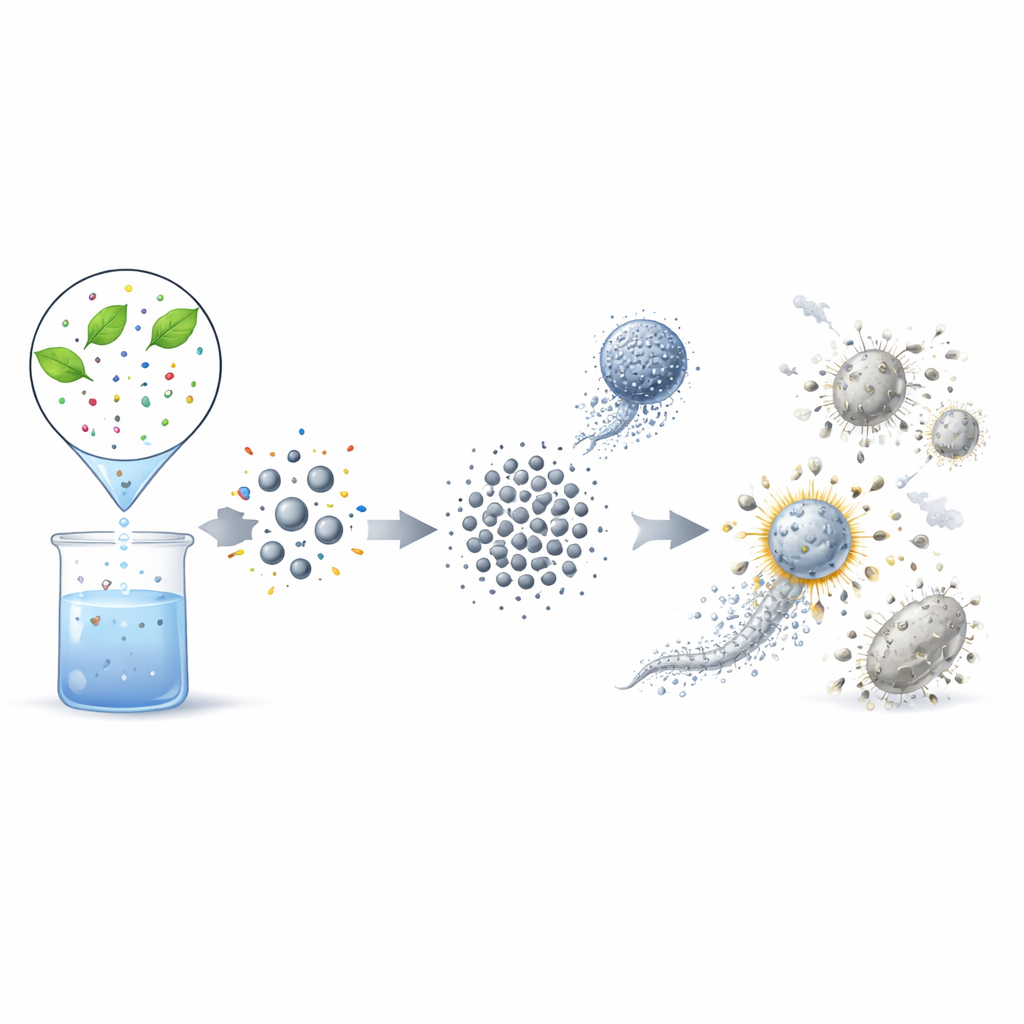
The real test was whether these plant-made silver nanoparticles could tackle germs that resist multiple drugs. The team collected urine samples from patients with suspected urinary tract infections at a hospital in Kushtia, Bangladesh, and isolated bacteria such as Escherichia coli that were already resistant to several commonly used antibiotics. They also isolated a plant-infecting fungus, Fusarium oxysporum, for comparison. Small discs soaked with different amounts of the silver particles were placed on plates covered with bacteria, and the clear circles that formed where growth was halted were carefully measured.
Strong Effects at Very Low Doses
The larger the amount of silver nanoparticles placed on the discs, the bigger the bacteria-free zones became, showing a clear dose–response pattern. At the highest tested dose, the particles produced noticeable zones of suppression, with one E. coli strain proving especially vulnerable. When the team determined the minimum amount needed to stop growth in liquid culture, they found that concentrations as low as 15 micrograms per milliliter were enough to prevent these resistant bacteria from multiplying, and slightly higher levels could kill them outright. The same particles also completely blocked the growth of the Fusarium fungus at an only slightly higher dose, indicating broad activity against both bacterial and fungal targets.
Why This Approach Matters
For non-specialists, the key message is that an invasive aquatic weed can be transformed into a tool against microbes that modern drugs struggle to control. By using water alone and the plant’s own natural chemicals, the researchers created silver nanoparticles without resorting to toxic reagents or complex equipment. These tiny particles showed strong ability to halt and kill multidrug-resistant urinary bacteria and a disease-causing fungus at very low amounts in the lab. While more work is needed to confirm safety inside the body and to understand exactly how these particles do their damage, the study points toward a future in which a common nuisance plant could help supply affordable, environmentally friendly antimicrobial agents.
Citation: Sharif, I.H., Primu, F.S., Joy, M.N.H. et al. Green synthesis of silver nanoparticles from Eichhornia crassipes and evaluates their antimicrobial properties against multidrug-resistant UTI pathogens. Sci Rep 16, 11109 (2026). https://doi.org/10.1038/s41598-026-41224-9
Keywords: green nanotechnology, silver nanoparticles, water hyacinth, drug-resistant infections, urinary tract infection