Clear Sky Science · en
Natural warning signals unexpectedly shape human metamemory ratings but not image recognition success
Why bright butterflies matter to our minds
Many animals advertise that they are toxic or unpalatable using bold colours and patterns, a strategy known as warning signalling. We humans instantly notice these striking butterflies and moths, but do their vivid wings also make them easier to remember? This study asked whether natural warning patterns shape how memorable such creatures seem to us, how well we actually recognise them later, and what this reveals about the way vision and memory work together.
Colorful wings as natural warning signs
In nature, predators learn to avoid prey with bright combinations of red, orange, yellow, and black because those colours often signal a nasty taste or toxicity. Such warning patterns are thought to work partly by being easy to remember after just a few bad experiences. The authors drew on a large image database of butterflies and moths, some with clear warning colours (aposematic species) and others with more muted, camouflaged looks. Earlier work had shown that the warning species strongly stimulate visual areas in a model bird brain, hinting that their patterns are special to the visual system. Here, the question was whether this visual punch also translates into an advantage in human memory.
Testing what looks memorable
Human volunteers viewed pictures of these butterflies and moths online. For each image, they were first asked to give a “metamemory” rating: a gut feeling about how likely they would be to recognise that exact image if they saw it again soon. This step captures our natural intuition about memorability, rather than actual performance. Later, the same people saw a mix of previously viewed images and new ones and had to judge whether each was old or new in a recognition test. In both phases, the researchers compared images with warning patterns and those without, and they also examined how much people agreed with one another about which specific images were remembered or forgotten. 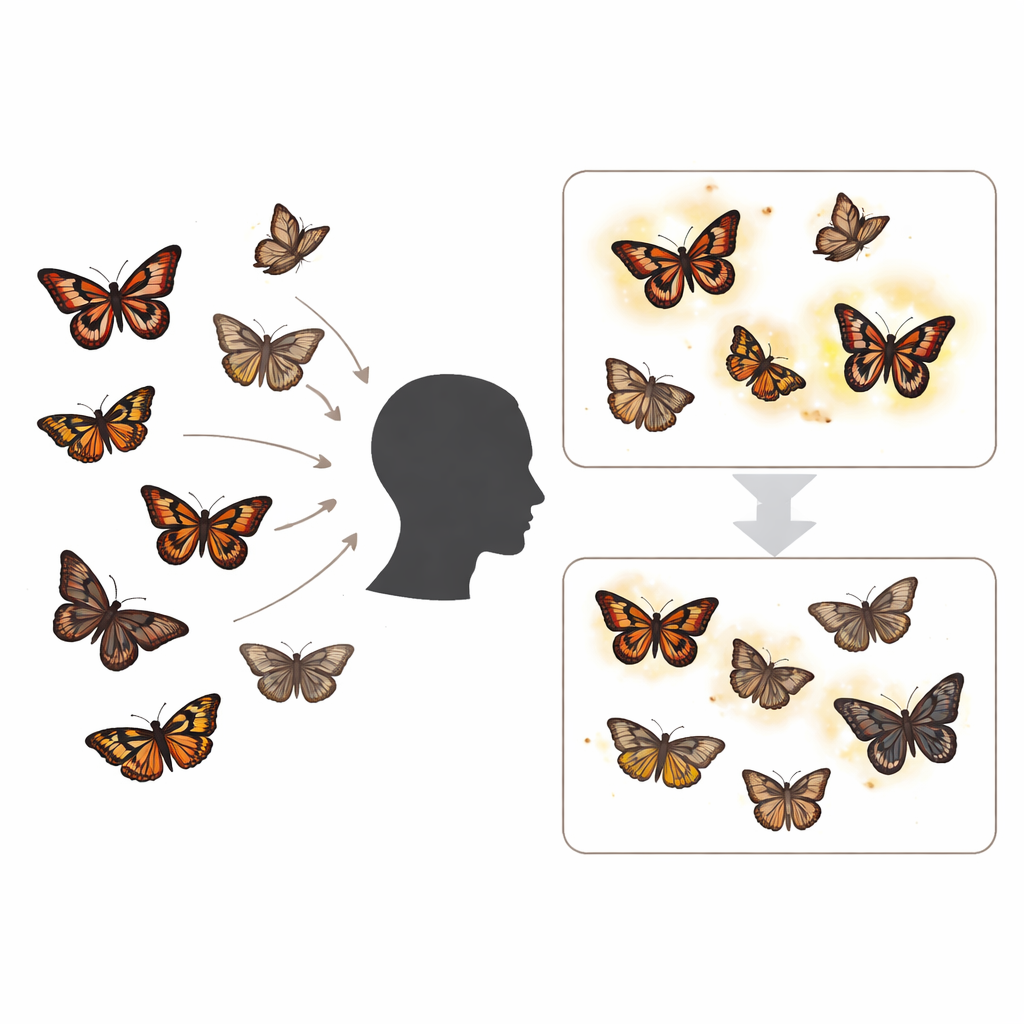
What we expect to remember versus what we do
The results revealed a striking mismatch between appearance and reality. Warning-patterned butterflies and moths consistently received higher metamemory ratings: people felt that these vivid species would be easier to remember than their drab counterparts. Yet, when it came to the recognition test, warning species were not recognised any more often than non-warning ones. Overall hit rates—how often an image was correctly judged as seen before—were very similar across the two groups. When the researchers compared metamemory scores with actual recognition for each image, the two measures barely lined up. Some species that looked very memorable turned out to be forgettable, and some plain-looking ones were quietly well remembered.
Shared memories across different people
Although warning patterns did not boost average memory accuracy, they did shape how predictable memory was from person to person. Using a “consistency analysis” borrowed from the field of image memorability, the authors examined whether different observers tended to remember the same images. For warning-patterned species, consistency was remarkably high: if one person remembered a particular warning butterfly, others were very likely to remember it too, and the same held for images that were widely forgotten. For non-warning species, agreement across observers was noticeably weaker. This pattern suggests that warning signals tap into visual processes that make certain images intrinsically more likely to leave a shared impression, even if that does not always translate into better overall recognition scores. 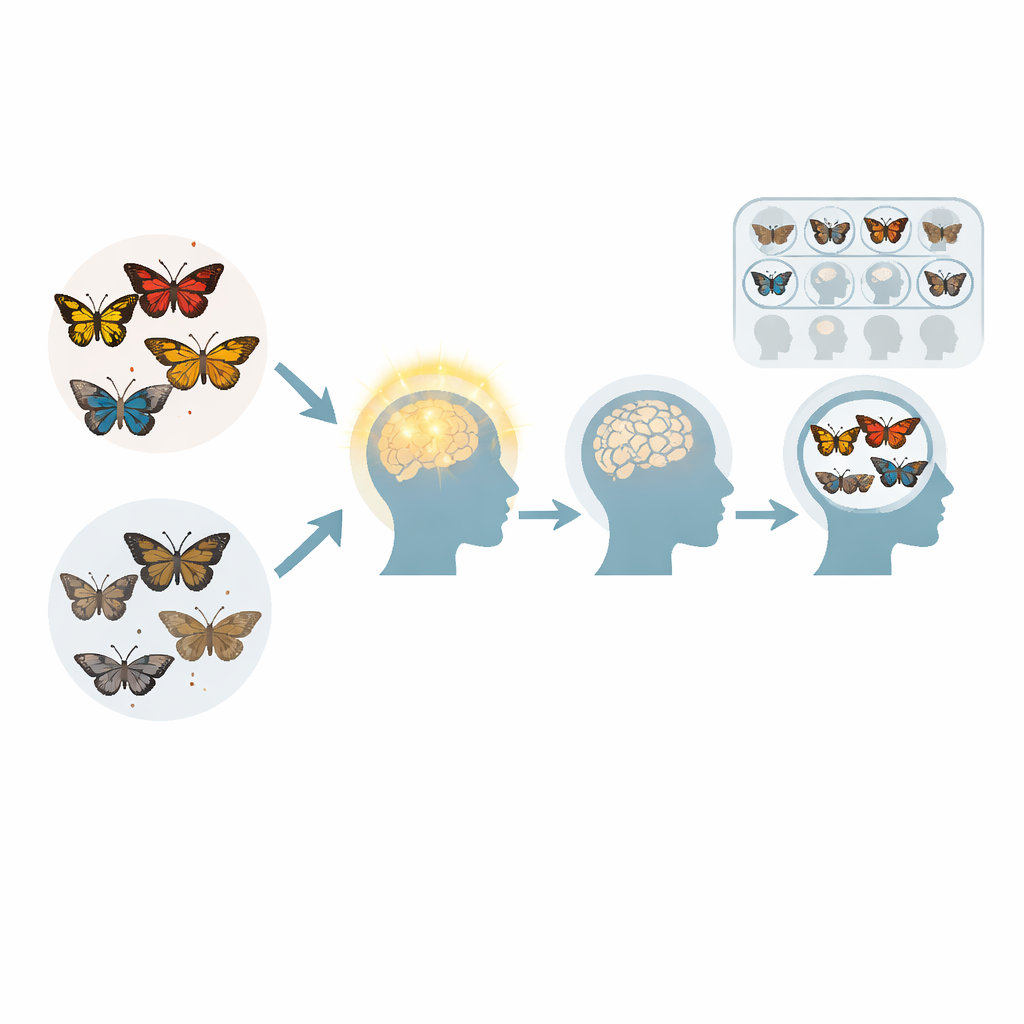
What this means for animal signals and human minds
For a lay observer, the key message is that how memorable something feels and how well we actually remember it can be surprisingly different. Bold warning colours on butterflies and moths make them seem especially memorable and lead different people to remember much the same individuals, yet they do not guarantee better recognition after a single glance. The study argues that the power of warning patterns may lie less in long-term recall and more in the immediate way our visual system responds when these patterns first hit our eyes. In other words, effective warning signals may work because they are instantly striking and consistently processed, not because they are stored more faithfully in memory.
Citation: De Filippi, F., Penacchio, O., O’Connor, A.R. et al. Natural warning signals unexpectedly shape human metamemory ratings but not image recognition success. Sci Rep 16, 10435 (2026). https://doi.org/10.1038/s41598-026-41178-y
Keywords: warning coloration, visual memory, butterflies and moths, image memorability, predator–prey signals