Clear Sky Science · en
Apical bud manipulation and integrated nutrient management enhance yield and profitability of cabbage (Brassica oleracea var. capitata L.) in Northwestern Ethiopia
Why smarter cabbage growing matters
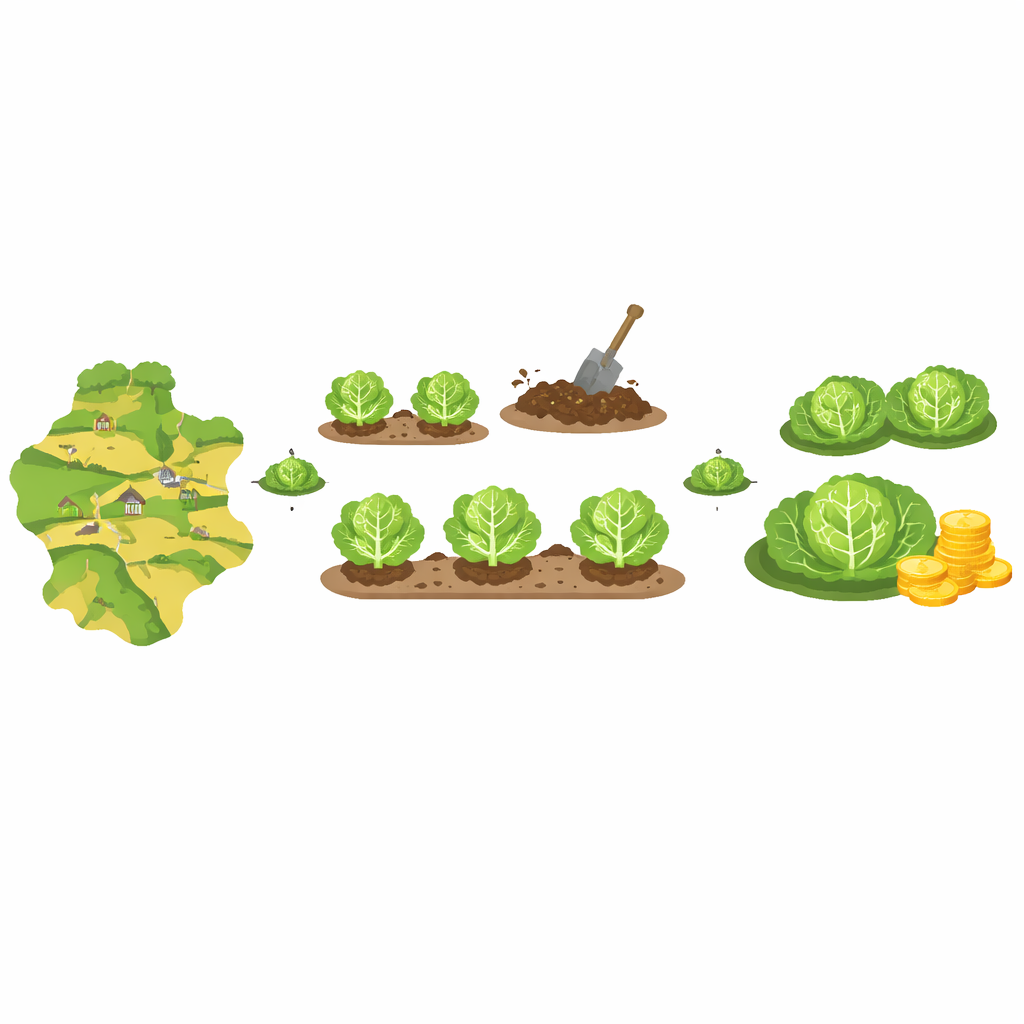
Cabbage is a staple vegetable in Ethiopia and around the world, providing vitamins, fiber, and income for millions of small farmers. Yet in parts of Ethiopia, cabbage harvests are far below what the land could produce, mainly because soils are tired and fertilizer is expensive. This study explores an affordable way for farmers to grow more and better cabbages by combining two simple ideas: managing how many buds on a plant are allowed to form heads, and enriching the soil with farmyard manure instead of relying only on costly chemical fertilizers.
Farms, soils, and a simple idea
The research took place on small farms and a university field site in northwestern Ethiopia, a region with cool temperatures and reliable summer rains that are well suited to cabbage. Local farmers commonly grow a variety called Copenhagen Market, often without added fertilizer or careful plant management. Cabbage plants naturally produce several buds along the stem, each potentially able to form a head. The central idea of the study was that, by deciding how many buds to keep and feeding the soil with well-prepared cow manure, farmers might coax each plant to produce more saleable heads and earn higher profits from the same plot of land.
Testing manure and bud numbers in the field
Researchers set up field experiments during the 2021–2022 season, using different combinations of two practices. First, they adjusted the number of buds left on each plant: some plants were left untouched, some were pruned to keep two buds, and others were pruned to keep three. Second, they applied four levels of farmyard manure: none, low, moderate, and relatively high. The manure was composted for several weeks, then mixed into the soil before transplanting the seedlings. All plots also received a modest dose of urea to reflect what farmers might realistically afford. The team then tracked how quickly plants formed heads, how tall they grew, how heavy and compact the heads were, and how many fell into small, medium, or large size classes.
More food from the right mix
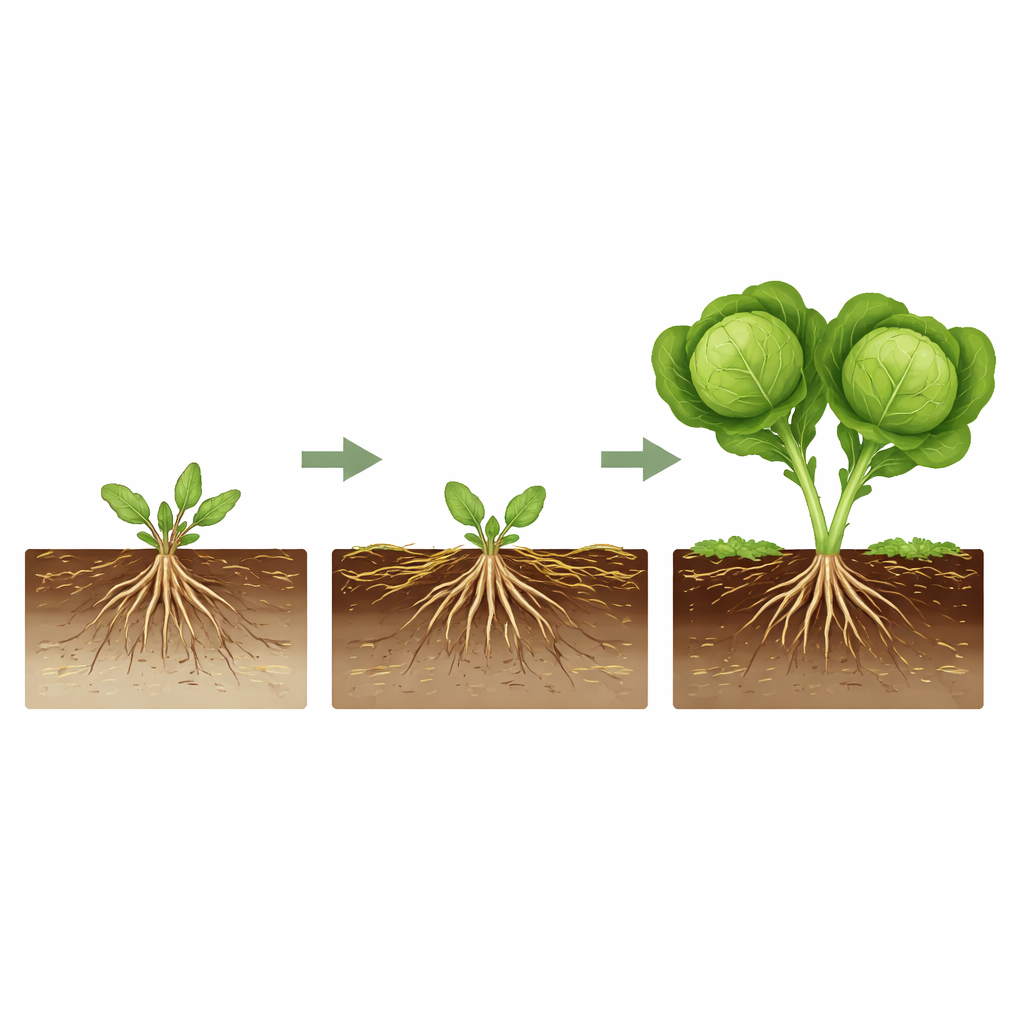
The combination of two buds per plant and a moderate manure rate of 5 tons per hectare clearly stood out. Plants under this treatment started forming heads earlier, grew taller, and produced the heaviest and most compact cabbage heads. Marketable yield reached about 41.8 tons per hectare, with a total yield of 43.1 tons per hectare, far above the unfertilized plots. These plants produced many medium and large heads—the sizes most valued in local markets—while generating relatively few undersized or damaged heads. In contrast, plants without manure or with too many buds tended to mature late, stay shorter, and yield far fewer usable cabbages.
Profits and practicality for small farmers
Higher yields only matter if they translate into better earnings. To test this, the researchers estimated production costs and likely selling prices based on nearby markets. They found that the two-bud, moderate-manure treatment delivered the highest net income, about 1,918 US dollars per hectare, and one of the best benefit–cost ratios among all options tested. Treatments with more buds, no manure, or very high manure rates either cost more than they were worth or failed to produce enough extra cabbage to justify the added effort. Because farmyard manure is widely available in mixed crop–livestock systems, this strategy fits well with the realities of smallholder farmers who cannot afford heavy use of chemical fertilizers.
What this means for future harvests
In everyday terms, the study shows that “less but better” can be a winning recipe: letting each cabbage plant keep only two buds and feeding the soil with a moderate amount of well-prepared manure makes the plants stronger, the heads bigger and more uniform, and the harvest more profitable. This approach does not require expensive inputs or complex technology, yet it raises yields to levels closer to the global average while improving soil health. For farmers in northwestern Ethiopia and similar regions, combining careful bud pruning with sensible organic fertilization offers a practical path toward more reliable food and income from the same piece of land.
Citation: Gelaye, Y. Apical bud manipulation and integrated nutrient management enhance yield and profitability of cabbage (Brassica oleracea var. capitata L.) in Northwestern Ethiopia. Sci Rep 16, 10391 (2026). https://doi.org/10.1038/s41598-026-41149-3
Keywords: cabbage cultivation, organic manure, bud management, smallholder farming, Ethiopia agriculture