Clear Sky Science · en
Effects of different high-intensity interval training modes of wattbike on anaerobic capacity in Chinese national alpine skiers
Why Skiers Care About How They Get Tired
For elite alpine skiers, races are decided in seconds, yet each run demands repeated bursts of leg-crushing effort. This study asks a simple but important question for anyone interested in high performance or smart training: if you only have a few weeks, is it better to train with many short sprints or with fewer, longer all-out efforts to build powerful, fatigue-resistant legs?
Racing Down the Mountain in Bursts
Alpine skiing is not a smooth, steady sport. Whether winding through tight slalom gates or flying down long speed courses, skiers alternate between explosive turns that load their legs with several times their body weight and brief gliding phases that act as mini-recoveries. Energy for these efforts comes mostly from anaerobic systems – the body’s quick, high-powered fuel sources – while aerobic energy plays a smaller, supporting role. That on–off rhythm makes interval-style training especially appealing, but coaches still lack clear evidence on which type of high-intensity intervals best sharpen power versus staying power in real-world elite skiers.
Two Ways to Push to the Limit
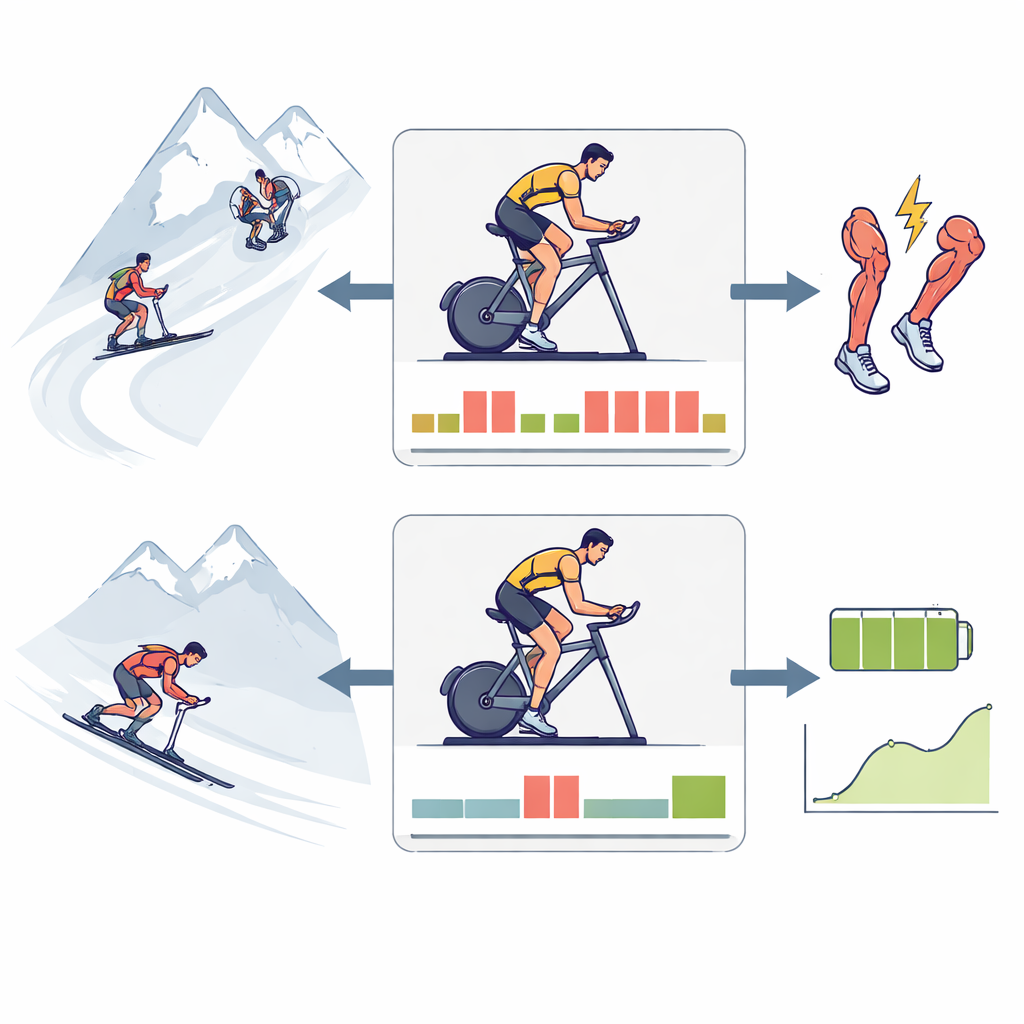
To tackle this, Chinese national-team alpine skiers were randomly split into two training groups for four weeks, all using a Wattbike. One group performed repeated sprint training made up of very short, 10-second all-out bursts with just 5 seconds of rest, grouped into sets. The other group used speed endurance maintenance training with much longer 60-second all-out efforts followed by 3 minutes of recovery. Both groups trained three times per week and kept their other national-team workouts the same. Before and after the program, the athletes completed three tests: a vertical jump to gauge explosive leg power, a 90-second side-to-side box jump to mimic ski-like movement, and a 90-second all-out cycling test that measures how high their power can spike, how well they maintain it, and how quickly they tire.
Short Sprints for Maximum Punch
The many short bursts of repeated sprint training mainly boosted the athletes’ ability to produce peak power. After four weeks, these skiers jumped higher and reached higher top power in the cycling test, while their counterparts in the long-interval group did not show clear gains in those peak measures. This pattern fits with what is known about very short, intense efforts: they repeatedly stress the body’s fastest fuel system and the nerves and muscles that drive rapid, forceful contractions. For technical events such as slalom and giant slalom, where skiers must snap into strong turns every few seconds, these adaptations could translate into sharper, more explosive moves from gate to gate.
Long Efforts for Hanging On
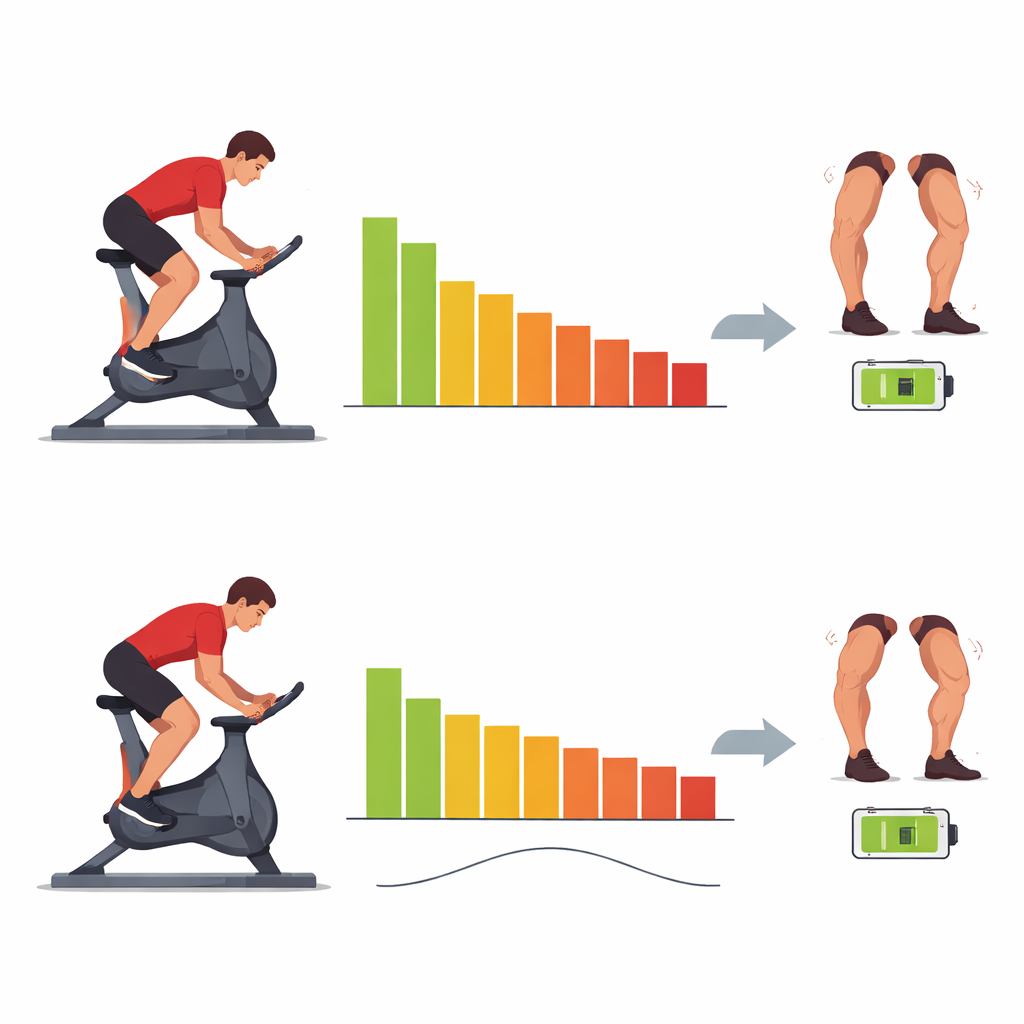
The longer, 60-second intervals of the speed endurance maintenance training told a different story. These sessions did not raise peak power, but they did help skiers hold their output more steadily during the 90-second cycling test and reduced how much their power dropped off, a sign of better fatigue resistance. This kind of training places a heavy strain on the body’s ability to handle acid- and metabolite buildup, teaching the muscles to buffer and tolerate discomfort while still working hard. Those qualities are especially valuable in speed events like super-G and downhill or in the punishing final seconds of any race, when legs are burning and mistakes become more likely.
Shared Gains and Real-World Use
Interestingly, both groups improved their performance in the 90-second lateral box jump, a test that blends balance, coordination, and repeated leg loading similar to skiing. Over such a short period, these gains likely reflect not just better conditioning but also more efficient movement and practice effects. For coaches, the broader message is practical: short repeated sprints and longer all-out intervals are not interchangeable; they can be used like different tools. Longer intervals are well-suited to off-season phases focused on building a “metabolic engine,” while short sprints fit better closer to competition, when fine-tuning explosive sharpness without creating excessive fatigue is key.
What This Means for Skiers
To put the findings simply, both types of high-intensity interval training made these national-team skiers better prepared for the demands of racing. But the shape of the improvement depended on how the work and rest were arranged. Short, frequent sprints mostly improved how hard the athletes could push in a single instant, while longer all-out efforts improved how long they could keep pushing when the legs started to burn. For athletes, coaches, and even motivated recreational skiers, the takeaway is clear: by choosing the right style of intervals at the right time of year, training can be tuned either to hit harder or to hold strong for longer on the way down the mountain.
Citation: Zeng, Y., Sun, Y., Lin, J. et al. Effects of different high-intensity interval training modes of wattbike on anaerobic capacity in Chinese national alpine skiers. Sci Rep 16, 11501 (2026). https://doi.org/10.1038/s41598-026-41119-9
Keywords: alpine skiing training, high-intensity intervals, repeated sprint training, speed endurance, anaerobic performance