Clear Sky Science · en
Binding properties of marine sulfated glycans to coagulation (co)-factors using surface plasmon resonance spectroscopy
Sea Molecules That May Lead to Safer Blood Thinners
Blood thinners like heparin save lives every day, but they can also cause dangerous side effects such as uncontrolled bleeding and rare immune reactions. This study explores unusual sugar molecules from sea cucumbers and sea urchins as possible alternatives. These marine compounds, called marine sulfated glycans, may keep blood from clotting in ways that differ from standard drugs and could one day offer patients safer options.
Unusual Sugars from the Ocean
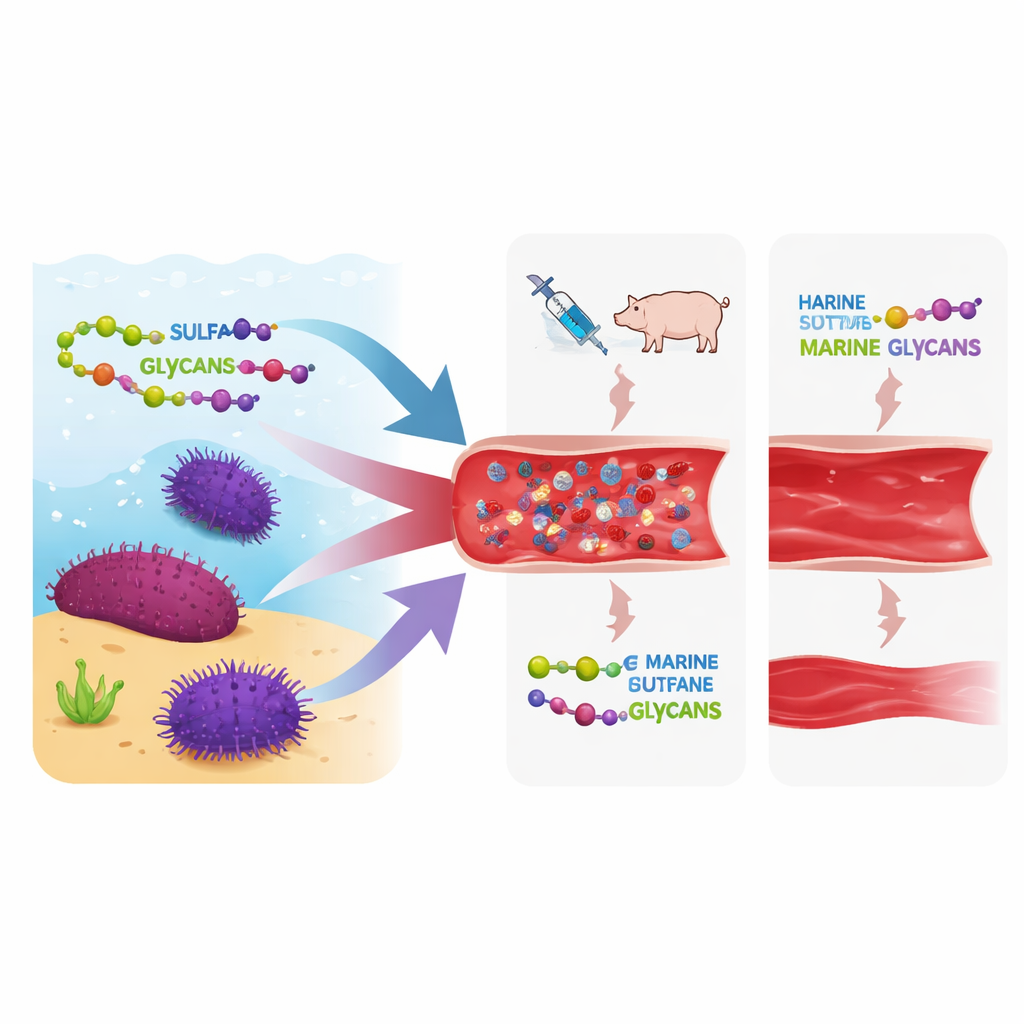
Marine sulfated glycans are complex sugars found in marine animals such as sea cucumbers and sea urchins. Two major types—fucosylated chondroitin sulfates and sulfated fucans—have attracted attention because they can prevent clot formation, fight viruses, and reduce inflammation. Unlike heparin, which is obtained from mammals such as pigs, these marine sugars have different building blocks and branching patterns. Those structural twists change how they interact with the proteins that control clotting, raising the hope that they might avoid some of heparin’s drawbacks while still protecting against dangerous clots.
Why New Blood Thinners Are Needed
Current hospital mainstays, unfractionated heparin and its smaller cousin low molecular weight heparin, work mainly by binding tightly to a natural inhibitor in blood called antithrombin. That partnership shuts down key clotting enzymes, especially thrombin and factor Xa. But the same strong effect makes dosing tricky: too little and clots still form, too much and bleeding risk rises. Heparin can also bind many other blood components, leading to unpredictable responses and, in some people, a serious immune reaction known as heparin-induced thrombocytopenia. These limitations have driven the search for new agents that act through different pathways and may be easier and safer to use.
Probing How Sea Sugars Talk to Clotting Proteins
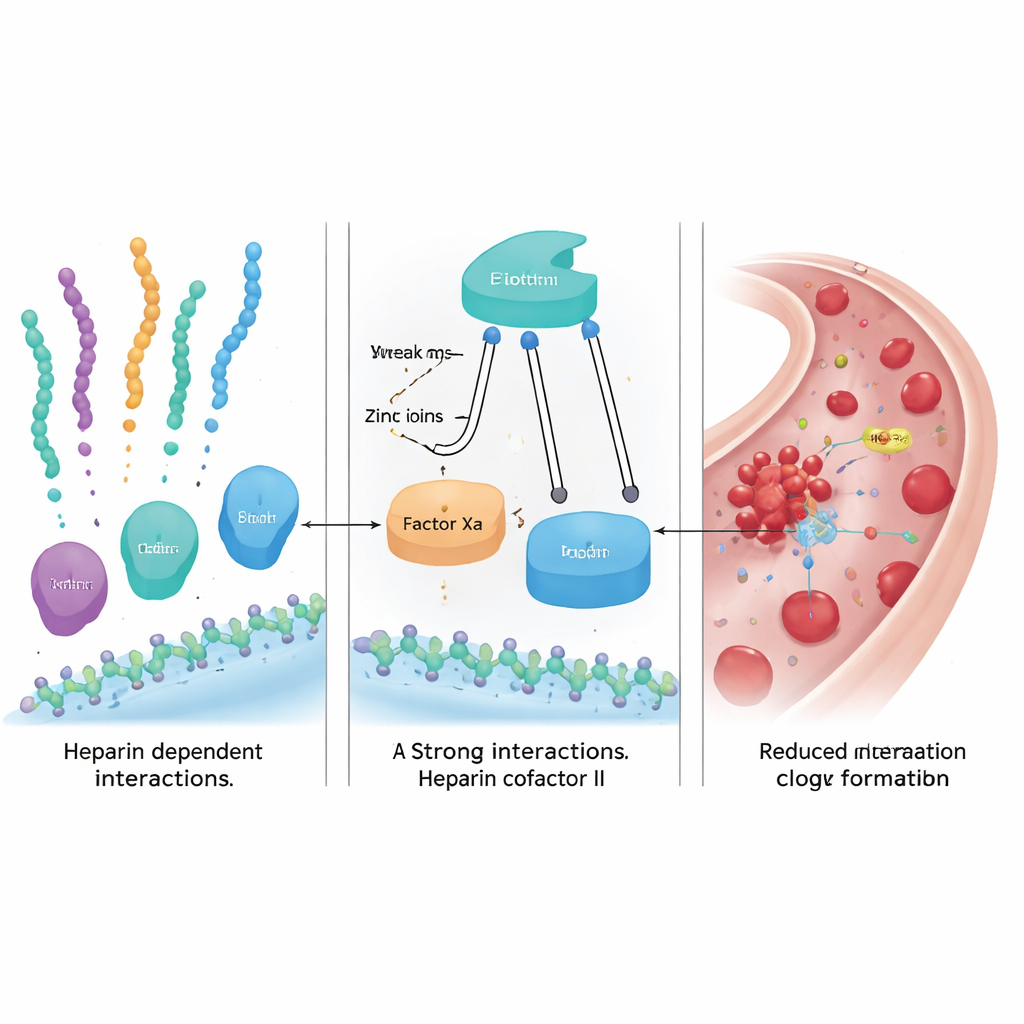
The researchers used a sensitive technique called surface plasmon resonance to watch, in real time, how various clotting proteins interact with heparin in the presence of different marine glycans. They focused on two enzymes that drive clot formation—thrombin (factor IIa) and factor Xa—and two natural inhibitors, antithrombin and heparin cofactor II. In their setup, heparin was anchored to a sensor surface, and the team measured how well each protein could still bind when mixed with increasing amounts of marine glycans. A stronger marine glycan would block more binding, showing up as a lower concentration needed to cut the signal in half.
Stronger Action Through a Different Route
The results revealed a striking pattern. None of the marine glycans showed meaningful binding to antithrombin at all, in sharp contrast to standard heparin. Yet many of them were extremely effective at interfering with thrombin and especially factor Xa. Several sea cucumber sulfated fucans and fucosylated chondroitin sulfates bound factor Xa far more strongly than either unfractionated or low molecular weight heparin, and some also bound very tightly to heparin cofactor II, another natural inhibitor of thrombin. This means the marine sugars appear to work largely through antithrombin-independent routes—by engaging factor Xa and heparin cofactor II directly—offering a fundamentally different mode of anticoagulant action.
The Hidden Help of Metal Ions
The study also uncovered an important supporting role for zinc ions, a metal naturally present in blood and released at sites of vessel injury. At first, factor Xa and heparin cofactor II bound poorly to the heparin-coated sensor. When zinc was added to the test solution, their binding jumped dramatically—by about 180-fold for factor Xa and 34-fold for heparin cofactor II—while thrombin and antithrombin were unaffected. This suggests that zinc can stabilize specific contact points between these proteins and negatively charged sugars, and that zinc-rich environments in the body may enhance the way marine glycans control clotting.
What This Could Mean for Future Treatments
Overall, the work shows that carefully characterized marine sulfated glycans can be stronger inhibitors of key clotting steps than standard heparins, yet they do so without relying on antithrombin. By favoring interactions with factor Xa and heparin cofactor II, sometimes boosted by zinc, these ocean-derived sugars outline new routes to thinning blood. Although more research is needed to confirm their safety—especially their tendency to bind other proteins linked to side effects—this detailed binding map provides a blueprint for designing next-generation anticoagulant drugs inspired by life in the sea.
Citation: Al. Ahmed, H., Pomin, V.H. Binding properties of marine sulfated glycans to coagulation (co)-factors using surface plasmon resonance spectroscopy. Sci Rep 16, 10333 (2026). https://doi.org/10.1038/s41598-026-41079-0
Keywords: anticoagulant, marine polysaccharides, blood clotting, factor Xa, heparin alternatives