Clear Sky Science · en
The susceptibility status of Aedes aegypti (Diptera: Culicidae) mosquitoes in Malaysia on pyrethroid and organophosphate insecticides with first detection of T1520I mutation
Why mosquito resistance matters to everyday life
For people living in dengue-prone regions, insecticide fogging trucks and household sprays are a familiar sight and an important shield against disease. But what happens when the mosquitoes these chemicals target begin to survive the treatments? This study from Malaysia investigates just that question, showing how dengue-carrying Aedes aegypti mosquitoes are evolving resistance to widely used insecticides and uncovering a new gene change that helps them withstand control efforts. The findings have direct implications for how communities can keep dengue in check in the coming years.
Where the mosquitoes were found
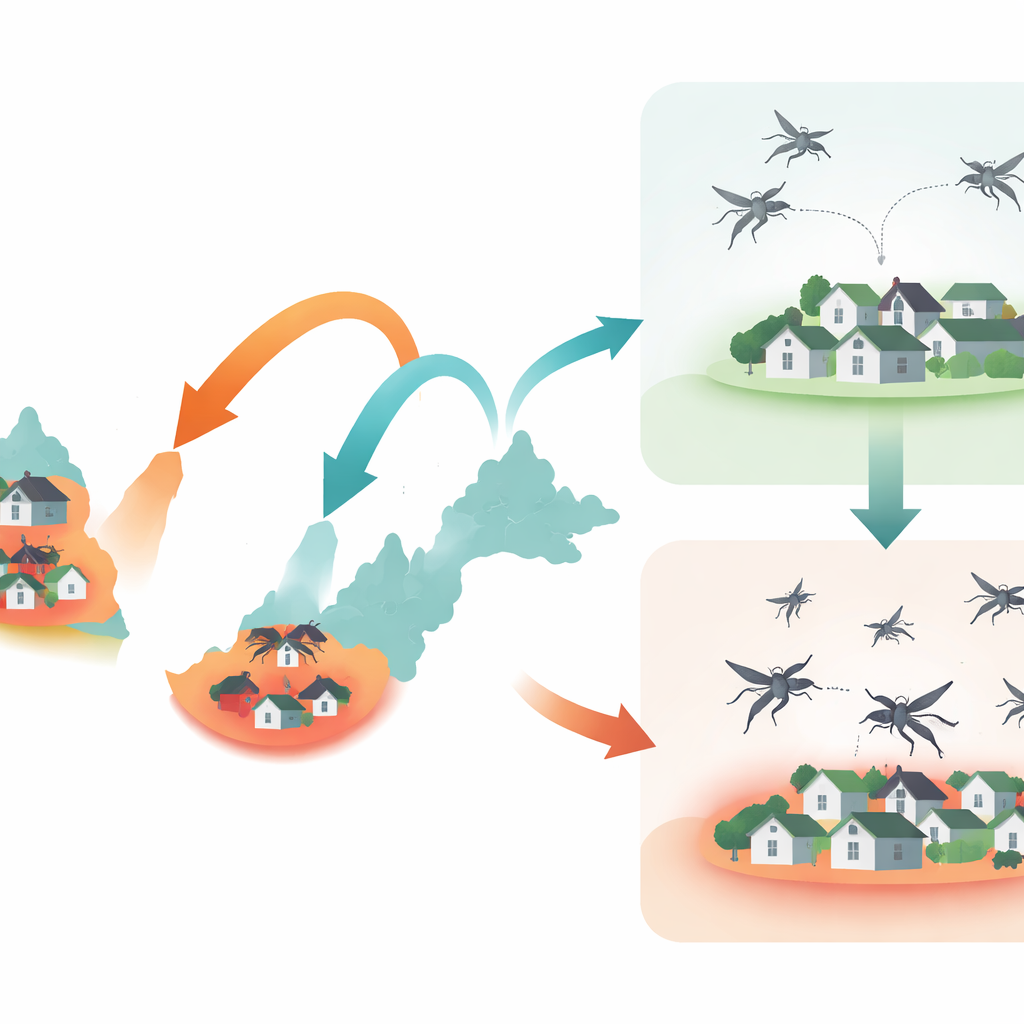
The researchers focused on Aedes aegypti, the main spreader of dengue, chikungunya, Zika, and yellow fever viruses. They collected mosquito eggs from seven urban and suburban dengue hotspots spread across five Malaysian states, from Penang in the north to Johor in the south, guided by national health records. These eggs were reared under controlled lab conditions until they became adult females, the stage that bites people and transmits viruses. A long-maintained laboratory strain that has never been exposed to modern control programs served as the “susceptible” reference for comparison.
How the insecticides were put to the test
Adult female mosquitoes from each location were exposed to four commonly used insecticides on treated paper, following World Health Organization guidelines. Two belonged to the pyrethroid family (deltamethrin and permethrin), often used in fogging and sprays, and two were organophosphates (malathion and pirimiphos-methyl), which are also used in dengue control. The scientists measured how many mosquitoes were killed after 24 hours and how long it took for 50% and 95% of them to be knocked down. They also extracted DNA from mosquitoes that survived exposure and sequenced key parts of a nerve-channel gene to look for specific mutations known to help mosquitoes resist insecticides.
What the tests revealed about resistance
The results showed a worrying pattern. Malathion still killed almost all mosquitoes at most sites, meaning this product remains largely effective, though there were early hints of reduced impact in one Johor population. In stark contrast, resistance to the other organophosphate, pirimiphos-methyl, was already widespread: some field groups had survival rates so high that the chemical barely worked. The situation was even more severe for pyrethroids. While the lab strain was fully susceptible, many field populations had far less than 90% mortality to deltamethrin and permethrin, the threshold used by the WHO to define resistance. Knockdown time tests backed this up, with some groups taking ten to more than forty times longer to be disabled than the lab strain, showing strong and sometimes extreme resistance. Resistance levels also varied from place to place, reflecting local differences in how often and how intensely insecticides are used.
The hidden genetic changes inside the mosquitoes
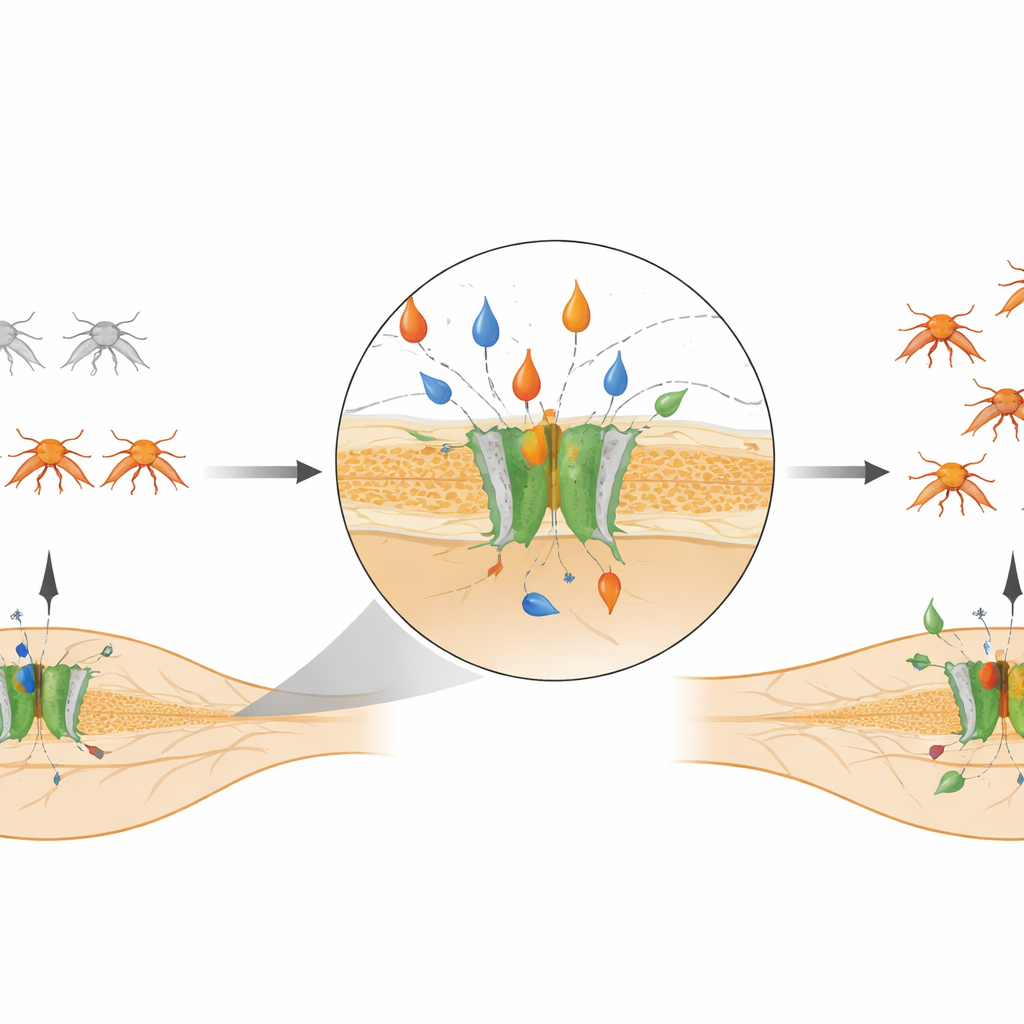
By decoding regions of the mosquitoes’ voltage-gated sodium channel gene—a key part of the nerve system that pyrethroids target—the researchers found several known “knockdown resistance” mutations, as well as a newer one. Changes called S989P, V1016G, and F1534C were common and often occurred together. The F1534C mutation was more strongly linked to resistance against permethrin, while the combination of S989P and V1016G was more important for deltamethrin resistance. The study also confirmed the presence of A1007G, a regionally important mutation previously reported in Malaysia, and, for the first time in the country, detected the T1520I mutation. Under deltamethrin exposure, this new mutation was present at very high frequency, suggesting it is rapidly spreading. The frequent co-occurrence of several mutations in the same mosquitoes indicates that resistance is now built on multiple genetic changes acting together, rather than on a single switch.
What this means for dengue control
For non-specialists, the take-home message is clear: many Malaysian Aedes aegypti mosquitoes can now survive some of the main insecticides used to control them, and they are acquiring new gene changes that make this resistance stronger and more complex. While malathion still works well in most locations, other chemicals are already failing in the field. If control programs continue to rely heavily on a narrow set of products, resistance will almost certainly worsen, undermining efforts to prevent dengue outbreaks. The authors argue for a more balanced approach that couples regular genetic monitoring of resistance mutations with insecticide rotation, better environmental management to remove breeding sites, and wider use of non-chemical tools such as biological control and innovative mosquito technologies. Such integrated strategies will be essential to keep ahead of evolving mosquitoes and protect communities from dengue in the long term.
Citation: Ma, T., Zuharah, W.F. The susceptibility status of Aedes aegypti (Diptera: Culicidae) mosquitoes in Malaysia on pyrethroid and organophosphate insecticides with first detection of T1520I mutation. Sci Rep 16, 10375 (2026). https://doi.org/10.1038/s41598-026-41000-9
Keywords: dengue control, mosquito insecticide resistance, Aedes aegypti, Malaysia, pyrethroid resistance