Clear Sky Science · en
Application of data-limited methods to assess stock status and recommend management for Indian mackerel (Rastrelliger kanagurta) in Bangladesh coastal waters
Why this coastal fish matters to your dinner plate
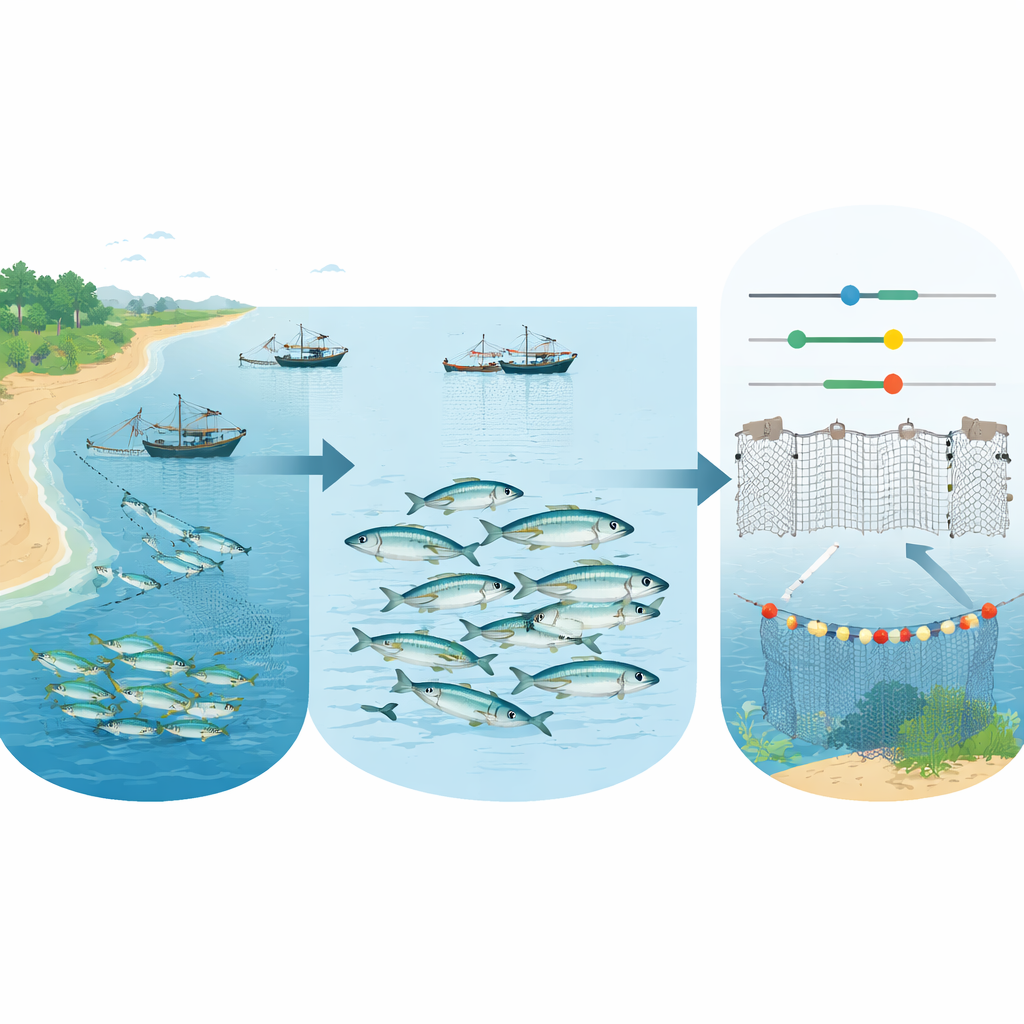
Along the shores of Bangladesh, Indian mackerel are a staple on family tables and a crucial source of protein for people and farmed animals alike. Yet these silvery fish are under growing pressure from industrial fleets and small-scale boats that share the same crowded waters. This study asks a very practical question: with limited data and rising demand, can we still tell whether Indian mackerel are being fished too hard, and if so, how can we bring the stock back without shutting the fishery down?
Counting fish when information is scarce
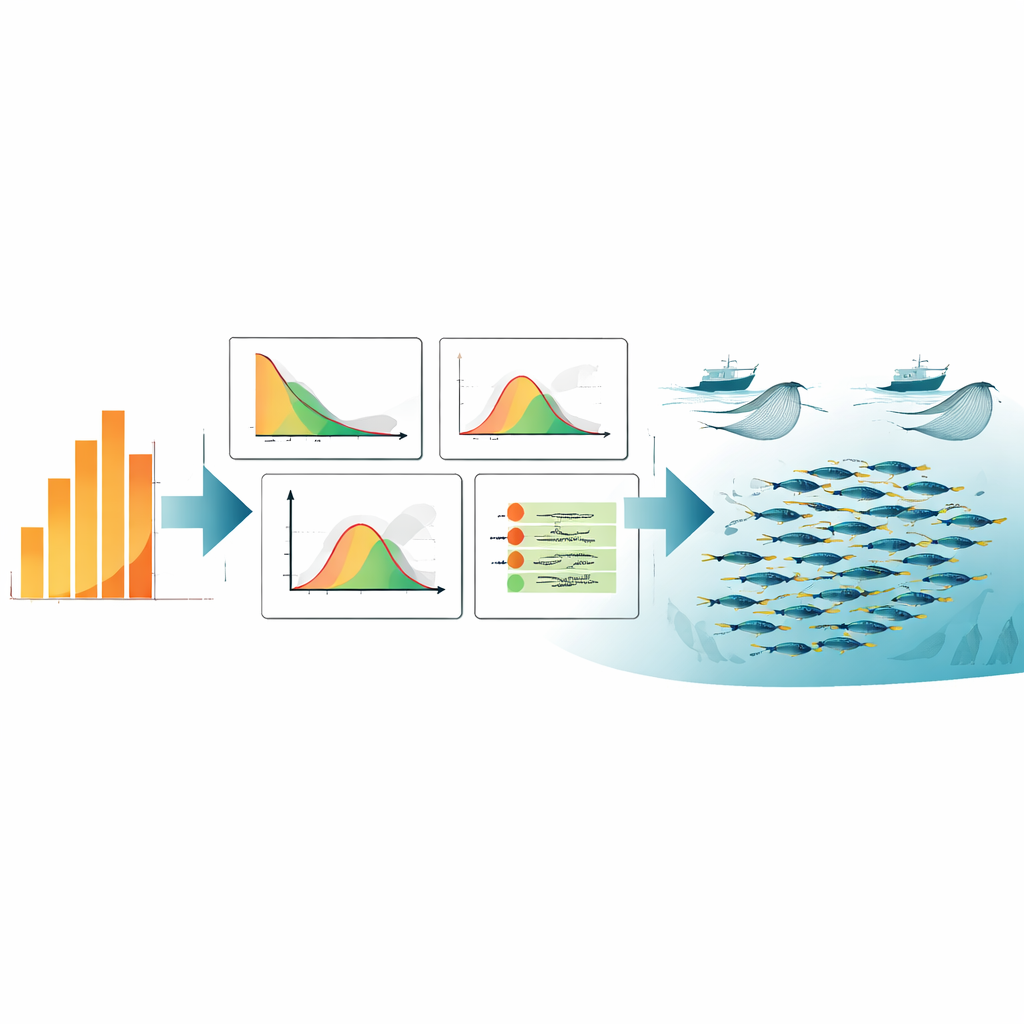
In many wealthy countries, fishery managers rely on decades of detailed records: how many fish were caught, how old they were, where they were taken. Bangladesh does not have that luxury for Indian mackerel. Instead, the researchers combined two types of information that are relatively easy to obtain: how long individual fish are, and how many tons are landed each year by industrial trawlers. Using these pieces, they applied two “data-limited” tools, known as DB-SRA and CMSY, which are designed to make the best possible guesses about the size and health of a fish population when only basic data are available.
What the fish themselves reveal
Over the course of 2021, the team measured nearly two thousand Indian mackerel from trawlers and landing sites along the Bay of Bengal. From the spread of lengths in their sample, they could infer how quickly the fish grow, how long they likely live, and how many die naturally each year. The analysis showed that Indian mackerel grow fast and have short lives, reaching an average maximum length of just over 33 centimeters in a little more than three years. But the length data also raised an alarm: more than half of the fish in the catch were smaller than the length at which most individuals first reproduce, and the spawning potential ratio—a measure of how much breeding power remains compared to an untouched population—was only about 17 percent. In simple terms, too many fish are being caught before they have a chance to spawn even once.
Reading the story in past catches
To understand how the stock has changed over time, the scientists fed a 17-year record of industrial catches into the two catch-based models. Both models agreed that a huge spike in landings in 2012—when more than 9,500 metric tons were hauled in—pushed the population into an overfished state. Since then, annual catches have mostly stayed below the estimated maximum sustainable yield, and there are signs that the biomass, or total weight of fish in the water, has begun to recover. Still, one of the methods indicated that the stock remains far below the level that would safely support the highest long-term catch, and current fishing pressure is roughly double what would be considered sustainable for this species.
Guiding the fishery back from the edge
Despite some disagreement between the two models about the exact numbers, both painted the same broad picture: Indian mackerel in Bangladesh are being harvested too heavily, especially at young ages, but recovery is possible if action is taken. Drawing on the combined evidence, the authors recommend simple, concrete steps. First, they propose a minimum catch length of 18–22 centimeters, which would allow most mackerel to spawn at least once before being vulnerable to fishing gear. Second, they advise limiting the industrial catch to about 1,500 metric tons per year—below the estimated sustainable ceiling—and maintaining the existing seasonal fishing closures that already give the stock a brief respite during part of the year.
What this means for fish, fishers, and neighbors
For non-specialists, the bottom line is straightforward: Indian mackerel in Bangladesh’s coastal waters are not yet a lost cause, but they are being pushed hard. The study shows that even with modest data, scientists and managers can still make informed, precautionary decisions. If size limits, catch caps, and seasonal bans are enforced—and if neighboring countries cooperate for this migratory, shared stock—the population should gradually climb back toward healthier levels. That would help secure a reliable supply of fish for coastal communities, while keeping one of the Bay of Bengal’s most important small pelagic species from slipping into serious decline.
Citation: Barua, S., Liu, Q., Chen, X. et al. Application of data-limited methods to assess stock status and recommend management for Indian mackerel (Rastrelliger kanagurta) in Bangladesh coastal waters. Sci Rep 16, 11892 (2026). https://doi.org/10.1038/s41598-026-40935-3
Keywords: Indian mackerel, Bay of Bengal fisheries, overfishing, data-limited stock assessment, sustainable catch limits