Clear Sky Science · en
WNT inhibition activates interferon stimulated gene expression by alleviating epigenetic repression of endogenous retroviruses
Why turning cold tumors hot matters
Cancer immunotherapies, especially drugs that release the brakes on immune cells, have changed treatment for many patients—but they still fail for most people. Many stubborn tumors stay "cold," meaning immune cells barely enter them. This study explores one major culprit behind that cold state: a growth and development pathway called WNT. The researchers uncover how active WNT signaling quietly shuts down a built‑in antiviral alarm system inside cancer cells, and how blocking WNT can switch that alarm back on and potentially make tumors far more visible to the immune system.
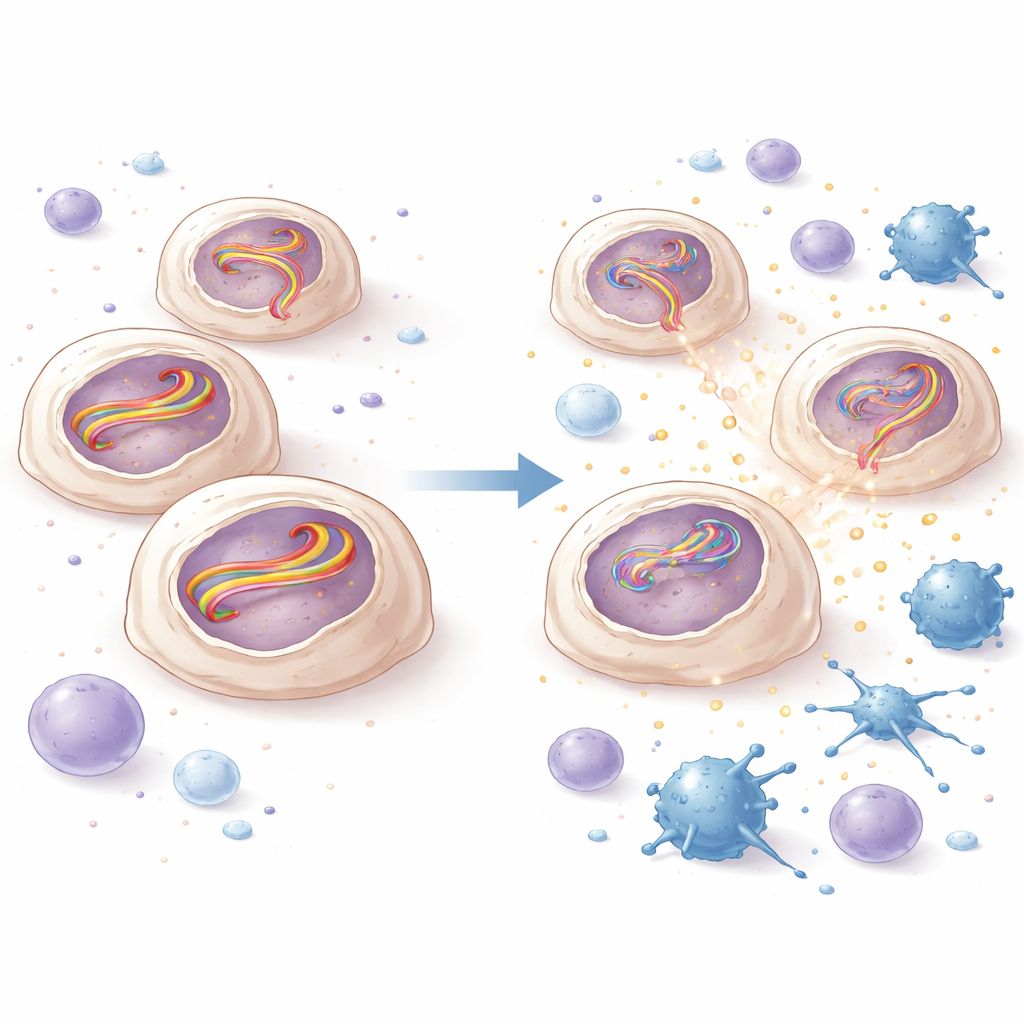
A growth signal that silences immune alarms
WNT signals normally guide embryonic development and help adult tissues renew themselves. In many cancers, however, this pathway is jammed in the "on" position through various mutations or excess production of WNT and its receptors. Earlier work had linked high WNT activity with poor responses to immune checkpoint inhibitors and with tumors that lack invading T cells. What was missing was the "how": which cellular systems does WNT tamper with to help tumors hide? To answer that, the authors used several human cancer cell lines with different WNT‑activating changes and blocked the pathway either with drugs that prevent WNT secretion or with genetic tools that reduce a key WNT protein, β‑catenin.
Blocking WNT wakes up antiviral genes
Across many of these cancer cell lines, blocking WNT consistently boosted a set of genes known as interferon‑stimulated genes, or ISGs. These genes usually turn on when cells sense viruses and mount an antiviral defense. Intriguingly, this surge in ISG activity appeared without a rise in interferon signal molecules themselves, and it was not stopped by drugs that block the usual interferon switches (JAK/STAT). That pointed the team toward an internal danger‑sensing route: receptors that recognize double‑stranded RNA, a form often produced during viral infection. They saw that WNT inhibition activated the TBK1–IRF3 signaling route and that disabling two double‑stranded RNA sensors, RIG‑I and MDA5, sharply reduced the ISG response. Together, these results show that turning off WNT lets an internal viral alarm ring, independent of external interferon signals.
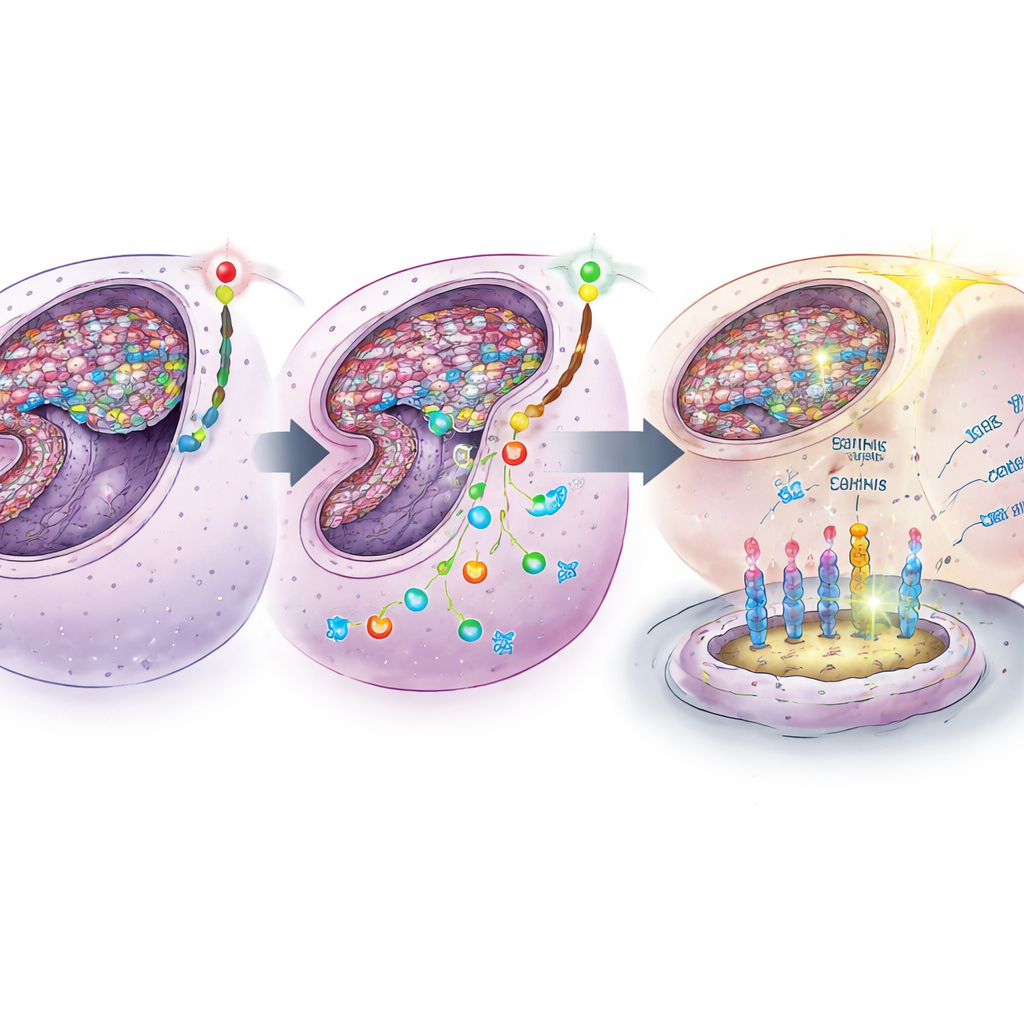
Hidden viral traces and loosened chromatin
Where was the double‑stranded RNA coming from if no real virus was present? The answer lies in ancient viral remnants buried in our DNA, called endogenous retroviruses (ERVs). In most cells, ERVs are kept silent by epigenetic repressors—proteins and chemical marks that keep chromatin tightly packed. The researchers found that blocking WNT reduced the levels of several such repressors, including DNMT1, EZH2, and KDM1A, in multiple cancer lines. Using a technique that maps open versus closed DNA regions, they showed that despite an overall tightening of chromatin, specific ERV‑rich regions became more accessible when WNT was blocked. Those ERV sites began producing RNA again, and this re‑expression was reversed when WNT activity was artificially restored, supporting a "viral mimicry" model: dormant viral sequences awaken, form double‑stranded RNA, and trigger antiviral defenses.
Different paths, shared outcome
The team compared this WNT‑driven viral mimicry to effects of blocking another major growth route, the MEK/ERK pathway, in the same pancreatic cancer cells. Both WNT and MEK/ERK inhibition boosted ISGs and ERV expression and reduced epigenetic repressors, and many of the same ERVs were activated. But their wiring differed: MEK inhibition induced interferon ligands and altered ERK signaling, whereas WNT blockade did not alter ERK activity and triggered ISGs without interferon release. The authors also tested whether lowering levels of the famous oncogene MYC, which can suppress interferon responses, was enough on its own to wake ISGs. In WNT‑driven cancers, it was not; only direct WNT pathway blockade produced the full antiviral‑like response, underscoring that WNT controls immune hiding through multiple, MYC‑independent steps.
From basic insight to future therapies
In simple terms, this work shows that many WNT‑driven tumors keep their internal antiviral alarm system switched off by epigenetically silencing old viral DNA embedded in their genomes. When WNT is blocked, those viral remnants speak up, producing double‑stranded RNA that switches on antiviral genes and can make tumor cells more visible to the immune system. Because directly targeting WNT in patients is challenging and can cause side effects, these findings highlight alternative strategies: drugs that mimic this viral‑like awakening through epigenetic modulation or targeted interferon delivery could convert cold, WNT‑active tumors into hot ones that respond better to checkpoint inhibitors. The study thus offers a concrete mechanistic bridge between a powerful growth signal and immune escape—and suggests new ways to bring resistant cancers back into the reach of immunotherapy.
Citation: Williams, C.M., Calderon, J.H., DiBlasi, V.R. et al. WNT inhibition activates interferon stimulated gene expression by alleviating epigenetic repression of endogenous retroviruses. Sci Rep 16, 12133 (2026). https://doi.org/10.1038/s41598-026-40894-9
Keywords: WNT signaling, tumor immune evasion, viral mimicry, endogenous retroviruses, interferon-stimulated genes