Clear Sky Science · en
Predictive value of testicular elastography on the outcome of percutaneous testicular sperm aspiration in patients with azoospermia
Why this matters for couples struggling to conceive
For couples facing the heartbreak of infertility, every test and procedure carries both hope and stress. This study explores whether a special type of ultrasound scan of the testicles can help predict, in advance, which men with no sperm in their semen still have a realistic chance of fathering a child using modern fertility treatments. If successful, such a scan could spare some men from painful, invasive procedures that are unlikely to work, while guiding others toward the best option to retrieve usable sperm.
Understanding the problem of missing sperm
Male infertility contributes to a large share of couples’ difficulty in conceiving, and one of the most severe forms is called azoospermia, when no sperm are seen in repeated semen tests. Sometimes this happens because the body is not making sperm properly; other times, sperm are being produced but are blocked from reaching the ejaculate. In both situations, doctors can sometimes recover sperm directly from the testicles using a needle or minor surgery and then use these cells in assisted reproduction methods such as in vitro fertilization with intracytoplasmic sperm injection. However, these retrieval procedures are invasive, may require anesthesia, and do not always succeed, especially when sperm production itself is poor.
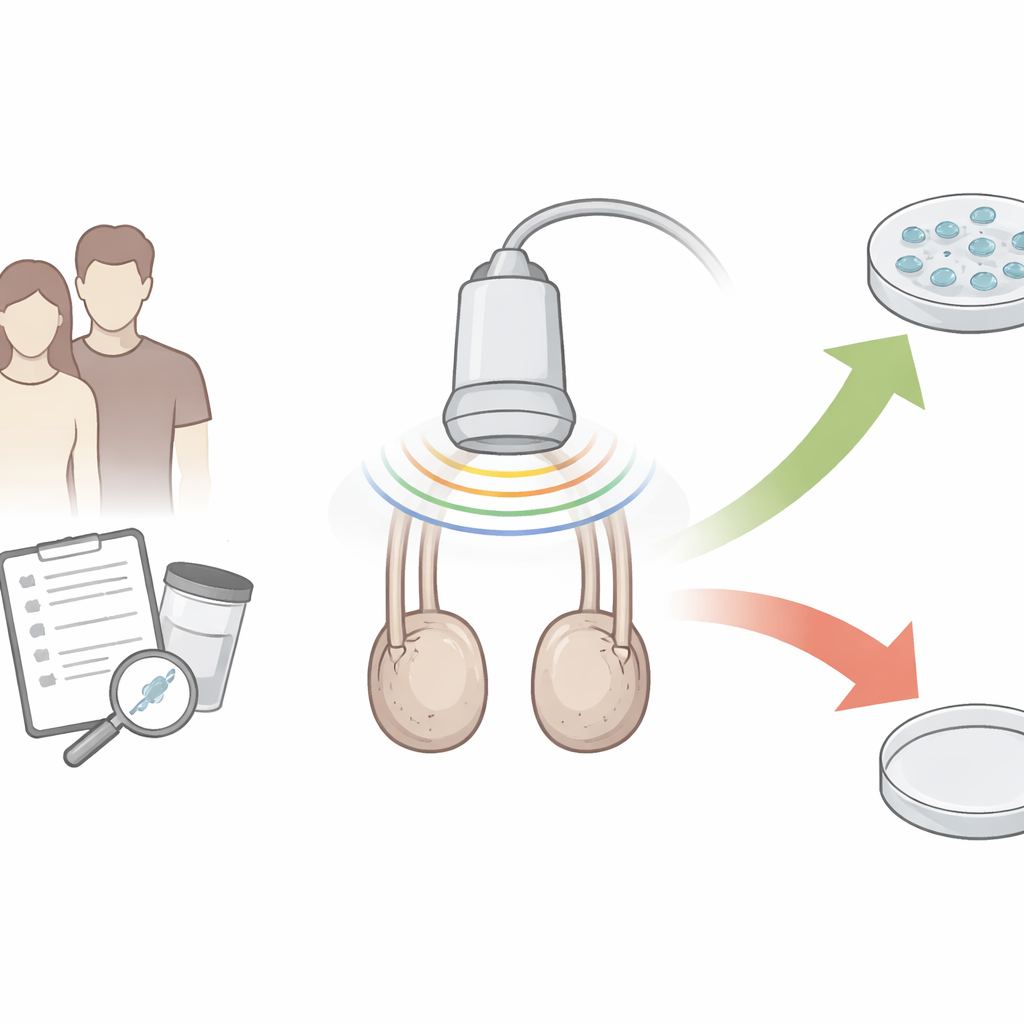
A new way to look inside the testicles
Traditional evaluations of male infertility rely on physical examination, hormone tests, and standard ultrasound to measure testicular size and structure. This study focused on an additional tool called strain elastography, a technique that gently presses the testicle with an ultrasound probe to gauge how soft or stiff the tissue is. Softer, more elastic tissue is thought to reflect healthier sperm-producing cells, whereas stiffer tissue may signal scarring or damage. The researchers asked whether these stiffness measurements, together with testicular size and levels of a key hormone called follicle-stimulating hormone (FSH), could predict the success of a needle-based sperm retrieval procedure known as percutaneous testicular sperm aspiration (TESA).
What the researchers did in real patients
The team studied 51 men in Iraq who had primary infertility and azoospermia, meaning they had never achieved a pregnancy and had no sperm in at least two carefully checked semen samples. Each man underwent a detailed examination, hormone testing, standard ultrasound to measure testicular volume, and strain elastography to calculate a strain ratio, an indicator of tissue stiffness. All men then had TESA, in which a fine needle is inserted into the testicle to draw out tissue that is examined under a microscope for usable sperm. The researchers compared elastography readings, testicular size, and hormone levels between men in whom sperm were found and those in whom the procedure failed.
How tissue softness, size, and hormones predicted success
Only about one-third of the men had sperm successfully retrieved by TESA. In those with a negative result, average FSH levels were higher, testicles were smaller, and the elastography strain ratio was higher, meaning the tissue was stiffer. Statistical analyses showed that each of these measures—FSH, testicular volume, and strain elastography—could help predict whether TESA would find sperm, with elastography and testicular volume performing particularly well. For example, the right testicle’s elastography values predicted successful sperm retrieval with over 90% sensitivity and specificity, suggesting that tissue softness on the scan closely tracks the presence of active sperm-producing cells.
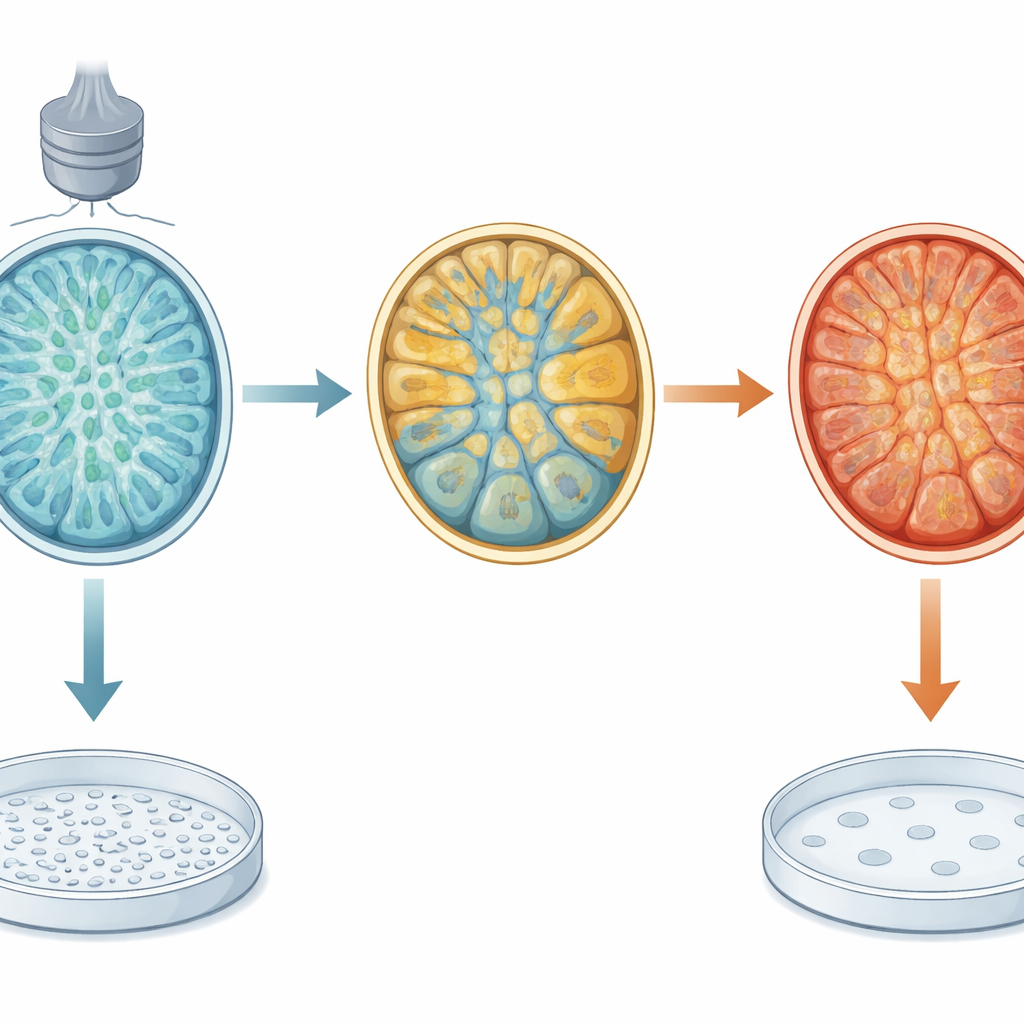
What this could mean for future fertility care
Although the study involved a relatively small group and more research is needed, the results indicate that testicular strain elastography can offer a noninvasive, quantitative window into how well the testicles are making sperm. When combined with hormone tests and measurements of testicular size, this approach could help doctors distinguish men whose infertility is mainly due to blocked sperm pathways from those whose testicles are severely damaged. In practical terms, this might allow clinicians to better counsel couples: encouraging TESA or more advanced retrieval techniques when the chances of success are good, and steering others toward alternatives such as donor sperm or adoption when the odds are low. For men already facing the emotional and physical burdens of infertility treatment, having a clearer, image-based prediction tool could make the journey more informed and less uncertain.
Citation: Rashid, A.O., Faraj, F.M., Ahmed, S.M. et al. Predictive value of testicular elastography on the outcome of percutaneous testicular sperm aspiration in patients with azoospermia. Sci Rep 16, 11105 (2026). https://doi.org/10.1038/s41598-026-40884-x
Keywords: male infertility, azoospermia, testicular elastography, sperm retrieval, assisted reproduction