Clear Sky Science · en
Utilizing bulk and single-cell RNA sequencing to identify potential biomarkers linked to angiogenesis and integrated stress response in chondrosarcoma
Why this bone cancer study matters
Chondrosarcoma is a rare but stubborn bone cancer that mostly strikes adults and often resists standard treatments like chemotherapy and radiation. Surgeons can sometimes remove the tumor, but when the disease spreads or comes back, options are limited. This study looks under the hood of chondrosarcoma cells to find molecular "flags" that help the tumor grow new blood vessels and survive under stress. Those flags could one day guide earlier diagnosis and more precise, targeted therapies.
Looking for telltale signs in tumor genes
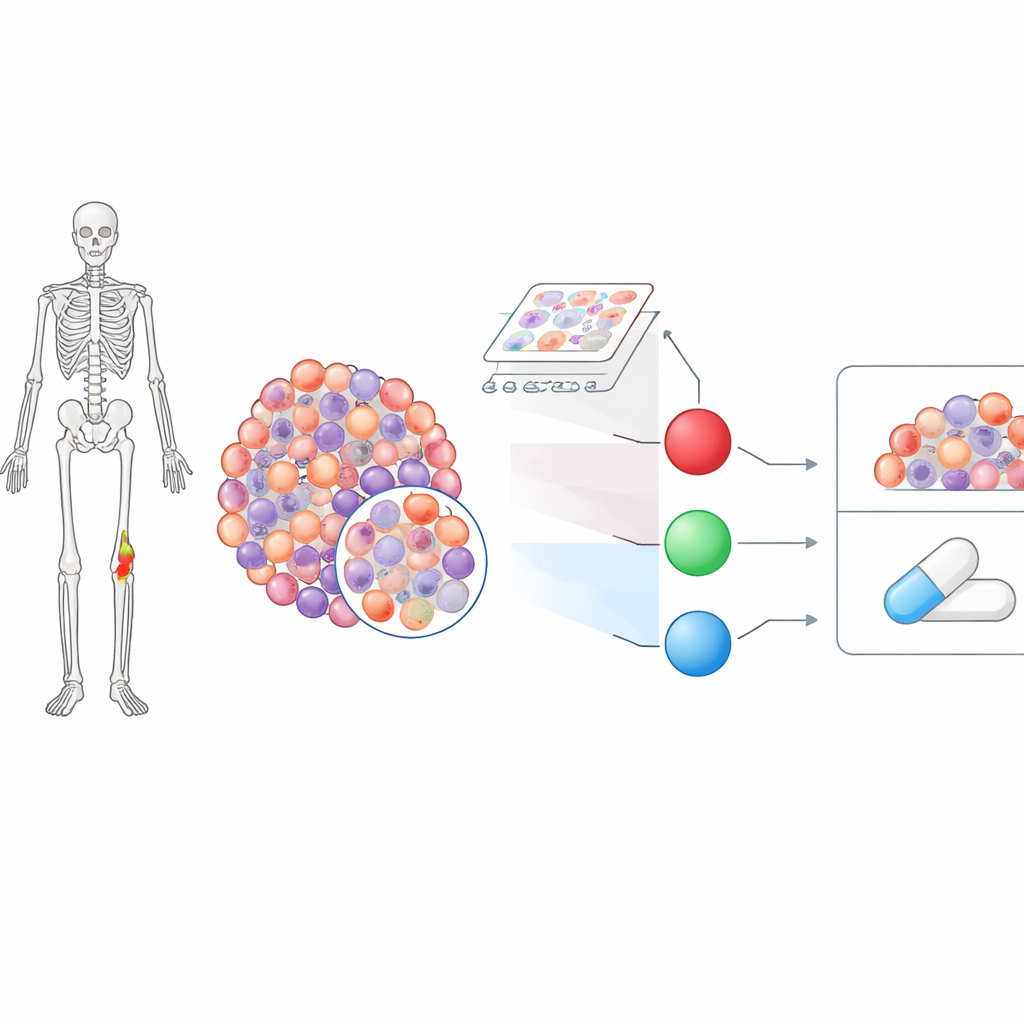
The researchers began with publicly available genetic data from chondrosarcoma tumors and healthy cartilage tissue. Using large-scale RNA profiling, which measures which genes are turned on or off, they searched for genes linked to two processes that are especially important in aggressive cancers: the growth of new blood vessels (angiogenesis) and the cell’s emergency coping system, known as the integrated stress response. By comparing tumor samples to normal tissue and grouping genes that tended to rise and fall together, they narrowed thousands of candidates down to a small set of genes that were both misregulated in cancer and connected to blood vessel growth and stress signaling.
Three key molecules stand out
From this long list, three genes emerged as especially promising biomarkers: HSPA8, LMNA, and SERPINH1. All three were consistently more active in tumor samples across two independent patient datasets. Each one plays a different but complementary role inside cells. HSPA8 helps other proteins fold correctly and protects cells from damage when they are short on oxygen or overloaded with misfolded proteins—conditions common inside fast-growing tumors. LMNA produces structural proteins that help maintain the shape and stability of the cell nucleus, where DNA is stored and read. SERPINH1 assists in building collagen, a major component of the cartilage-like matrix that surrounds chondrosarcoma cells and can shield them from therapy.
Connecting stress, support cells, and blood vessels
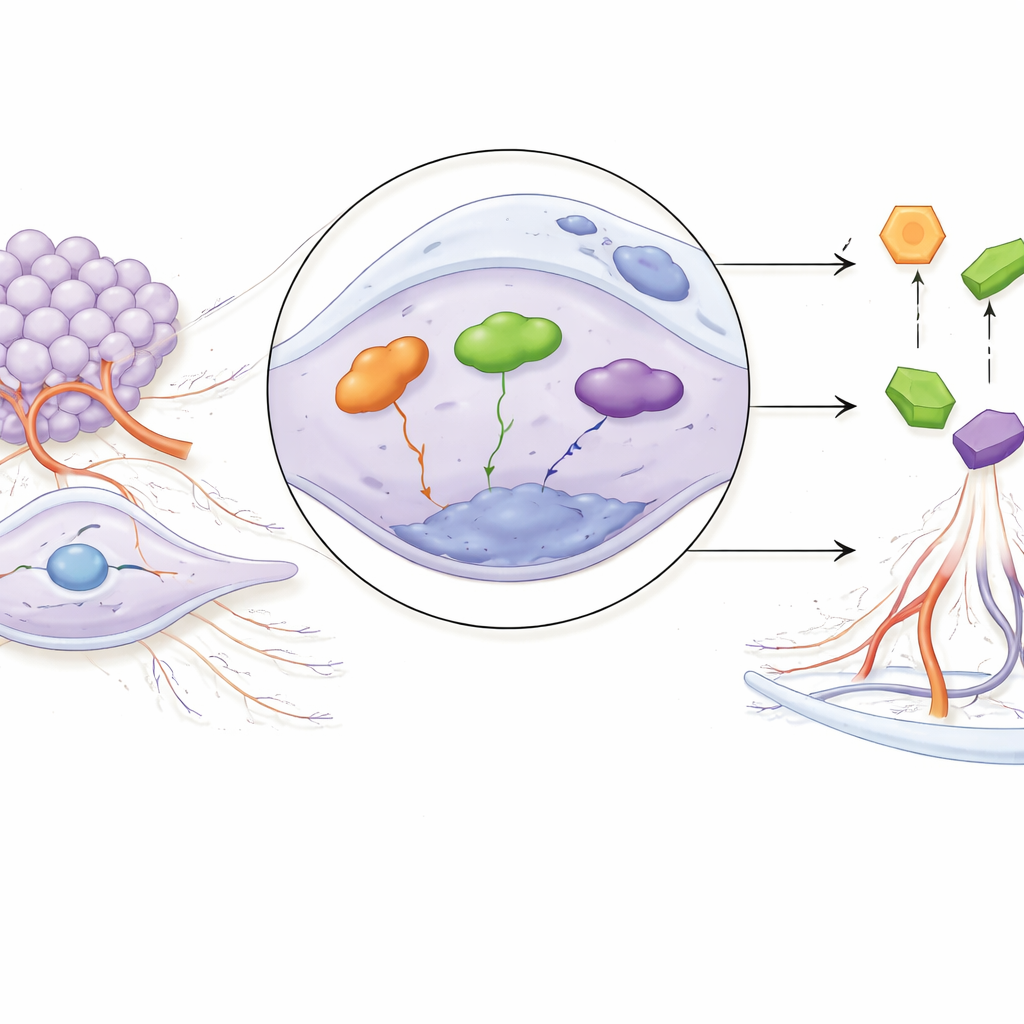
To move beyond bulk averages, the team examined single-cell RNA sequencing data from thousands of individual cells taken from chondrosarcoma tumors. This fine-grained view allowed them to identify which cell types carried high levels of the three biomarkers. The strongest signals appeared in stromal cells—support cells in the tumor environment that can influence growth, invasion, and blood vessel formation. By reconstructing how these stromal cells change over a “pseudo-time” trajectory, the researchers showed that HSPA8 and LMNA tend to rise as the cells become more specialized, while SERPINH1 gradually declines. Communication mapping between different cell types suggested particularly strong signaling between these stromal cells and nearby cartilage-like tumor clusters, hinting that the biomarkers may help coordinate cross-talk that favors tumor progression.
From networks to possible drugs
The investigators then placed the three biomarkers into broader regulatory and drug-interaction networks. They found a web of transcription factors, microRNAs, and long non-coding RNAs that appear to control these genes, with one factor, STAT1, standing out as a central hub touching all three. Using computational tools, they also predicted several existing compounds that might bind to the proteins encoded by HSPA8, LMNA, and SERPINH1. Simulated docking suggested strong binding between HSPA8 and ADP, between LMNA and the experimental cancer drug lonafarnib, and moderate binding for a third small molecule to SERPINH1. Finally, laboratory tests using patient tissue samples confirmed that the three genes are indeed more active in chondrosarcoma than in healthy controls, strengthening their case as real-world markers.
What this could mean for patients
In plain terms, this study argues that three molecules—HSPA8, LMNA, and SERPINH1—act as important helpers for chondrosarcoma, allowing tumor-supporting cells to weather stress, remodel their surroundings, and encourage new blood vessels. Because they are consistently elevated in patient tumors and sit at the crossroads of key survival pathways, they could serve as warning signals for diagnosis or as handles for future drugs to grab onto. While much work remains—especially testing candidate drugs and confirming these pathways in more patients—the findings offer a clearer map of how this bone cancer sustains itself and point toward new strategies to slow or stop it.
Citation: Li, S., Zhao, J., Qin, Q. et al. Utilizing bulk and single-cell RNA sequencing to identify potential biomarkers linked to angiogenesis and integrated stress response in chondrosarcoma. Sci Rep 16, 10133 (2026). https://doi.org/10.1038/s41598-026-40800-3
Keywords: chondrosarcoma, angiogenesis, integrated stress response, single-cell RNA sequencing, biomarkers