Clear Sky Science · en
Identification of berbamine hydrochloride as a novel coagulation factor VII inhibitor by natural product library screening using zebrafish as a model
Why this matters for everyday health
Heart attacks, strokes, and dangerous blood clots often begin when the body’s normal response to injury goes into overdrive. Millions of people take blood thinners to prevent these clots, but today’s medicines can cause serious bleeding, including in the gut and brain. This study explores a new way to find gentler blood thinners by testing hundreds of naturally derived compounds in tiny zebrafish, ultimately homing in on one promising molecule that targets an early step in clot formation.
Small fish, big clues about blood clotting
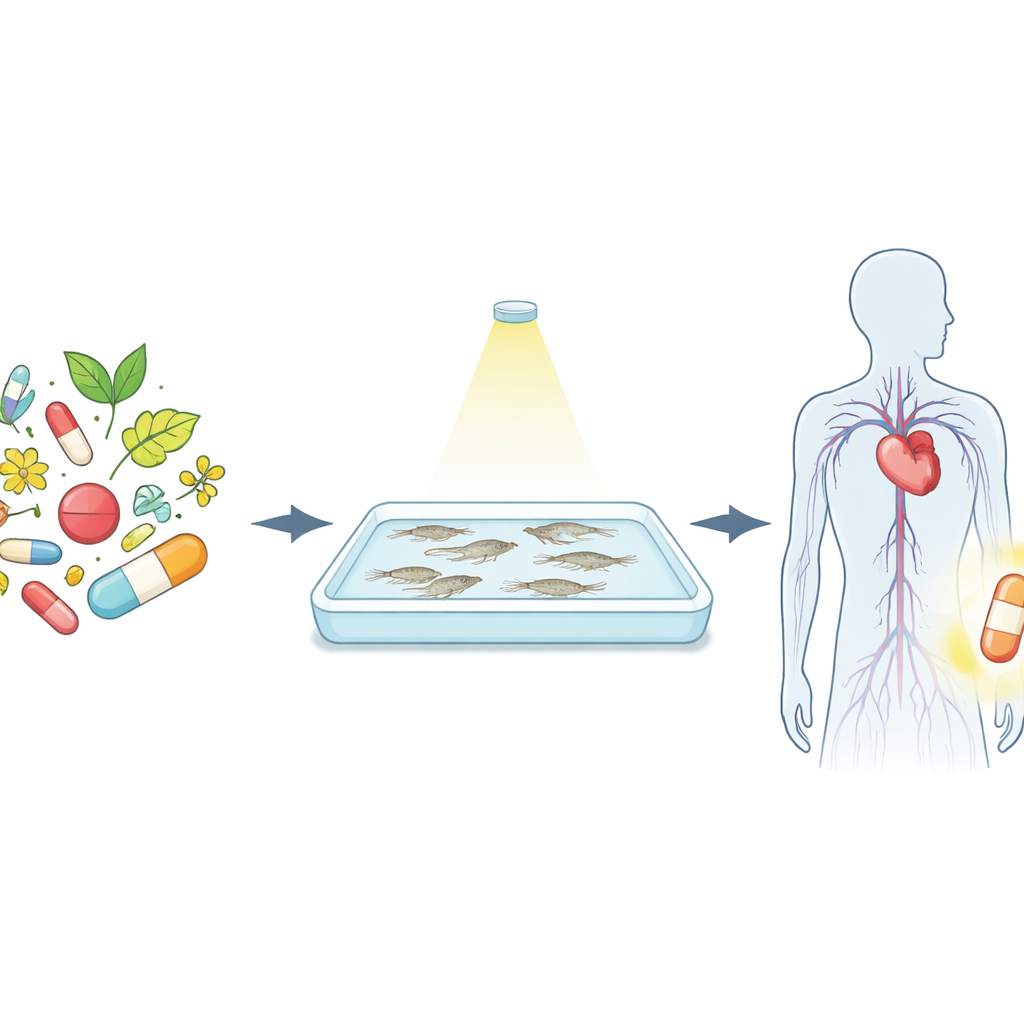
Zebrafish may seem an unlikely ally in the search for new drugs, but their blood system is remarkably similar to ours. They use many of the same clotting factors and clot-forming cells, and their transparent larvae let scientists watch clotting in real time. The researchers took advantage of this by developing laser-based tests that create small injuries in the fish’s veins and arteries and then timing how quickly a clot blocks the vessel. This setup allowed them to rapidly screen many chemicals in living animals, rather than only in test tubes.
Searching nature’s chemical library
The team began with a collection of 547 natural products, many originally isolated from plants or other organisms. First, they exposed zebrafish larvae to each compound to see which were safe at a chosen dose; 321 did not kill the fish. Using their laser-induced clotting test on these survivors, they found 76 compounds that significantly slowed vessel blockage, suggesting potential blood-thinning effects. Many of these were already known to affect platelets or blood vessels, so those were set aside. The remaining 33 were run through additional injury models that rely on different types of damage, helping the scientists sort which pathways each compound might influence.
Pinpointing which step in clotting is affected
To move from whole fish to specific mechanisms, the researchers turned to miniature versions of standard hospital clotting tests. They used zebrafish and human blood plasma in assays that separately probe the two major routes that trigger clot formation, often called the “intrinsic” and “extrinsic” pathways. By seeing which tests were slowed by each compound, they could infer where in the clotting cascade the drugs might act. Two natural products appeared to act on the intrinsic route, while two others, including a molecule called berbamine hydrochloride, acted on the extrinsic route, which begins when a protein called factor VII partners with a “tissue factor” at an injury site.
A closer look at berbamine
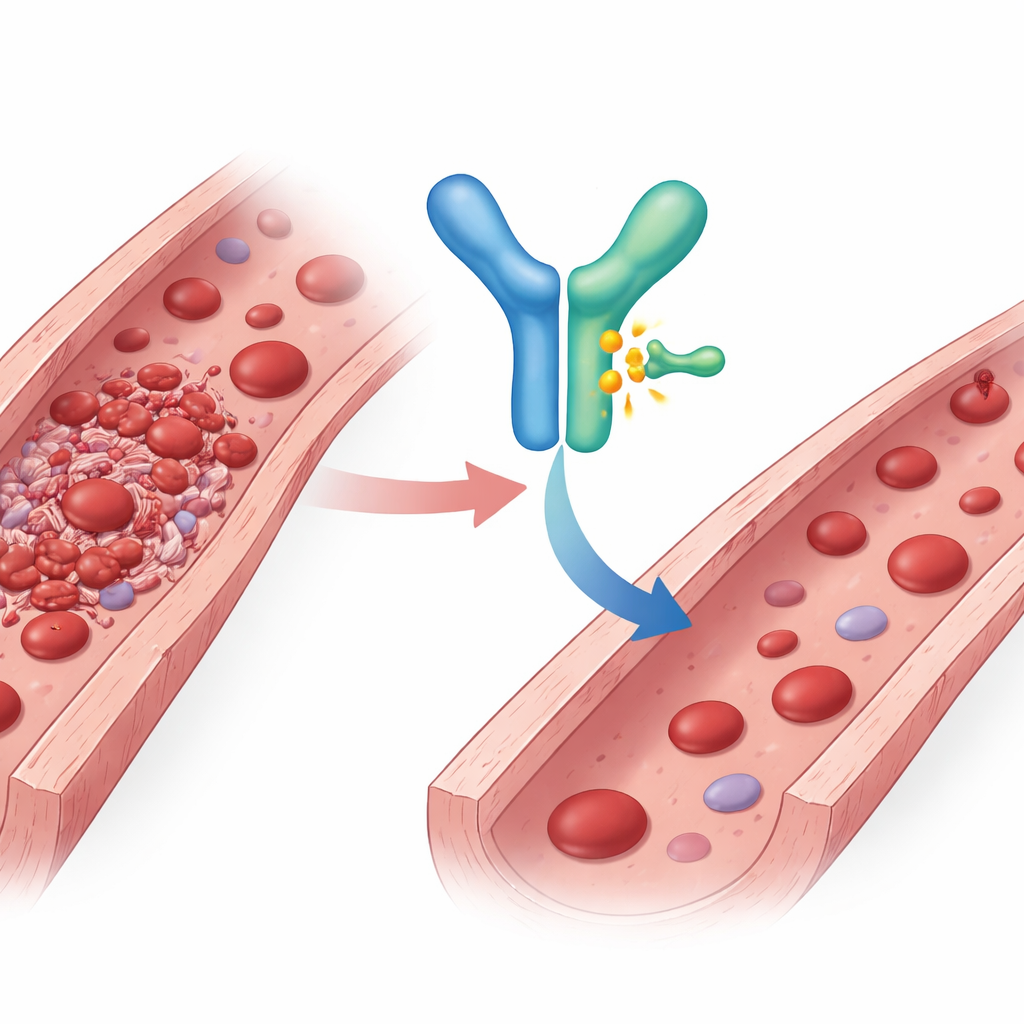
Berbamine hydrochloride stood out because it prolonged the clotting time in plasma in a dose-dependent way, consistent with a targeted brake on the extrinsic pathway. When adult zebrafish were given the drug, they did not show obvious spontaneous bleeding at moderate doses, though very high doses did increase bleeding after a deliberate gill injury. In a specialized test that measures the activity of factor VII, higher concentrations of berbamine slowed this protein’s activity, especially in the presence of tissue factor, hinting that it interferes with how factor VII is activated. Computer docking studies supported this idea: the molecule nestled into the three-dimensional structure of inactive factor VII and formed hydrogen bonds with key amino acids near its active region, but showed no such binding to the already active form, factor VIIa.
What this could mean for future treatments
Altogether, the work shows that zebrafish can be used to sift through large sets of natural compounds and sort them according to which parts of the clotting system they influence. Among several new candidates, berbamine hydrochloride emerged as a selective modulator of factor VII, an early “on switch” for clot formation. By acting at this initiating step rather than blocking clotting outright, berbamine may reduce the risk of runaway clotting while posing less danger of uncontrollable bleeding at suitable doses. Although more testing in mammals and humans is needed, this study highlights a possible new class of blood thinners and showcases a powerful strategy for discovering safer antithrombotic drugs.
Citation: Panapakam, J., Via, J., Kumar, A. et al. Identification of berbamine hydrochloride as a novel coagulation factor VII inhibitor by natural product library screening using zebrafish as a model. Sci Rep 16, 10045 (2026). https://doi.org/10.1038/s41598-026-40631-2
Keywords: blood clot prevention, zebrafish model, natural product drug discovery, factor VII inhibition, safer anticoagulants