Clear Sky Science · en
Uneven transition risks from multi-scope carbon flows: a nationwide regional assessment for South Korea
Why this matters for everyday life
When we think about climate change, we often picture smokestacks and power plants. But a growing share of carbon "responsibility" is tied not just to where pollution is released, but to the long supply chains that bring electricity, steel, cement, food, and gadgets into our homes and cities. This study looks at how that shift in thinking plays out across South Korea’s regions, asking a deceptively simple question with big implications: who really bears the risks and costs as climate rules tighten—factory towns, big cities, or both in different ways?
Tracing hidden carbon in the economy
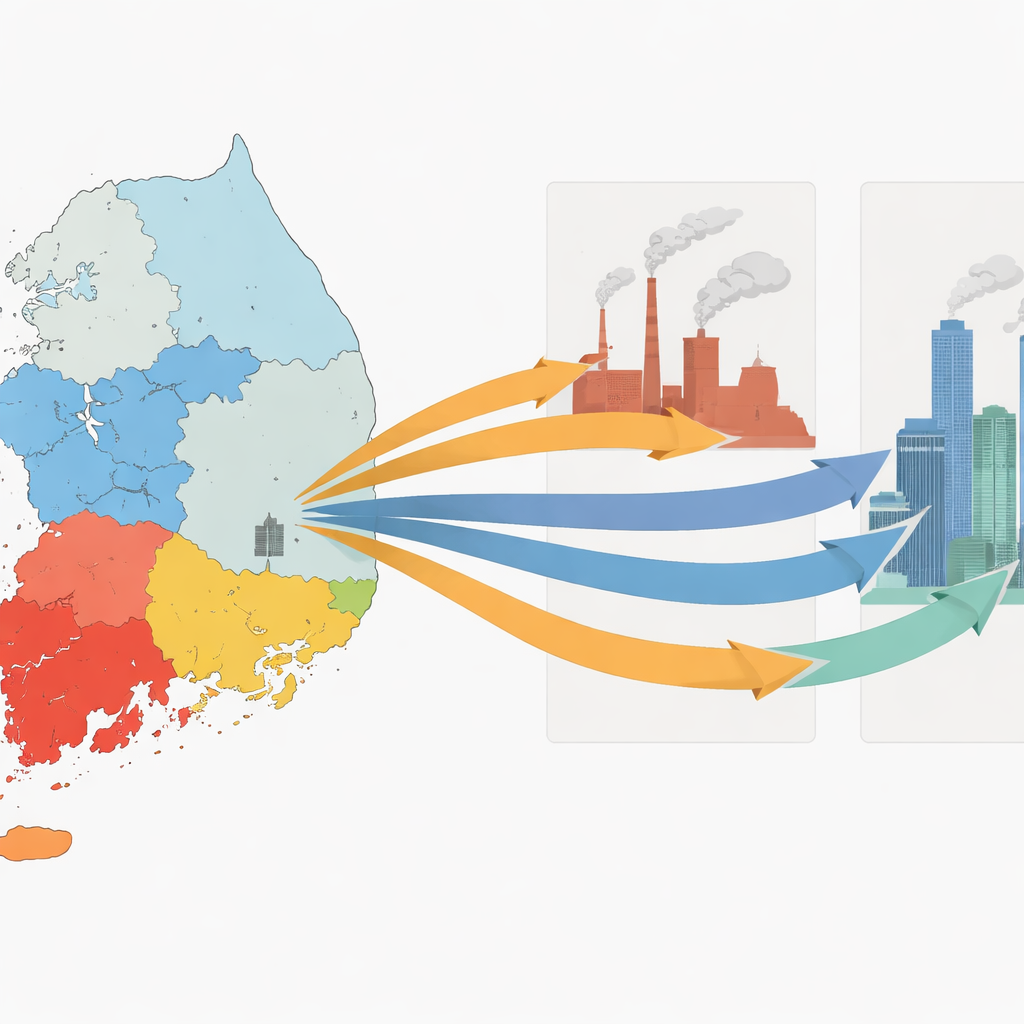
The researchers built a detailed picture of how carbon flows through South Korea’s economy by combining data on energy use, industrial production, trade between regions, and standard emission factors. Instead of stopping at the usual count of what is burned within each region, they considered three layers of emissions: those released directly from burning fuel on site; those that come from bought-in electricity and heat; and those “hidden” in the materials and services that regions buy from elsewhere, such as steel, chemicals, and transport. By threading all this information through an environmentally extended input–output model, they could follow carbon from coal mines and power plants, through factories, into buildings, roads, and consumer products across 17 regions and 35 broad sectors.
Two simple lenses on unequal climate risks
From this complex system, the authors distilled two intuitive indicators. The first, which they call carbon exposure, adds up all emissions tied to a region, no matter where they physically occur. It reflects the sheer volume of carbon that could face costs under carbon pricing, emissions trading schemes, or border tariffs. The second, responsibility mismatch, compares how much a region emits within its own borders to how much it “imports” in the form of carbon-heavy goods and services. A high mismatch means a region’s economy leans heavily on pollution that happens somewhere else, and could therefore be exposed to new disclosure rules, investor scrutiny, or reputational pressure as supply chains become more transparent.
Factory belts versus city hubs
The results show a sharp split between South Korea’s industrial heartlands and its metropolitan centers. Coastal provinces with clusters of power plants, metal smelters, and petrochemical complexes carry very large direct emissions. Their economies are built on energy- and material-intensive production, making them especially vulnerable to rising carbon prices, stricter fuel standards, and pressure to retrofit plants with cleaner technologies. At the other end of the spectrum, regions like Seoul and Gyeonggi-do look relatively clean if you count only local smokestacks. But once supply-chain emissions are included, they emerge as heavyweights: their buildings, infrastructure projects, consumer goods, and financial activities are all underpinned by carbon emitted in other regions. This means they have relatively low on-the-ground pollution but very high dependence on “outsourced” carbon.
Four types of regional futures
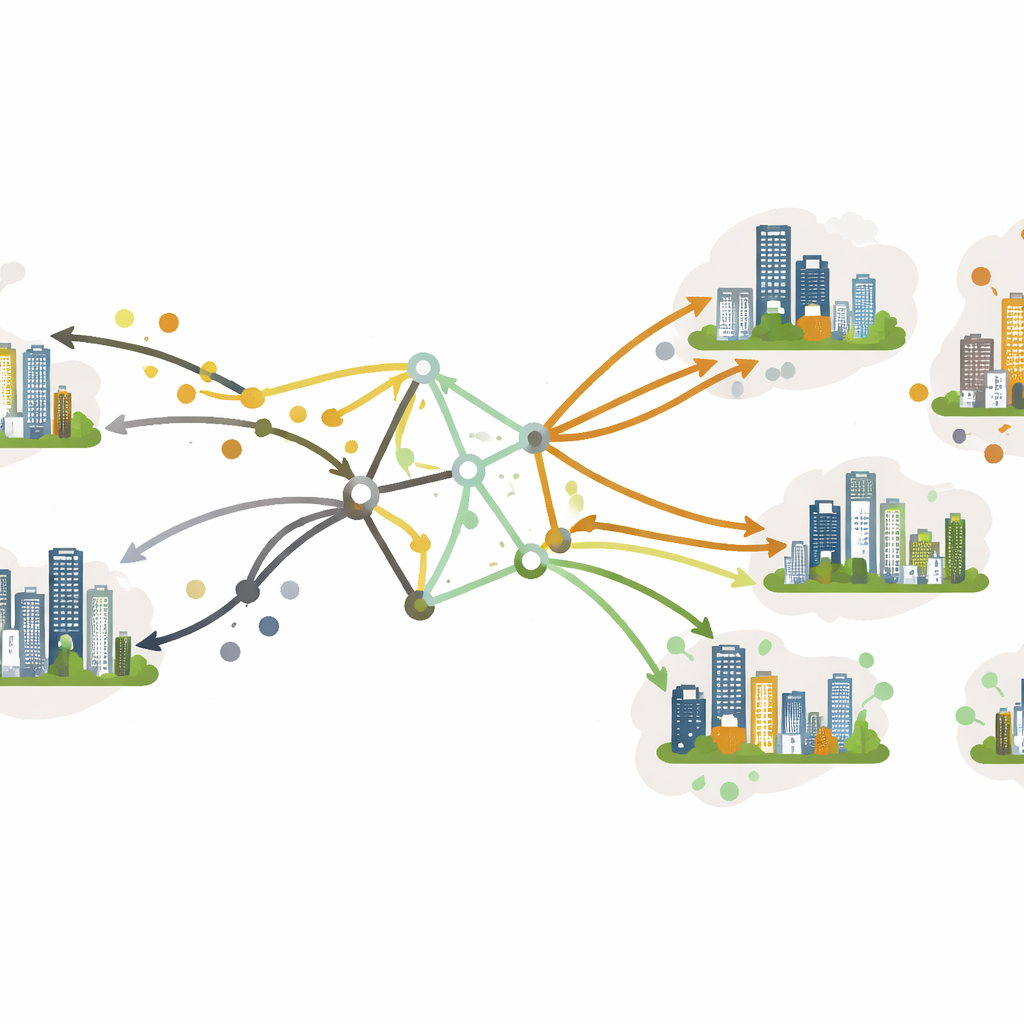
By plotting regions according to their total exposure and their responsibility mismatch, the study identifies four archetypes of transition risk. A few places, such as Sejong and Jeju, combine low emissions and modest reliance on imported carbon, and thus face relatively mild pressures. A larger group of industrial provinces sit in the high-exposure, low-mismatch corner: they produce most of the nation’s emissions locally and will feel the brunt of policies that make carbon expensive or require rapid technical upgrades. In contrast, major urban and economic hubs show high mismatch: their prosperity rests heavily on carbon-intensive supply chains, exposing them to growing demands for full value-chain reporting and greener procurement. Between these poles lie mixed-structure regions that share both kinds of vulnerability and could become testing grounds for combined industrial and supply-chain solutions.
What this means for fair climate action
In plain terms, the study concludes that climate risk in South Korea is not just about how much smoke rises from each region’s chimneys. It is also about who buys and benefits from carbon-heavy goods and services, and how those ties are revealed by new reporting rules. Industrial regions will need strong support to clean up production without losing their economic base, while big cities must take more responsibility for the hidden emissions they drive through their purchasing, planning, and investment choices. By showing where carbon is produced, where it is demanded, and how regulations travel along those links, the authors argue that climate policies should be tailored to each region’s role in the national supply chain, rather than applied with a one-size-fits-all approach.
Citation: Lim, N.O., Cho, H., Lim, S.T. et al. Uneven transition risks from multi-scope carbon flows: a nationwide regional assessment for South Korea. Sci Rep 16, 9959 (2026). https://doi.org/10.1038/s41598-026-40569-5
Keywords: carbon supply chains, regional climate risk, South Korea emissions, value-chain carbon, transition risk