Clear Sky Science · en
Digital infrared reflex testing and asynchronous teleconsultation for infant eye screening
Why checking baby eyes is so important
Clear vision in the first months of life is crucial for a child’s brain development. Some serious eye problems, such as cataracts present at birth, may not be obvious to parents but can permanently damage sight if they are not caught early. This study explores a new way for family doctors to check infants’ eyes using a digital camera that works with invisible infrared light and remote advice from eye specialists, with the goal of making high‑quality screening easier to deliver in everyday clinics.
A new kind of gentle eye check
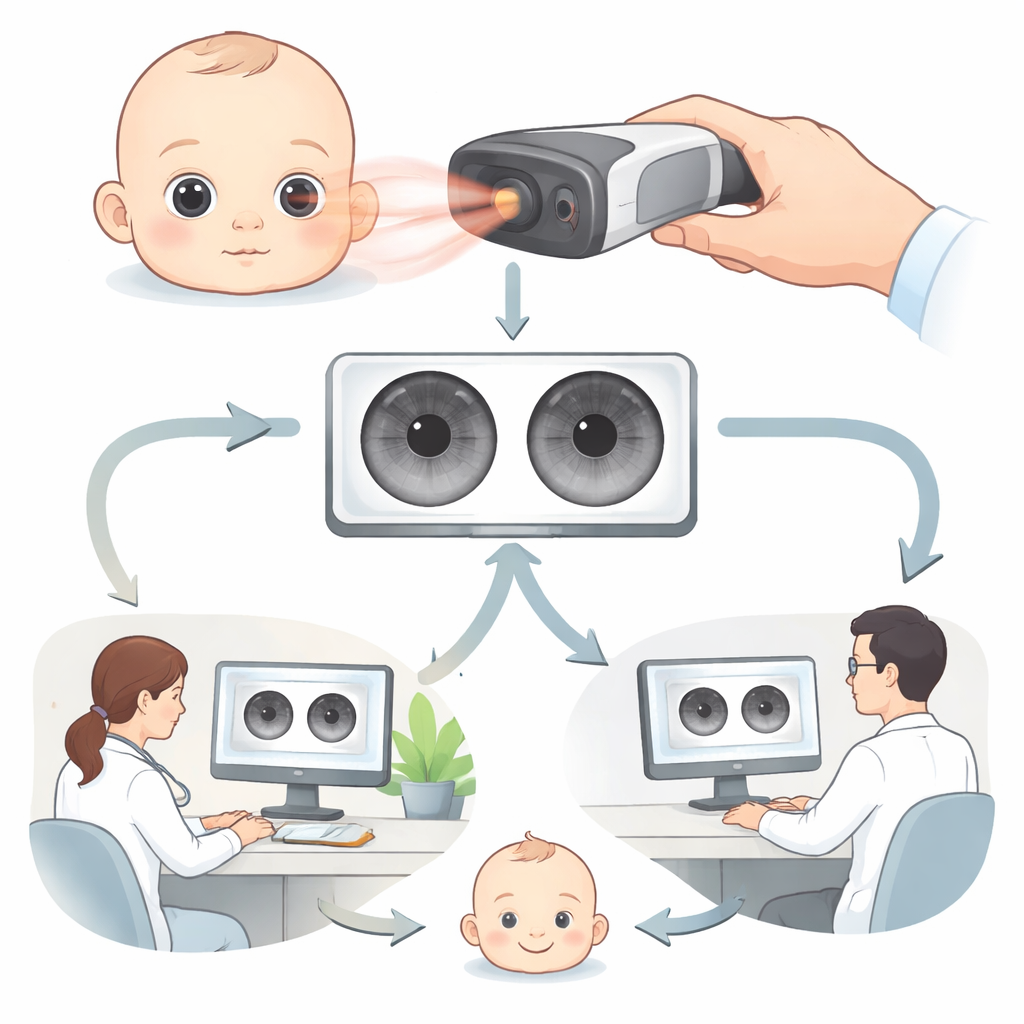
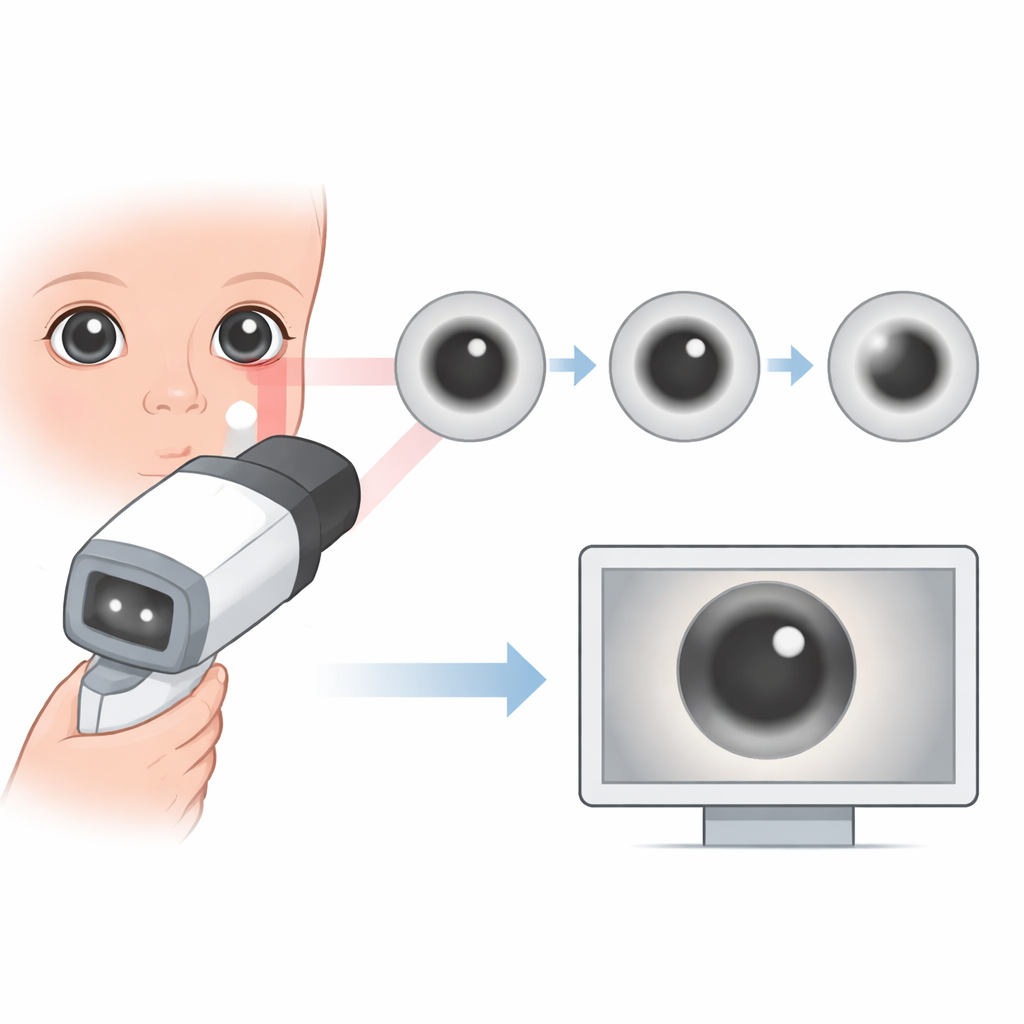
Today, most babies have their eyes checked with a handheld light called the red reflex test. It works, but it demands skill and experience, and results can be harder to interpret in wiggly infants or in children with darker eye pigmentation. The team in Trento, Italy, tested a different approach: digital infrared reflex testing (IRRT). A small portable videoscreener shines a harmless beam of near‑infrared light into both eyes from about a meter away and captures images of the light that bounces back from the retina. In a healthy eye, the pupil looks evenly gray. If something blocks the light along the way—like a cloudy lens, a corneal scar, or abnormal tissue—dark patches appear in the image, flagging a possible problem.
Bringing specialists into the visit from afar
The study was designed to see not only how well IRRT matched the traditional test, but also whether it could fit into a telemedicine system linking primary care pediatricians with pediatric eye doctors. Five community pediatricians used both methods on 189 infants aged one to six months during routine visits. They stored the infrared images as digital files inside an electronic health record. When the pediatrician was unsure or saw something unusual, they sent the images and basic clinical information through a secure teleconsultation platform. Ophthalmologists at local hospitals reviewed the images later and either reassured the pediatrician, or arranged an in‑person visit for the baby within days.
How well the new test performed
When the researchers compared the results of infrared imaging with the standard red reflex exam, the agreement was almost perfect. A statistical measure of consistency showed that the two methods very rarely disagreed, and the infrared test produced inconclusive images—blurred shots or misdirected gaze—in only about five percent of cases. Pediatricians reported that, after a moderate learning period, the handheld device was easy to operate and could usually capture a suitable image in two to three minutes. They valued having a photographic record that could be shared, revisited, and used for follow‑up decisions, something the traditional light‑only exam cannot provide. Parents, for their part, were highly accepting of the digital screening, which is quick, non‑invasive, and comfortable for infants.
What worked well and what needs improvement
Teleconsultation was technically and organizationally feasible in 84 percent of screening encounters. Pediatricians appreciated rapid specialist feedback and structured reports, but they also highlighted practical hurdles. Darkening rooms, calming moving babies, and adjusting focus could slow image capture. Entering data, saving images, and navigating the teleconsultation software added to visit time, and some clinics struggled with integration between their office computers and the health system’s platform. The device itself had limits, including modest image resolution and the need to stand relatively far from very young infants. The authors suggest design tweaks—shorter working distances, faster and sharper cameras, and additional light sources—to further improve detection, including of tumors at the back of the eye.
Looking ahead to smarter, wider screening
Overall, the study shows that digital infrared eye imaging, combined with remote specialist review, can reliably match the current standard exam while adding strong advantages in documentation and connectivity. With better training and smoother software, this model could be expanded to more pediatricians, helping to catch treatable eye conditions early even in areas with few eye doctors. Because the images are already digital, they are also well suited for future artificial‑intelligence tools that could automatically flag suspicious patterns. For families, the take‑home message is reassuring: simple, painless technology used in the pediatrician’s office may soon make it easier to protect infants’ sight when it matters most.
Citation: Racano, E., Spinelli, C., Sacco, G. et al. Digital infrared reflex testing and asynchronous teleconsultation for infant eye screening. Sci Rep 16, 10086 (2026). https://doi.org/10.1038/s41598-026-40517-3
Keywords: infant eye screening, infrared imaging, telemedicine, congenital cataract, pediatric ophthalmology