Clear Sky Science · en
Differences in gait biomechanics during level walking between chronic stroke patients with and without depression
Why Mood Might Change How We Walk After a Stroke
Many people survive a stroke but are left with subtle changes in how they walk that make daily life harder. At the same time, depression is common after stroke and is known to slow recovery. This study asks a simple but important question: does low mood actually change the way the legs work during walking, even when people seem to get around fairly well? By using precise motion-capture tools more familiar from movie studios and sports labs, the researchers looked under the surface of everyday walking to see how body mechanics differ between stroke survivors with and without depression.
Who Took Part and What the Researchers Measured
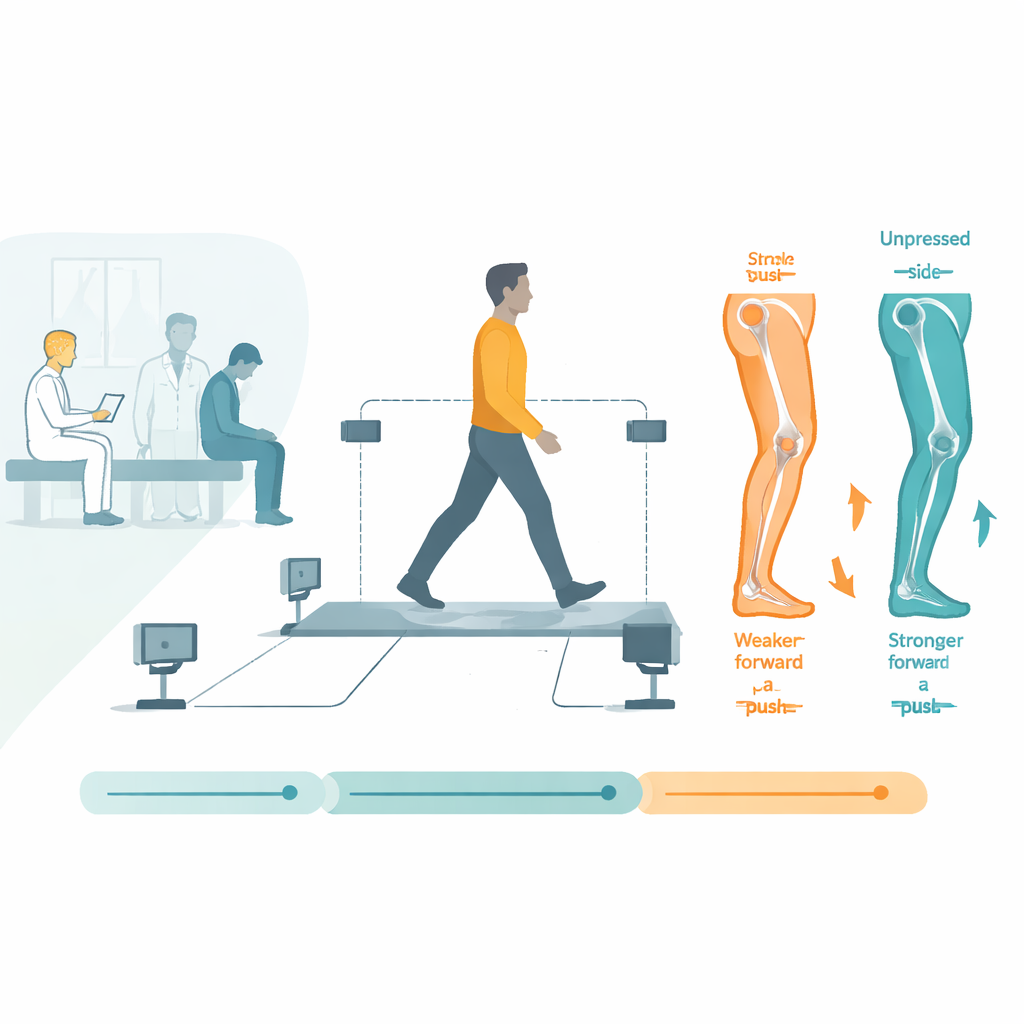
The team studied twenty people who had experienced a stroke more than six months earlier and ten healthy adults of similar age. All stroke participants could walk independently and had similar basic walking scores, so obvious disability was limited. The stroke group was split into two equal subgroups using a standard depression questionnaire and detailed clinical interviews: one with depression and one without. Everyone walked at a comfortable pace along a seven-meter walkway while an array of infrared cameras tracked reflective markers on their hips, knees, and ankles, and force plates in the floor recorded how strongly they pushed on the ground.
How the Walking Test Worked
From these recordings, the researchers calculated how much each joint bent and straightened and how much mechanical power the joints produced or absorbed during a full step. They focused on movements seen from the side, where most of the forward motion happens. For stroke survivors, the team analyzed both the affected leg and the so-called unaffected leg; for healthy volunteers, they averaged both sides, because normal walking is usually quite symmetrical. They then compared key measures, such as the maximum bend in the knee during the swing phase and the peak power generated at the hip and ankle when the body pushes forward.
What Was Different in People With Depression
The clearest difference emerged at the hip on the unaffected side. Stroke survivors with depression generated much less power at this hip joint when starting to swing the leg forward than both stroke survivors without depression and healthy adults. In fact, the non-depressed stroke group produced hip power on par with the healthy group, while the depressed group fell well behind. Statistical analyses suggested this was not a chance finding, and higher depression scores were moderately linked to lower hip power. By contrast, overall walking speed and standard clinic scores were similar between the two stroke groups, meaning this change in hip drive would likely be missed in a routine exam.
Shared Walking Problems After Stroke
Not all gait differences were tied to mood. Both stroke groups, regardless of depression, walked more slowly than healthy adults. They also bent the knee less on the unaffected side during the part of the step when the foot is in the air, and they generated less power at the ankle when pushing off the ground. These changes match what is known about stroke-related weakness and stiffness, especially around the ankle. The fact that depression did not track with these ankle and knee measures suggests that some aspects of walking remain mainly shaped by the injury to the brain and nerves, while others, like hip power on the stronger side, may be more sensitive to psychological state and motivation.
What This Means for Recovery
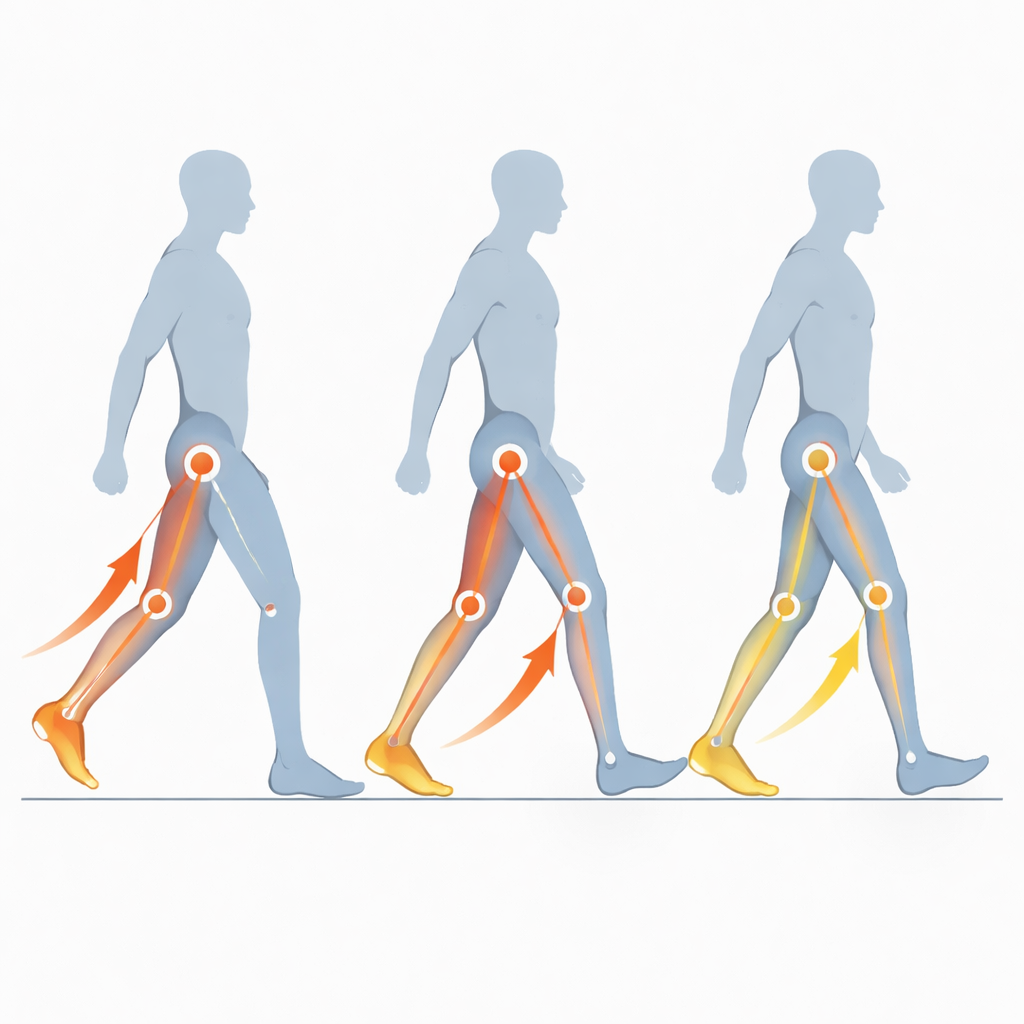
Put simply, the study suggests that feeling depressed after a stroke is linked with a weaker forward drive from the hip of the stronger leg, even in people who appear to walk fairly normally in the clinic. At the same time, both mood groups share lingering problems with knee bend and ankle push-off that reflect the lasting impact of the stroke itself. For patients and therapists, this means that measuring how joints actually move and push—rather than relying only on how far or how fast someone can walk—may reveal hidden inefficiencies. It also hints that the best rehabilitation plans in the later stages after stroke may need to combine physical training, especially for hip strength and control, with active screening and treatment for depression to support more natural and efficient walking.
Citation: Bak, SY., Chung, EH., Shin, S. et al. Differences in gait biomechanics during level walking between chronic stroke patients with and without depression. Sci Rep 16, 10019 (2026). https://doi.org/10.1038/s41598-026-40475-w
Keywords: stroke rehabilitation, gait biomechanics, post-stroke depression, walking mechanics, motion analysis