Clear Sky Science · en
In silico structural and functional characterization of high-risk missense variants in MMP8, GZMK, and OASL genes associated with epidemic viral infections
Why tiny genetic changes matter for big outbreaks
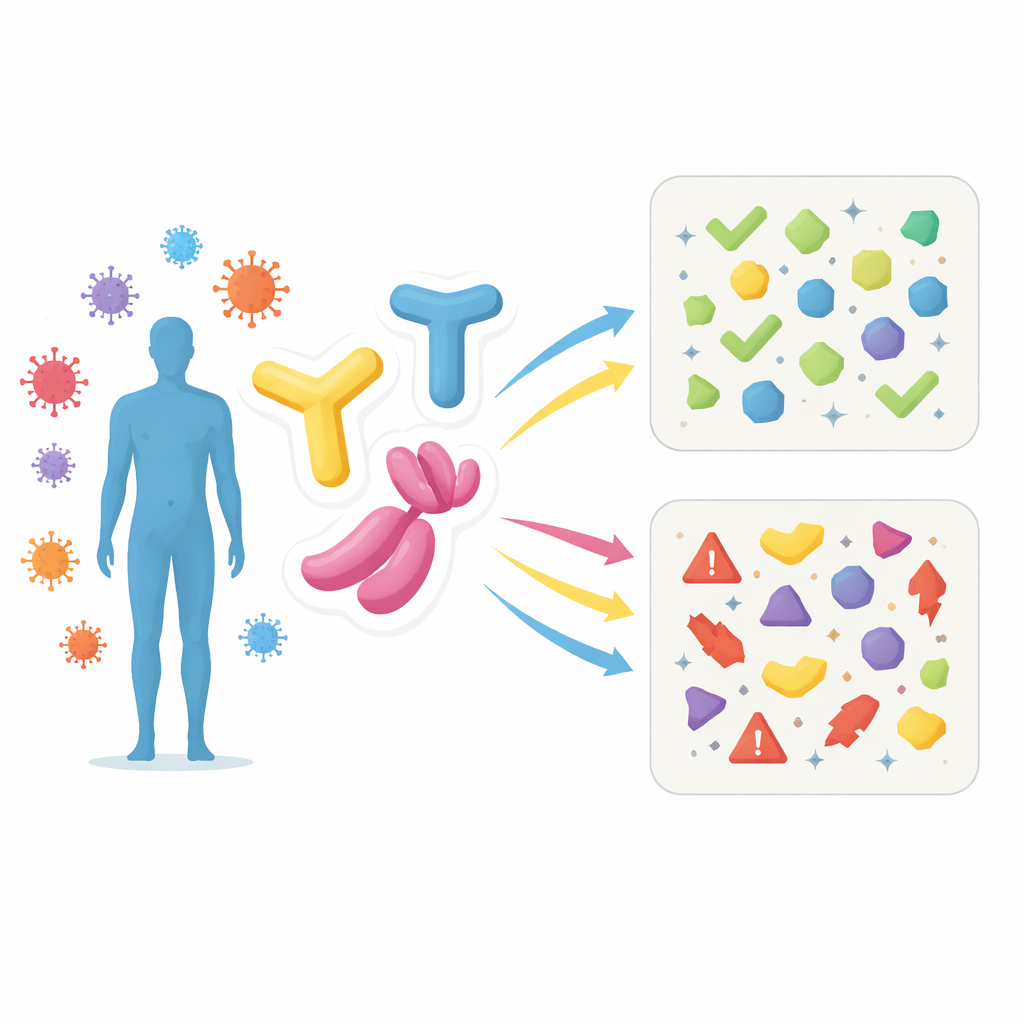
When a new virus spreads through the population, not everyone gets equally sick. Some people shrug off infection, while others develop life-threatening disease. This study asks a deceptively simple question: can small inherited changes in our immune system genes help explain these differences? By using powerful computer simulations instead of lab experiments, the researchers probe how specific genetic variants might subtly reshape key immune proteins and, in turn, alter our bodies’ response to epidemic viruses such as influenza, Ebola, or coronaviruses.
Three immune helpers under the microscope
The team focused on three human genes that earlier large-scale analyses had flagged as central players in responses to many respiratory viruses: MMP8, GZMK, and OASL. Each gene encodes a protein that helps control how we fight infection. MMP8 helps remodel damaged tissue and tune inflammation in the lungs and elsewhere. GZMK encodes granzyme K, an enzyme released by killer immune cells to attack virus-infected cells and influence inflammation. OASL produces a protein that boosts the body’s antiviral alarm system and can directly interfere with virus replication. Within these genes, the authors singled out five rare but high-risk “missense” variants—single-letter changes in DNA that swap one building block in the protein for another—because multiple prediction tools agreed they were likely harmful.
Simulating the impact of harmful variants
Rather than testing these variants in cells or animals, the researchers built digital 3D models of the normal and altered proteins and then subjected them to a battery of in silico tests. They used established algorithms to ask whether each change was predicted to damage the protein, how much it might weaken overall stability, and whether it touched parts of the protein that are highly conserved across species, a sign of functional importance. Next, they ran long molecular dynamics simulations—essentially physics-based movies at the atomic scale—to watch how each mutant protein flexed, compacted, or loosened over hundreds of nanoseconds, and how these shifts affected its interactions with a representative small-molecule partner.
Different genes, different structural fates
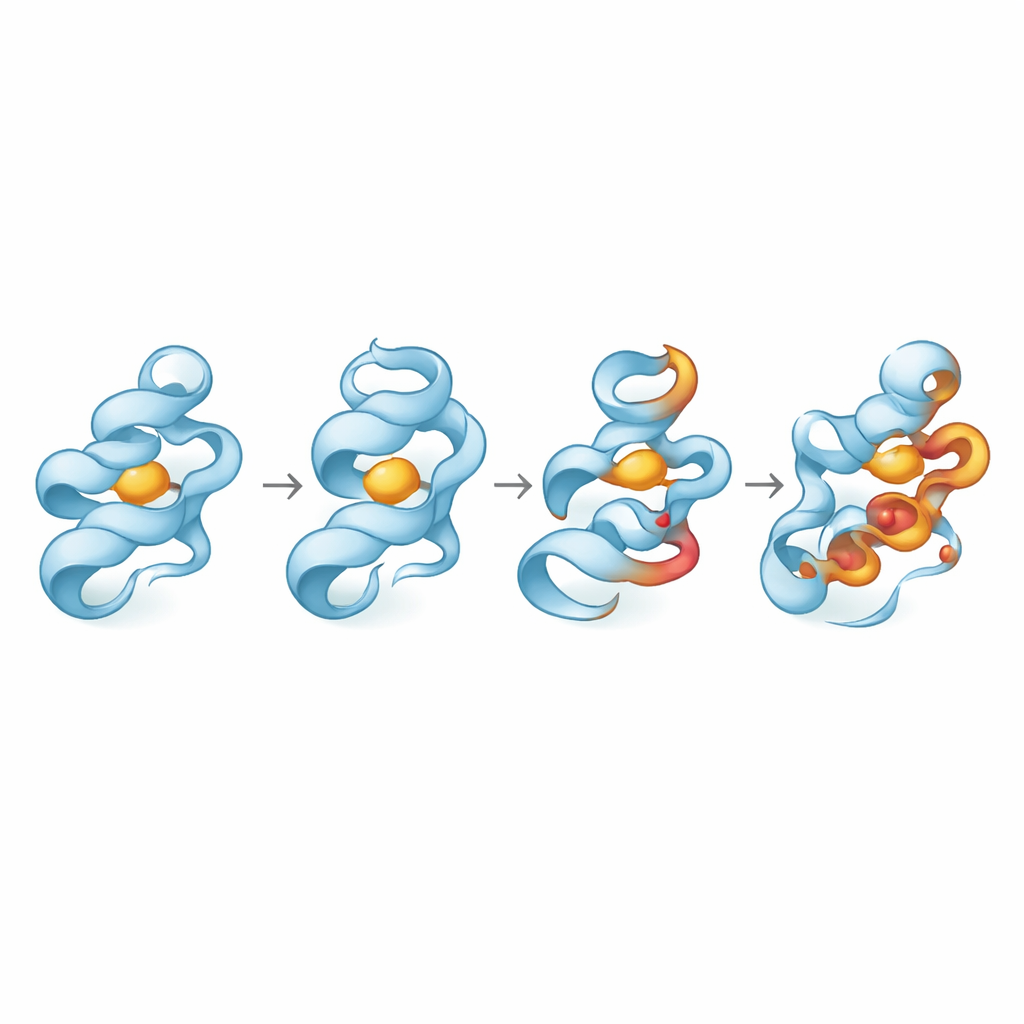
The results revealed that not all risky variants misbehave in the same way. In the MMP8 protein, one variant, D253N, caused the structure to shrink and become less exposed to surrounding water, suggesting a more compact but destabilized state that sampled a broader range of shapes. Another MMP8 variant, Y261S, kept the overall fold and dimensions close to normal and even appeared somewhat more rigid. For GZMK, the A42P change had only mild effects, but L122P clearly increased local flexibility and altered how tightly the protein packed together. In OASL, the W216C variant loosened the structure, increased surface exposure, and disrupted long-range internal motions, consistent with a relaxed, less cohesive fold. Principal component analyses, which condense complex motion into a few dominant patterns, confirmed that D253N, L122P, and W216C especially enlarged the range of conformations explored.
When binding looks fine but behavior changes
To probe whether these structural shifts might matter for function, the team docked each normal and mutant protein to a chosen small molecule and then refined these complexes with further simulations and energy calculations. All variants still managed to bind their partners, sometimes with only modest changes in predicted binding strength. Yet the way they did so often differed: contact patterns between protein and ligand shifted, and in some cases—such as MMP8 D253N—the total binding free energy became less favorable, hinting at weaker or less reliable interactions. Intriguingly, the OASL W216C variant actually showed stronger calculated binding to its test molecule despite its overall destabilization, illustrating that increased flexibility can sometimes improve grip on a partner even as it undermines other aspects of protein behavior.
What this means for future outbreaks
For a lay reader, the key message is that tiny inherited changes in our DNA can subtly reshape important immune proteins without obviously breaking them. These five variants in MMP8, GZMK, and OASL all appear to disturb the balance between stability, motion, and molecular contacts in ways that could influence how an individual responds to viral infection—by altering inflammation, cell killing, or antiviral signaling. The work does not prove that carriers of these variants fare better or worse during real epidemics; that will require careful lab and clinical studies. But by pinpointing which changes most strongly distort protein dynamics, this computational study provides a priority list of variants for experimental testing and underscores how modern simulation tools can help unravel why some people may be more vulnerable when the next virus sweeps through.
Citation: Et-tanjaouy, M., Saih, A., Machich, O. et al. In silico structural and functional characterization of high-risk missense variants in MMP8, GZMK, and OASL genes associated with epidemic viral infections. Sci Rep 16, 12973 (2026). https://doi.org/10.1038/s41598-026-40467-w
Keywords: viral infection susceptibility, immune gene variants, protein structure dynamics, computational immunology, missense mutation