Clear Sky Science · en
Democratic governance through DAO-based deliberation and voting for inclusive decision making in AI models
Why this matters for everyday technology users
When we ask an AI to draw a picture or answer a question, we rarely see who decided how that system should behave. This paper explores a new way to give ordinary people—especially those who are usually left out—a real say in how AI models are designed and updated. Instead of tech companies making all the rules behind closed doors, the authors test a democratic, blockchain-based system that lets diverse communities debate, vote, and directly shape how AI handles sensitive issues like stereotypes in images.
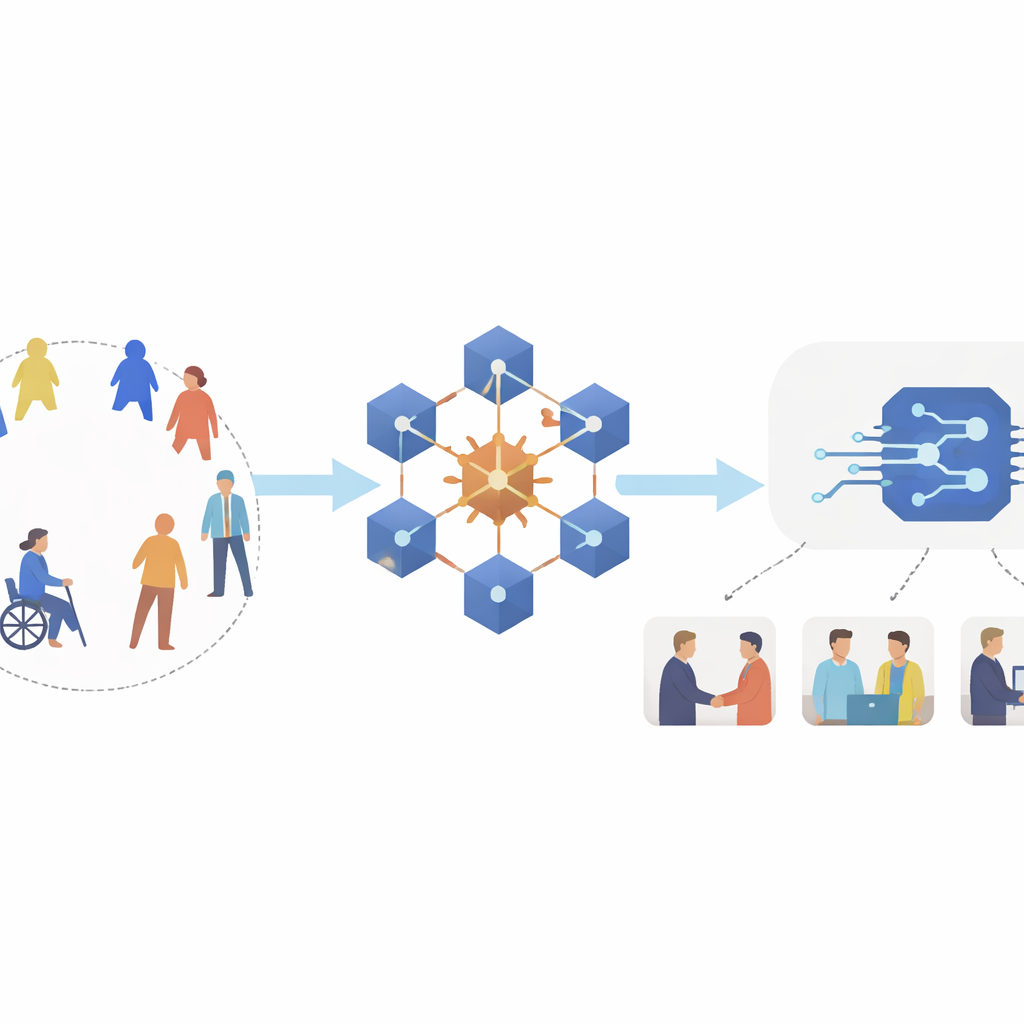
Problems with hidden decisions in AI
Modern AI systems are built from huge datasets and complex code, yet the decision-making around them is often opaque. That lack of transparency has led to discrimination, misrepresentation, and even violations of privacy or intellectual property. The harms are not evenly distributed: people with disabilities and communities in the Global South are often both early users of AI and the ones most affected when it goes wrong. Traditional tools for listening to the public—such as surveys and focus groups—struggle to keep up with fast-moving AI and do not easily support deep discussion, consensus-building, or ongoing input.
A new kind of digital town hall
The authors propose using Decentralized Autonomous Organizations, or DAOs, as a kind of digital town hall for AI governance. DAOs are blockchain-based systems that let people make collective decisions using transparent rules and smart contracts instead of a central authority. In this study, the DAO structure supports a multi-step process: people first talk through value-laden questions in natural language, then see concrete choices for how an AI model could behave, and finally vote on which options they prefer. The case study focuses on a familiar problem—gender bias in text-to-image models, such as always drawing a nurse as a woman and a chief executive as a man when given a neutral prompt.
How the study was run with underrepresented groups
To see if this democratic framework could work in practice, the researchers ran an online experiment with 177 participants drawn from two underserved groups: people from the Global South and blind or visually impaired users in the United States. Participants first interacted with an AI assistant about a biased image scenario, then discussed with other people in an online forum, and finally voted on proposals for changing the text-to-image model’s behavior. The team compared four governance setups, varying both how preferences were combined (a simple ranked method versus a quadratic method that lets people express stronger feelings by investing more of their voting “budget”) and how much decision power each person had (equal for everyone versus a skewed 20/80 split).
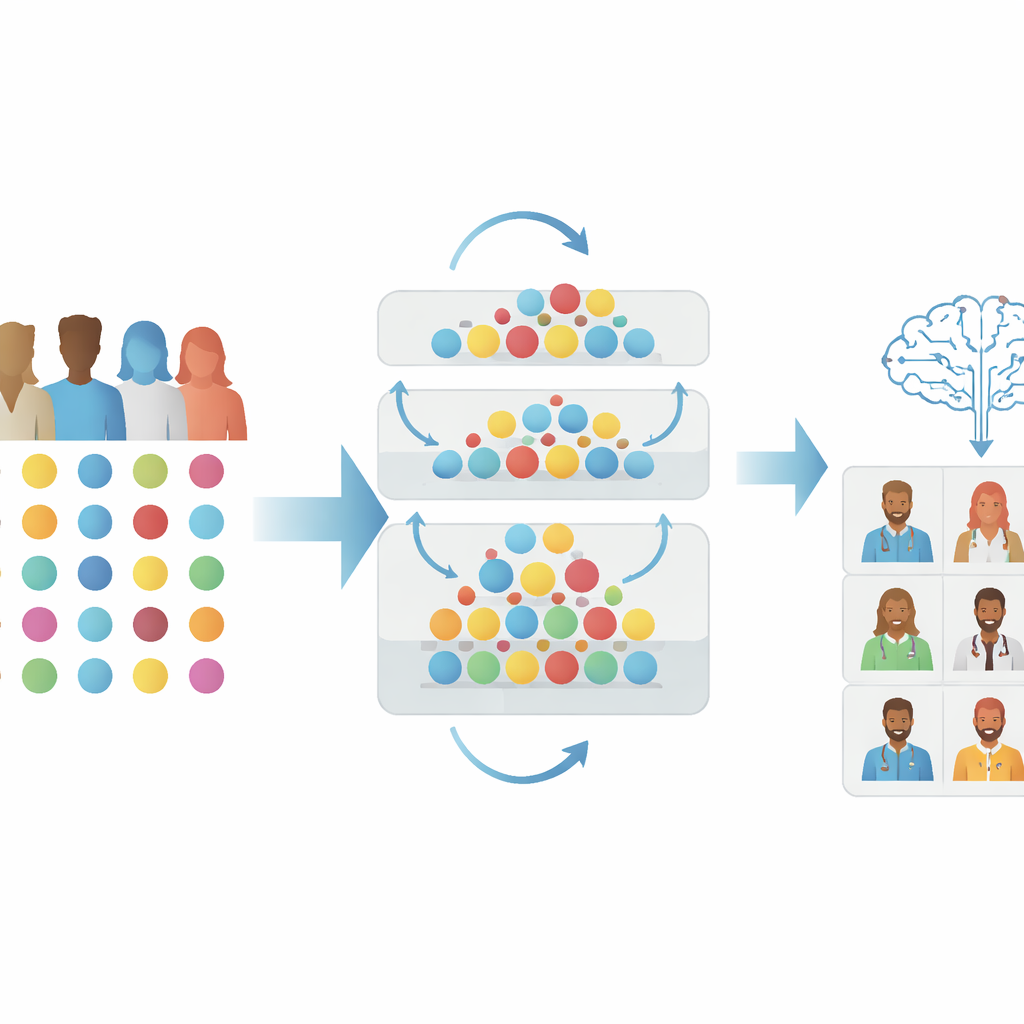
What people wanted from fairer image generation
Despite cultural differences, participants converged on several shared expectations for fairer AI images. Many wanted more user control, such as options to customize the gender or other visible traits, or to receive several different images and then choose the one that fit their needs. They cared about both social appropriateness and statistical accuracy: some accepted that most nurses are women in their local context, while others stressed the need to avoid reinforcing stereotypes. Participants from the Global South often favored a “middle ground,” with enough diversity not to confuse users, while many U.S. participants were less tolerant of biased or ambiguous outputs. Across groups, people with disabilities highlighted the importance of inclusive representation and the risks of narrow or idealized images.
Which voting systems felt most democratic
Participants generally reported that the process felt enjoyable, meaningful, and trustworthy, and that they believed their input would be used to improve the AI model. The combination that stood out as fairest was quadratic voting paired with equal decision power for everyone. In this setup, people felt their voice was better reflected, that political equality was higher, and that the process maintained order while remaining inclusive. This method seemed to amplify strongly held views from minorities without simply giving extra influence to those with more resources. At the same time, the authors caution that such mechanisms may over-represent smaller groups in some contexts, so future systems will need to tune governance settings to particular topics and communities.
What this means for the future of AI rules
The study shows that it is possible to move beyond top-down company policies and toward democratic, computational governance of AI. By combining structured discussion, transparent voting rules, and blockchain-backed decision records, DAO-based systems can give marginalized groups a credible way to shape how AI behaves. For everyday users, this could eventually look like in-product features that allow people to challenge specific outputs, join deliberations, and vote on model changes. The authors argue that such participatory frameworks—carefully designed to protect privacy and prevent power grabs—are a promising path to align AI with a wider range of human values, rather than just those of developers and executives.
Citation: Sharma, T., Potter, Y., Park, J. et al. Democratic governance through DAO-based deliberation and voting for inclusive decision making in AI models. Sci Rep 16, 11792 (2026). https://doi.org/10.1038/s41598-026-40180-8
Keywords: AI governance, democratic voting, algorithmic bias, decentralized organizations, text-to-image models