Clear Sky Science · en
Effects of repeated freeze and thaw cycles on the stability of faecal microbiome composition
Why frozen poop matters for health research
Large health studies around the world are stockpiling frozen stool samples to understand how gut bacteria influence everything from obesity to cancer. But many of these precious samples are thawed and refrozen as new questions arise and new technologies appear. This study asks a practical but crucial question: how many times can you safely freeze and thaw a stool sample before the picture of the gut microbiome starts to blur?
How gut samples are really handled in the lab
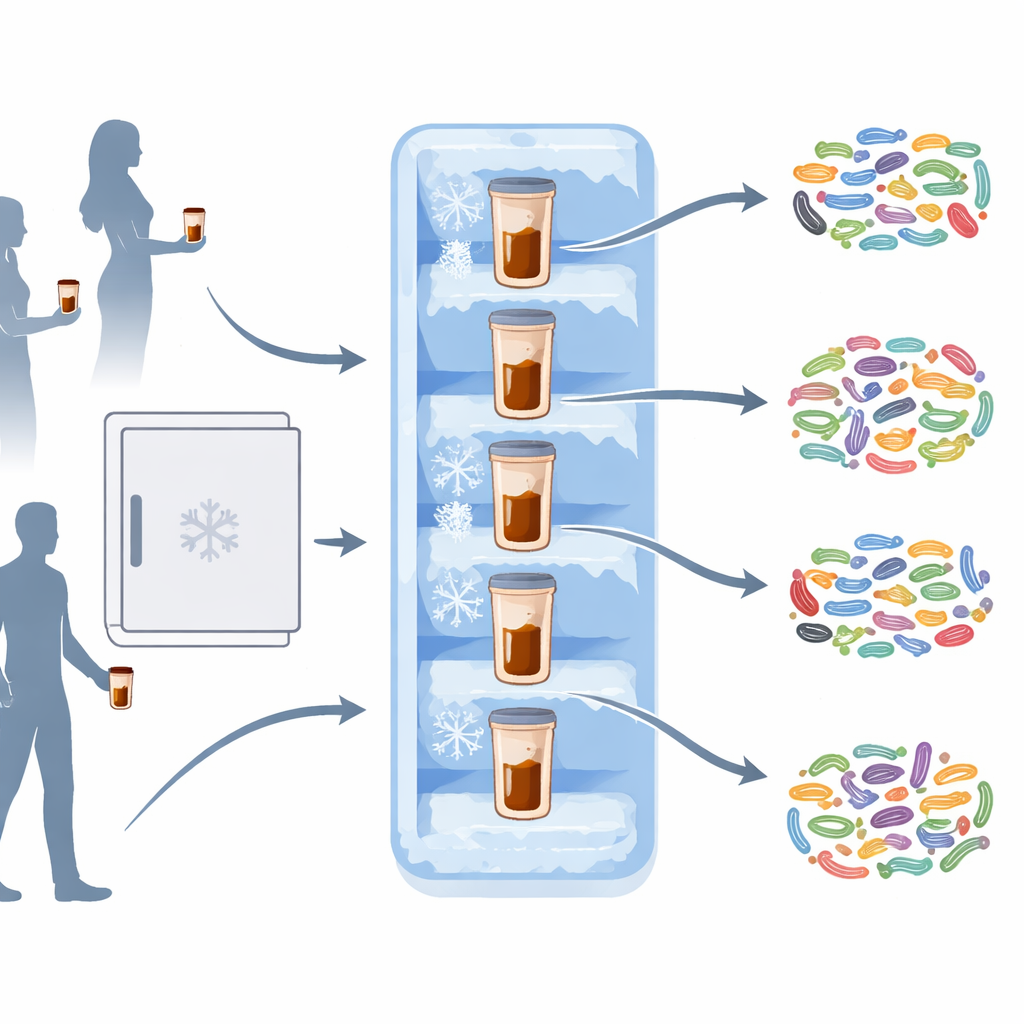
In an ideal world, scientists would analyze stool immediately after it is produced. In reality, people collect samples at home, store them briefly in the fridge, and then send them to a lab, where they are frozen for long-term storage. When researchers later want to run new tests, they must thaw the sample, take a small portion, and freeze the rest again. Each freeze–thaw round could damage bacterial cells and their DNA, potentially giving a distorted view of which microbes are present. Past studies offered mixed messages and often used small animals, infants, or older laboratory methods that do not fully match today’s large human studies.
Putting repeated freezing to the test
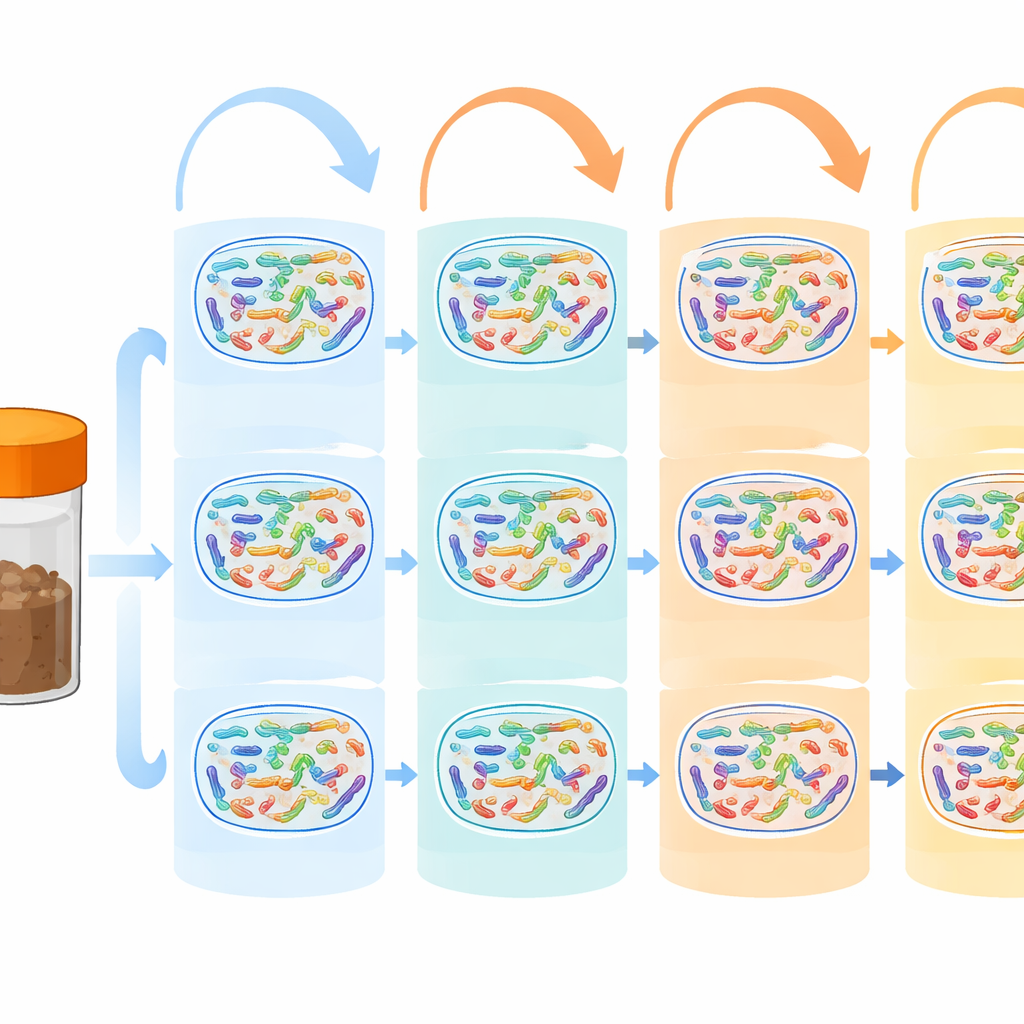
The researchers recruited five healthy adults, aged 25 to 50, who had no recent gut problems or antibiotic use. Each person provided a stool sample that was carefully mixed and split. One portion was processed immediately to capture the “fresh” microbiome. The rest was frozen at very low temperature. Every few days, the frozen vial was slowly warmed just enough to chip off a small piece for DNA extraction, then returned to deep freeze. This was repeated six times per person. The team then sequenced bacterial DNA from each time point, using a common gene-based method that identifies which groups of microbes are present and how abundant they are.
Microbial diversity stays surprisingly steady
Across the six freeze–thaw rounds, the overall richness and balance of gut microbes in each sample changed very little. Measures of diversity within each sample, and differences between samples, stayed stable. When the researchers used statistical tools to visualize patterns across all samples, the main factor that separated them was not how many times they were frozen, but which person they came from. In other words, your personal microbial fingerprint remained far more important than any freezing history. DNA yield did drop after the first freeze, but then stayed steady, suggesting that the amount of usable genetic material was still sufficient for reliable analysis.
Small shifts emerge only after many cycles
Looking more closely at individual groups of bacteria, the team checked whether specific types rose or fell with repeated freezing. A very cautious analytical method detected no meaningful changes at all, even after six cycles. A more sensitive method did pick up modest shifts in a small fraction of bacterial groups. These changes appeared mainly after four or more cycles, and were most obvious in one broad group of gut bacteria that are known to be relatively fragile. Some other groups seemed to increase slightly over time. However, because these signals did not appear consistently across all methods, the authors caution that at least some of these apparent shifts may be false alarms rather than true biological effects.
What this means for stored stool collections
For people designing or reusing large microbiome studies, the message is reassuring. When stool samples from healthy adults are slowly thawed and quickly refrozen, the overall picture of the gut microbiome remains highly reproducible through at least three freeze–thaw cycles. Personal differences between individuals dominate over any freezing effects. After about four cycles, subtle changes in some bacterial groups may creep in, so heavy reuse of the same vial could gradually reduce accuracy. Overall, the study supports safely reanalyzing samples that have been thawed once or a few times, opening the door to getting much more scientific value from existing frozen collections without having to recruit new volunteers for every new question.
Citation: Sangermani, M., Desiati, I., Quattrini, N. et al. Effects of repeated freeze and thaw cycles on the stability of faecal microbiome composition. Sci Rep 16, 9880 (2026). https://doi.org/10.1038/s41598-026-39939-w
Keywords: gut microbiome, stool samples, sample storage, freeze thaw cycles, microbiome sequencing