Clear Sky Science · en
Non-albumin proteinuria is associated with all-cause mortality in community-dwelling adults
Why urine tests can say more than we thought
Most of us think of urine tests as routine checks our doctors order and then quickly move on from. But beyond looking for sugar or infection, these tests can carry early warnings about our kidneys and our overall survival. This study from Japan asks a simple but powerful question: can a little‑known type of urinary protein, usually ignored in everyday checkups, quietly signal who is at higher risk of dying in the coming years—even among people living at home and not in the hospital?
Looking beyond the usual kidney warning sign
Doctors often focus on one key signal in urine: albumin, a common blood protein that should mostly stay inside the body rather than leak into urine. When albumin appears in urine, it points to kidney damage and higher risk of heart disease and early death. Yet urine carries many other proteins besides albumin. The researchers called this bundle of “other” proteins non‑albumin proteinuria, or NAP. Because these proteins often come from the kidney’s tubules—the tiny channels that process waste—NAP may reveal damage in parts of the kidney that albumin does not fully capture. Earlier work in hospital patients hinted that higher NAP meant higher death risk, but no one had tested this idea in large groups of ordinary adults living in the community.
A long-term look at thousands of neighbors
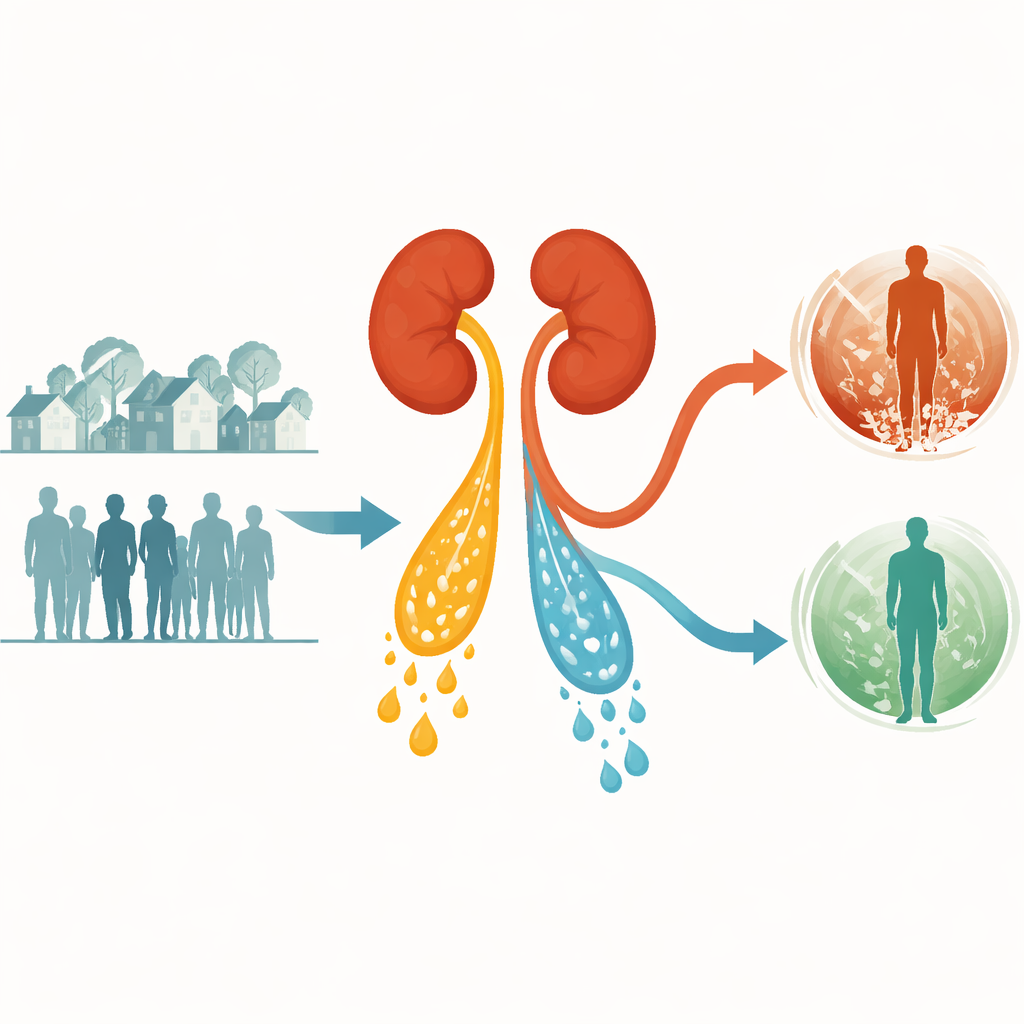
The team drew on the Uonuma Cohort Study, a large health project in two cities in Niigata Prefecture, Japan. They analyzed 6,601 men and women aged 40 and older who took part in government health checkups between 2012 and 2015. From spot urine samples, they measured albumin relative to creatinine (a standard way to adjust for urine concentration) and total protein relative to creatinine. NAP was then calculated as the difference between total protein and albumin. Participants also answered questions about smoking, alcohol use, exercise habits, and medical history, and had their blood pressure, blood sugar, and kidney filtration rate measured. The researchers then followed these individuals for a median of 11.2 years, tracking who died and, when possible, from what causes.
More "other" proteins, higher chance of dying
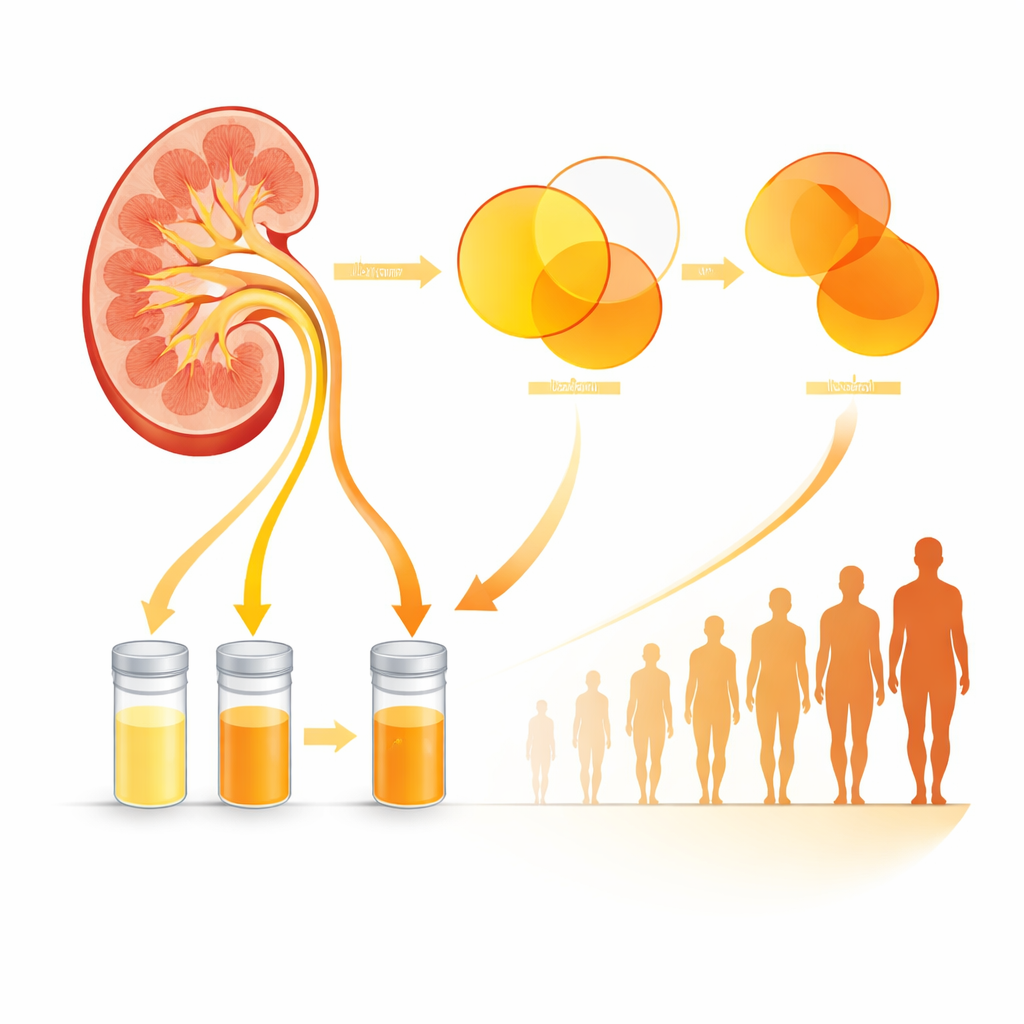
Over the follow‑up period, 1,182 participants died. Using statistical models that accounted for age, sex, lifestyle, blood pressure, diabetes, prior heart disease, and kidney function, the investigators found a clear pattern: higher NAP was linked to a higher risk of death from any cause. Each time NAP level doubled, the risk of dying rose by about 16 percent before adjusting for albumin and remained about 12 percent higher even after albumin levels were taken into account. People with both moderately raised albumin and very high NAP had the greatest risk, more than double that of those with low levels of both. In contrast, a related measure that compares albumin to total protein did not show an independent link with death once albumin was considered, underscoring that the non‑albumin part of the protein mix carries distinct information.
Heart-related deaths stand out
When the researchers looked at causes of death, NAP was associated with deaths from cardiovascular disease, such as heart attacks and strokes, but not clearly with cancer deaths. Even after removing participants who already had heart disease at the start, higher NAP still tended to go hand in hand with more cardiovascular deaths, though the estimates became less precise. Subgroup analyses suggested that people with diabetes and high NAP may be especially vulnerable; in this group, NAP predicted death risk more strongly than albumin did. This is striking because modern diabetes care often focuses on lowering albumin in urine, which may blunt albumin’s usefulness as a warning sign while leaving NAP as a more sensitive signal of ongoing damage.
What this could mean for everyday checkups
For patients and clinicians, the study suggests that routinely considering NAP could sharpen risk assessment at very little extra cost. Because NAP can be calculated from two tests already used in many clinics—urine albumin and urine total protein—it does not require high‑tech equipment or special markers. In this Japanese community, relying on albumin alone would have missed some of the people at highest risk. While the study has limits—it measured urine only once, relied on self‑reported medical history, and was confined to one region and ethnicity—it offers an important message: proteins beyond albumin in our urine may quietly reflect kidney stress and blood vessel injury that raise our chances of dying, especially from heart disease. In plain terms, what our kidneys leak into the toilet bowl today may carry clues about how long and how well we live tomorrow.
Citation: Kabasawa, K., Hosojima, M., Ito, Y. et al. Non-albumin proteinuria is associated with all-cause mortality in community-dwelling adults. Sci Rep 16, 12323 (2026). https://doi.org/10.1038/s41598-026-39833-5
Keywords: kidney health, urine proteins, cardiovascular risk, chronic kidney disease, community cohort study