Clear Sky Science · en
Bioaccumulation of toxic and essential elements and enzymatic responses in native fish from the middle Tocantins River
Why this river and its fish matter to you
Along the middle Tocantins River in Brazil, families depend on the water and its fish for food, work, and daily life. This study asks a deceptively simple question with wide-reaching implications: when metals and other elements from farms, towns, and industry enter the river, how much ends up inside the fish people eat—and what does that mean for their health? By examining two common local fish and measuring both chemical buildup and subtle signs of stress in their bodies, the researchers connect the dots from pollution to dinner plate.
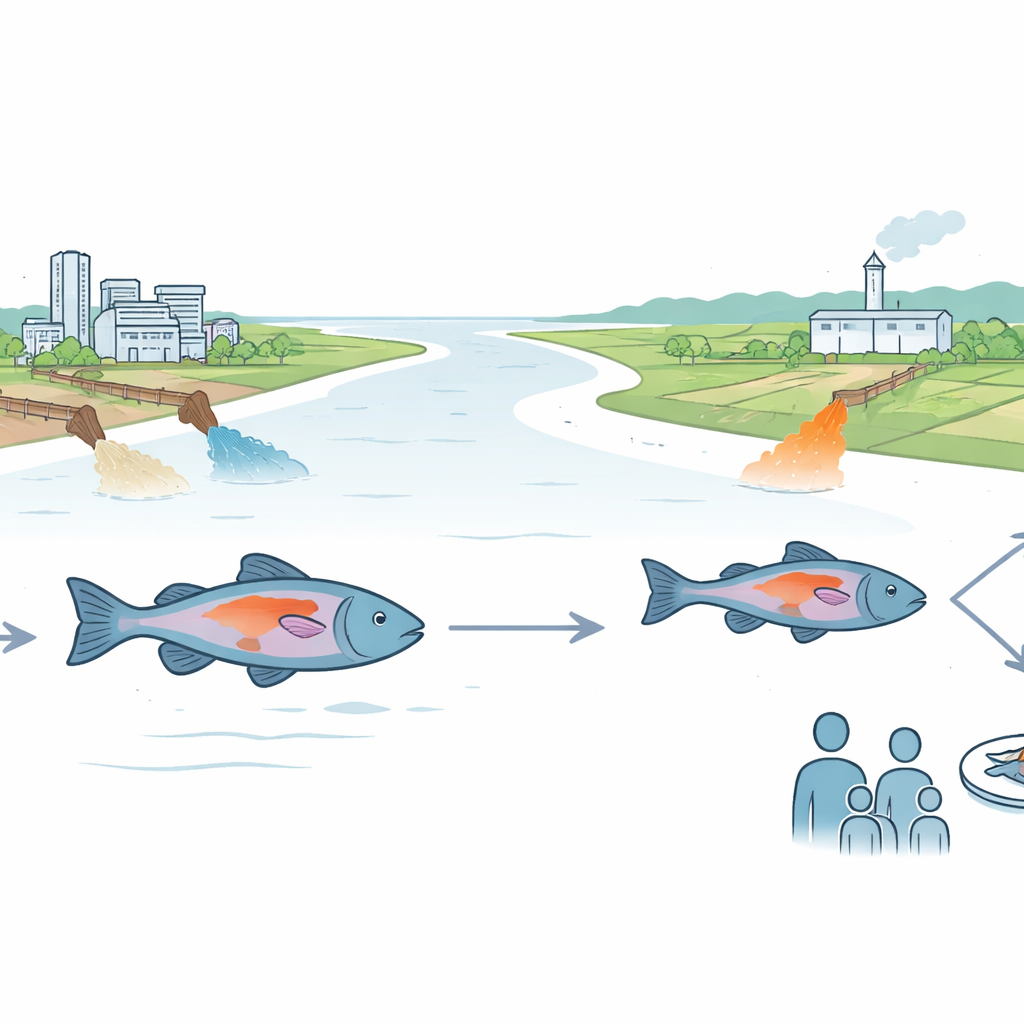
A river under growing pressure
The Tocantins River lies in a transition zone between Brazil’s savanna and the Amazon forest, an area where agribusiness, pulp and paper mills, aquaculture, and expanding cities all converge. Wastewater, farm runoff, and industrial discharges carry a mix of substances into the river, including well-known toxic metals such as arsenic and lead, as well as essential nutrients like iron and selenium that can become harmful at high levels. Local riverine communities use the river for bathing, drinking in some cases, and small-scale fishing, so any change in water quality quickly becomes a human issue, not just an environmental one.
Two everyday fish as living gauges
To turn this concern into measurable evidence, the team focused on two native fish that are widely eaten: branquinha (Psectrogaster amazonica), abundant near an urban riverside area, and branquinha-cascuda (Caenotropus labyrhinthicus), common near a more rural river beach. They collected 15 individuals of each species and measured metals and other elements in the muscle (the part people eat) and in the liver, a key organ for processing contaminants. They also tested several enzymes in the fish—natural chemical workers involved in nerve function and liver health—to see whether the animals’ bodies were reacting to the elements they had accumulated.
Hidden buildup inside healthy-looking fish
On the surface, the fish seemed to be in good condition: their size and weight suggested they were growing normally. Inside, however, the story was different. In the urban-zone fish, arsenic in muscle exceeded national and international safety limits by up to about two and a half times, and lead in the liver surpassed some guidelines by nearly twentyfold. Selenium, an element that humans and fish actually need in small amounts, reached extreme levels—more than thirty times the recommended limit in muscle and over forty-five times in liver. In the rural-zone fish, lead and zinc were not detected, but arsenic and especially selenium in the edible muscle were again far above safety thresholds, showing that even less-urbanized stretches of the river are not free from concern.
From river water to people’s plates
By comparing concentrations in water with those in fish, the researchers showed that some elements moderately build up in fish tissues over time. More importantly, they estimated how much of each element a person might ingest by eating typical amounts of local fish. For adults, most metals stayed below international daily safety limits, but arsenic and selenium stood out as potential problems, especially for people in the Amazon region who eat fish almost every day. For children, the risk was sharper: under high-consumption habits common in river communities, arsenic intake could be roughly seven times higher than the level considered safe. Enzyme tests supported the chemical findings. Changes in enzymes related to nerve activity and liver function indicated that the metals were not just present but biologically active, pushing the fish into a state of chronic, though not yet fatal, stress.
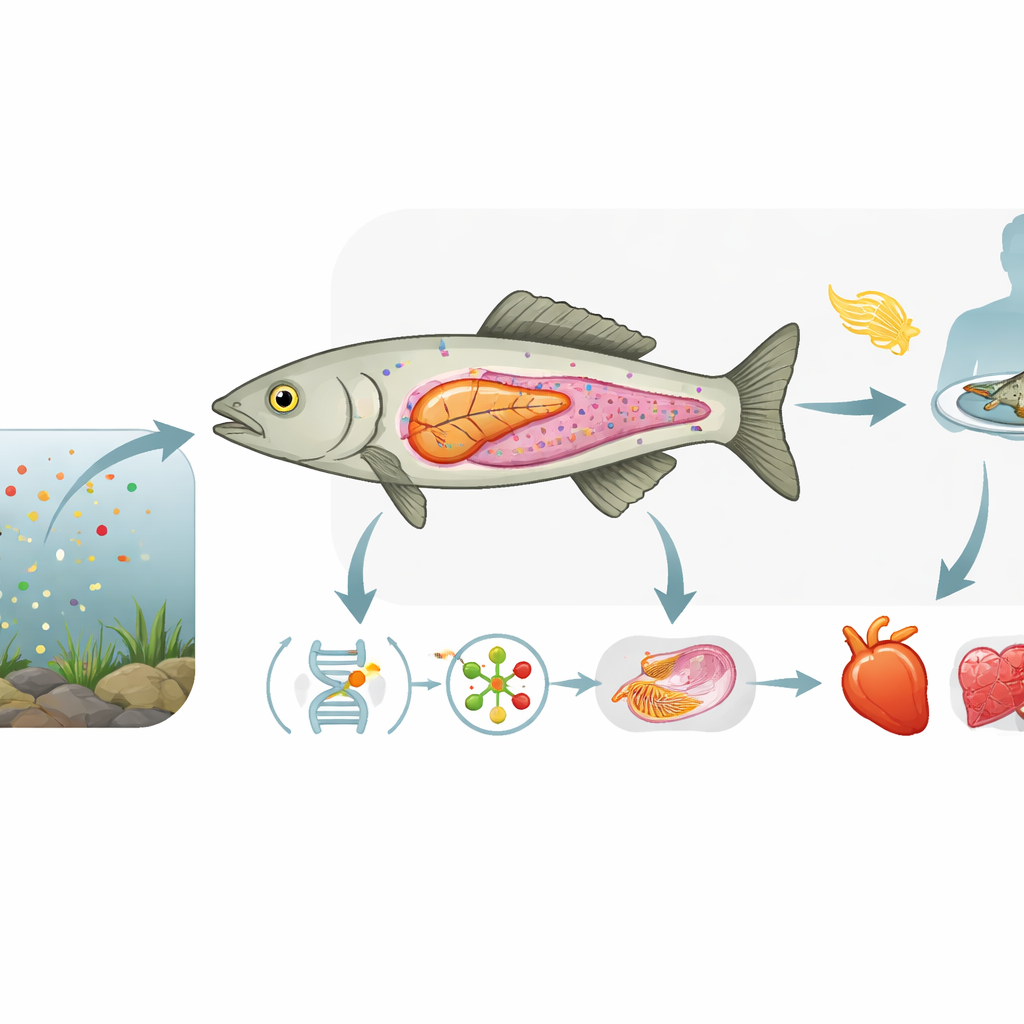
What this means for families along the river
The study’s message is clear in everyday terms: fish from this part of the Tocantins River can carry enough arsenic and selenium to pose a long-term health concern, especially for children who eat a lot of local fish. The fish themselves may look healthy, but their tissues and enzymes reveal ongoing exposure to a mixture of contaminants from both urban and rural sources. By tying together water quality, fish health, and human diet, the work shows how protecting the river is directly tied to protecting the well-being and food security of the communities that depend on it. The authors call for regular monitoring, better sanitation and pollution control, and fish consumption advice tailored to vulnerable groups, so that people can continue to rely on the river’s fish without silently accumulating toxic elements over a lifetime.
Citation: da Silva Acioly, T.M., Iannacone, J., da Silva Araújo, K.S. et al. Bioaccumulation of toxic and essential elements and enzymatic responses in native fish from the middle Tocantins River. Sci Rep 16, 12569 (2026). https://doi.org/10.1038/s41598-026-39611-3
Keywords: fish contamination, arsenic in food, Amazon rivers, food safety, metal bioaccumulation