Clear Sky Science · en
Exploring factors associated with psychiatric hospitalization for persons living with family
Why this research matters for everyday families
When a loved one is in severe mental distress, families often find themselves making agonizing decisions about hospital care, sometimes even against that person’s will. This study looks closely at people in Thessaloniki, Greece, who live with their families and are admitted to psychiatric hospital wards. By examining who they live with, their social and financial situation, and their contact with services, the researchers reveal patterns that help explain when and why hospital stays — especially involuntary ones — happen, and what could be done to prevent them.
Different kinds of families, different life stories
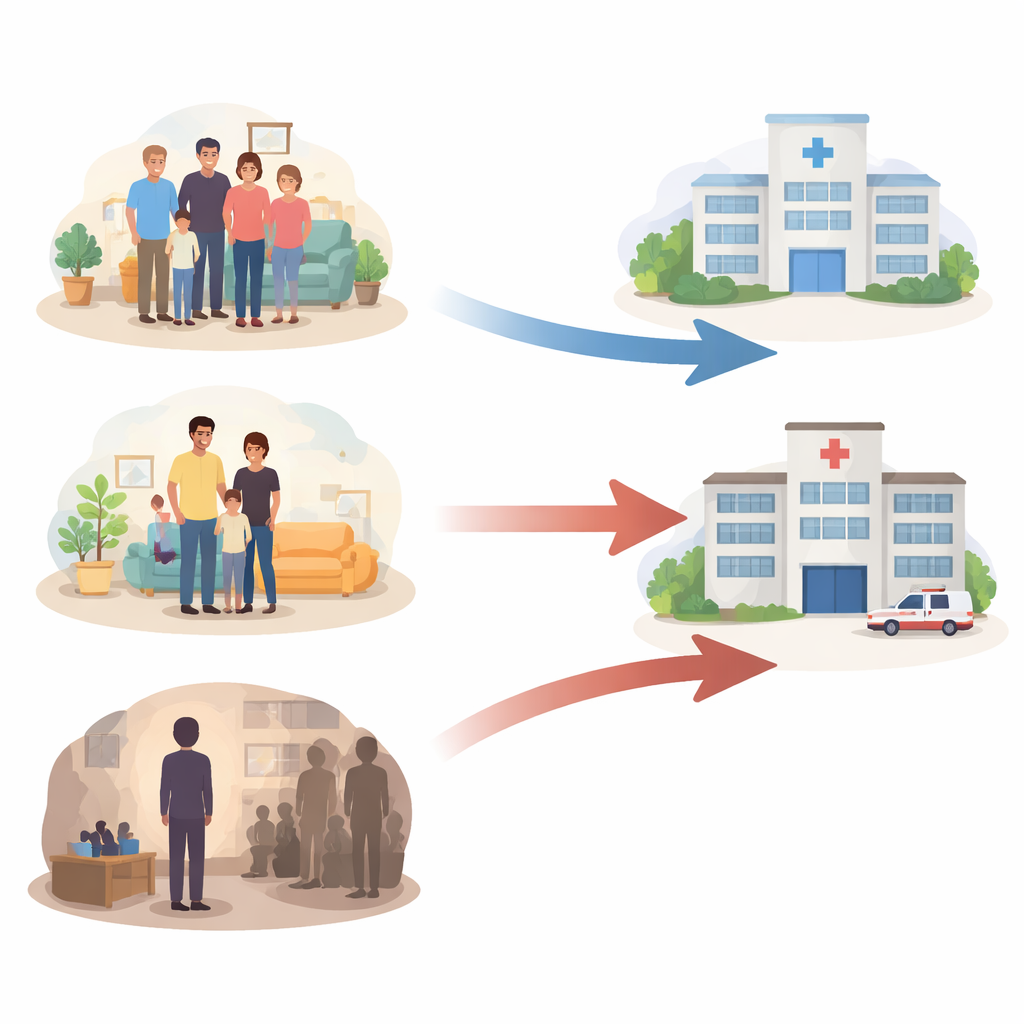
The researchers focused on 514 adults who lived with family members and had been admitted to public psychiatric units over one year. Using a technique that groups people with similar characteristics, they identified three main “profiles.” One group consisted mainly of younger men with long‑standing psychotic disorders who still lived with their parents. A second group comprised mostly older adults, living with partners and children, who had recently developed depression. The third group included mainly women living in families with very low income and long‑term mental health problems. These profiles show that “living with family” can mean very different things in practice.
When strong family ties do not prevent coercion
The first profile, almost half the sample, paints a picture of younger men with schizophrenia‑spectrum disorders who have been unwell for several years and live with their family of origin. They report good social support and little loneliness, suggesting that their parents are closely involved and caring. Yet this is the group most likely to be admitted involuntarily. Many had not been regularly seeing mental health professionals or taking medication before the crisis that led to hospitalization. In a system where families are legally responsible for initiating most involuntary admissions, these parents often turn to hospital care as the only way to ensure treatment when symptoms suddenly worsen.
Supportive homes in later life
The second profile covers about a quarter of the sample and centers on older adults living with the families they have created — typically partners and children. These people usually have no long history of mental illness; they are admitted after a relatively recent onset of depression and show only moderate disruption in daily functioning. They report high satisfaction with life, their living environment, and the support they receive at home. For this group, admission is just as likely to be voluntary as involuntary, suggesting that strong, stable family relationships may help people seek help earlier and leave more room for shared decision‑making about hospital care.
Hidden strain in families facing poverty
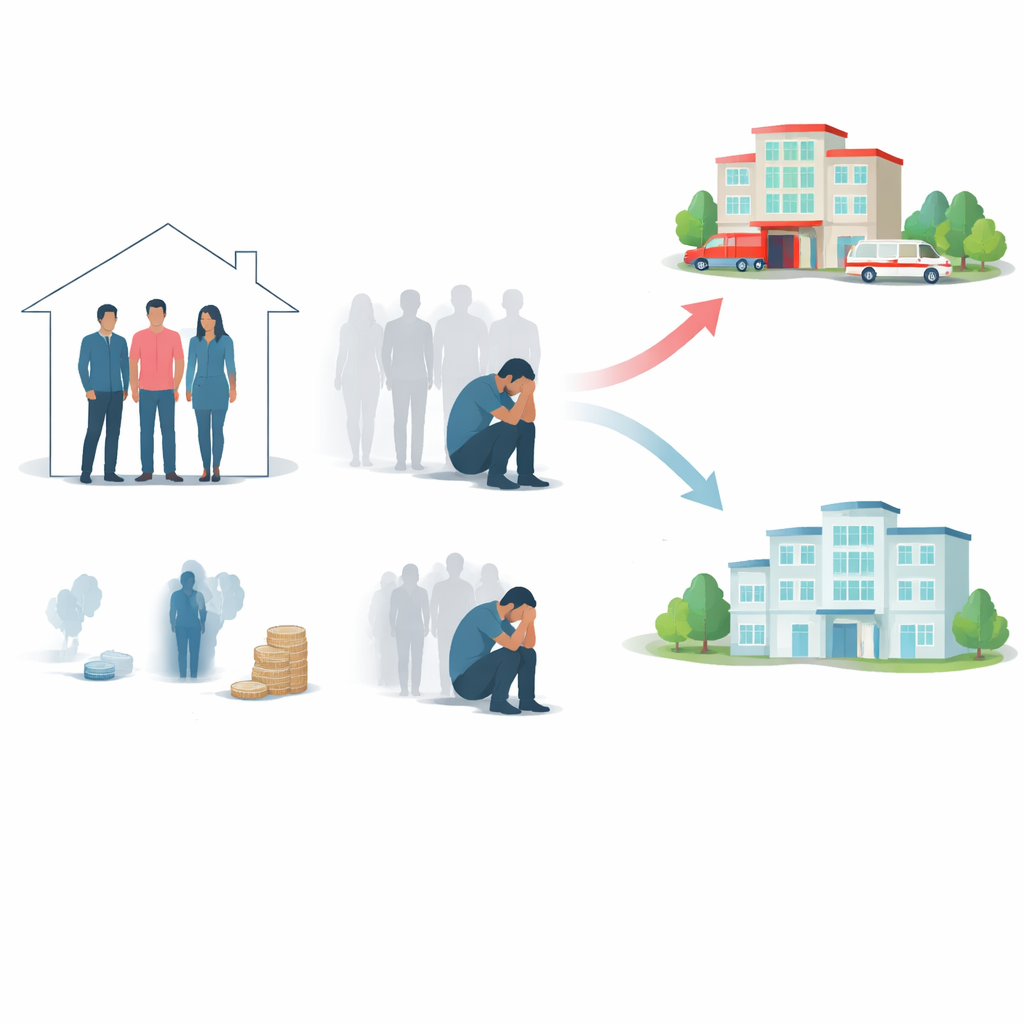
The third profile, also about a quarter of the participants, reveals a more troubling picture. These are mainly women living in households below the poverty line, with long‑term mental health difficulties and many previous hospital stays. They tend to receive only medication, have little contact with community‑based services, and report low social support, weak social networks, poor quality of life, and intense loneliness — despite living with family. Surprisingly, they are more often admitted voluntarily than involuntarily. The authors suggest that for people facing deep social and financial hardship, hospital wards may function as one of the few accessible places offering safety, care, and respite, even if admission is formally “voluntary.”
What this means for care and prevention
Across all three profiles, the family often provides crucial emotional and practical help, but this alone is not enough to prevent psychiatric hospitalization. What matters just as much are the severity and duration of mental health problems, whether people are linked to community services, and whether families have alternatives to calling for involuntary admission during a crisis. The authors argue that reducing coercive hospitalizations will require supporting families with education and counseling, strengthening local mental health teams that can respond early and in the community, and targeting extra help to women and families living in poverty. In simple terms, the study shows that when families are well supported and not left to carry the burden alone, fewer crises need to end with a locked hospital door.
Citation: Anastasopoulos, O., Georgaca, E., Vaiopoulou, J. et al. Exploring factors associated with psychiatric hospitalization for persons living with family. Sci Rep 16, 9949 (2026). https://doi.org/10.1038/s41598-026-39394-7
Keywords: psychiatric hospitalization, family caregiving, involuntary admission, social support, mental health services