Clear Sky Science · en
Incidence and risk factors of LUTS associated with benign prostatic hyperplasia among Chinese men: findings from the CHARLS cohort
Why this matters for aging men
As people live longer, more men find that trips to the bathroom begin to shape their daily lives and sleep. This study looks at how often bothersome urination problems arise in Chinese men as they age, and what everyday factors—such as weight, smoking, sleep habits, and where they live—may raise or lower their chances. Understanding these patterns can help men and their doctors act earlier, with changes in lifestyle and tailored checkups rather than waiting for severe symptoms to appear.
Common but often overlooked symptoms
The researchers focused on lower urinary tract symptoms linked to an enlarged prostate, a condition often called benign prostatic hyperplasia. Instead of relying on scans or surgery records, they used men’s own reports of frequent urination, weak stream, getting up at night to urinate, and feeling that the bladder does not empty completely. These “everyday” complaints, though not life-threatening, can drain energy, disturb sleep, and reduce quality of life. The study followed more than 6,700 Chinese men aged 45 and older who did not have these symptoms at the start.
Tracking men across China over time
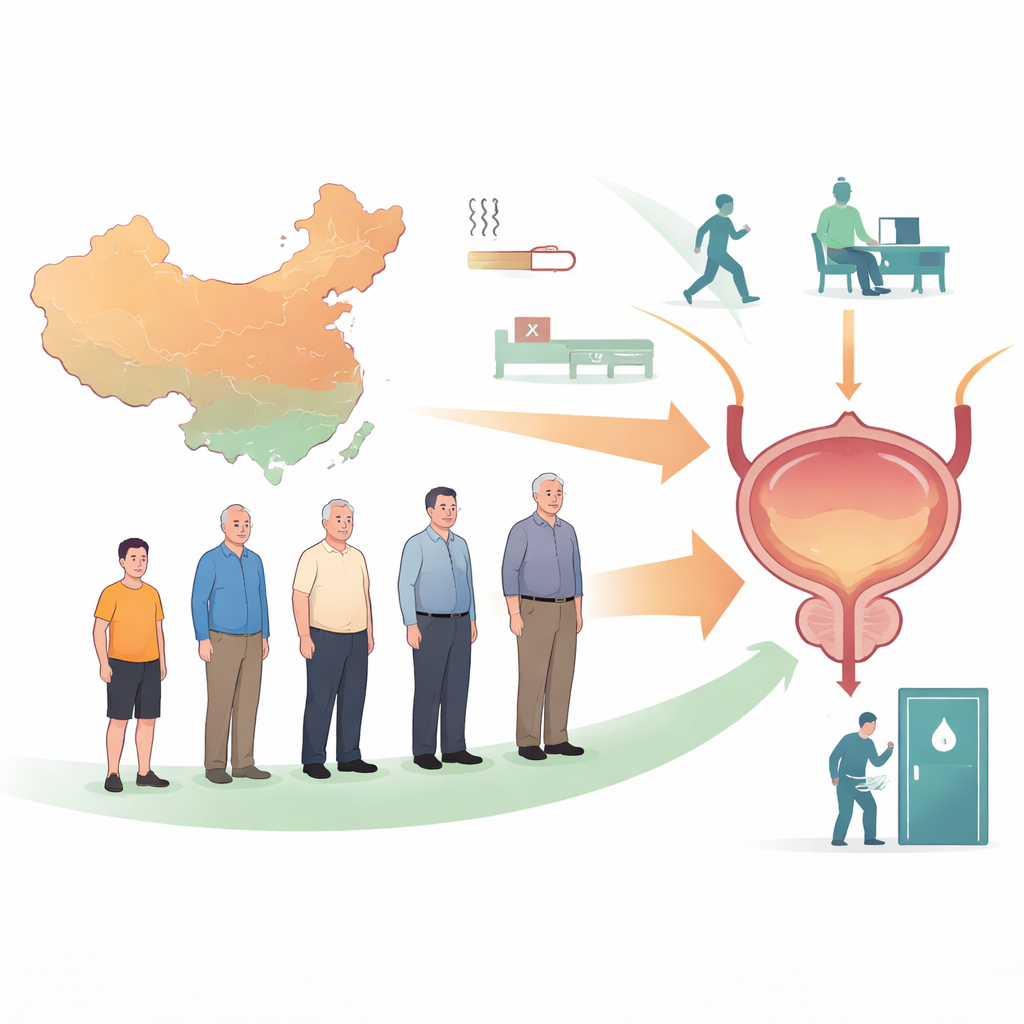
The team used data from the China Health and Retirement Longitudinal Study, an ongoing national survey that visits the same people every two years. Over about seven years of follow-up, they counted how many men newly developed urinary symptoms and calculated how often this happened per year of life. They also linked these outcomes to a rich set of information: age, body size, waistline, education, smoking and drinking habits, sleep and napping patterns, mood, and the province and climate region where each man lived. Sophisticated time-to-event models allowed them to estimate which factors independently predicted who would go on to develop symptoms.
How risk builds with age and lifestyle
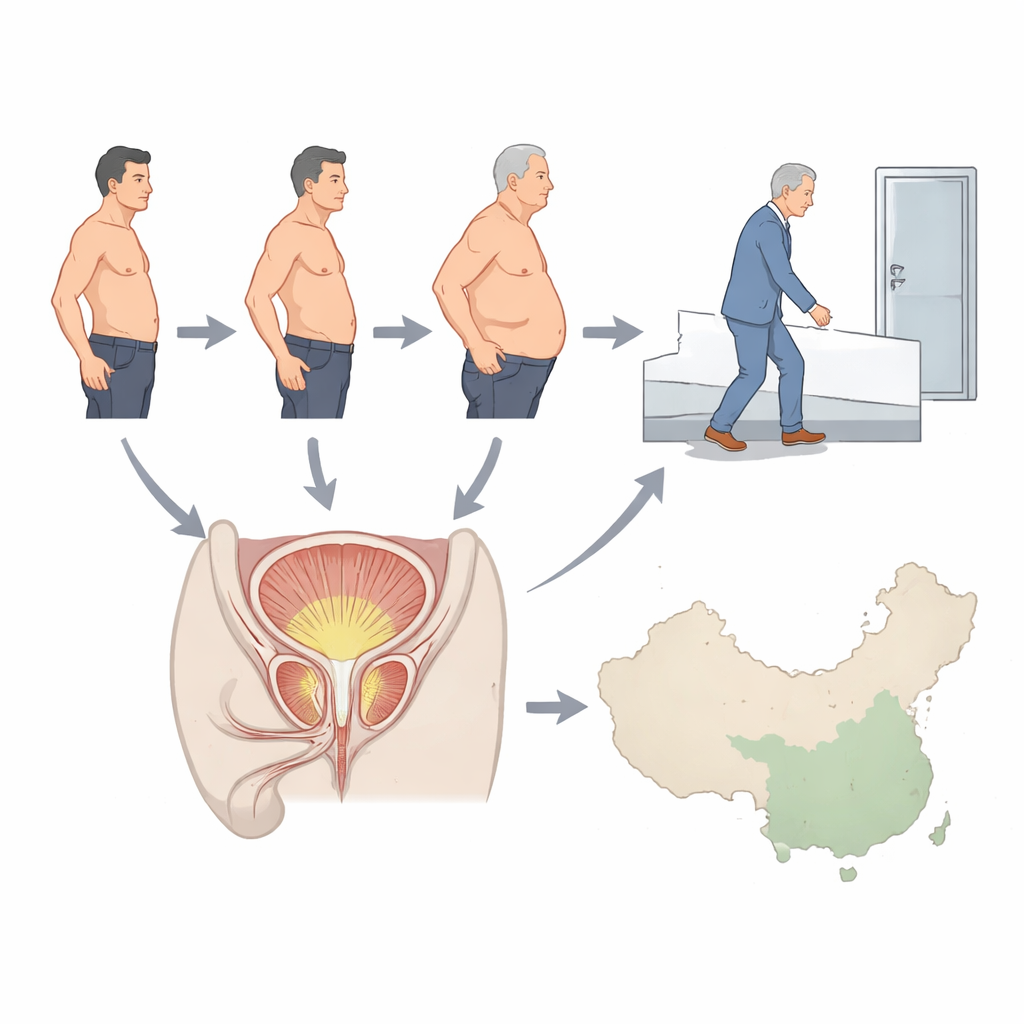
Overall, about 30 new cases occurred each year for every 1,000 men, a rate similar to that seen in Western countries. Risk climbed steadily with age, peaking in men in their early seventies and then declining slightly in the very old, likely because frailer men with many illnesses were less likely to remain in the study. For a typical 45‑year‑old man without symptoms, the chance of developing them was estimated at roughly one in six over the next decade and more than two in five over 30 years. Men with larger waistlines and those who were overweight were more likely to develop symptoms, highlighting the role of fat around the abdomen rather than overall weight alone. Current or former smokers and men who napped more than an hour a day also faced higher risk, suggesting that both chemical exposures and sleep–activity patterns may influence bladder and prostate health.
Place, mindset, and mood also play a role
The study uncovered striking regional differences. Men living in central and southern parts of China, especially in more humid areas, developed urinary symptoms more often than those in drier northern and western regions. This pattern may reflect differences in climate, diet, work, and access to medical care. Education was a double-edged marker: men with more schooling were more likely to report or be diagnosed with symptoms, perhaps because they were more health-aware and more likely to seek care. On the psychological side, men who rated their own health as good were less likely to develop symptoms, while higher levels of depressive feelings were linked to greater risk, particularly in younger older men. This supports the idea that bladder problems and mood can aggravate each other over time.
What this means for prevention and care
Taken together, the findings show that urinary problems in older men are not just an unavoidable part of getting old, but the result of an interplay between aging, body fat, daily habits, emotional well‑being, and the environment. Because several key factors—waist size, smoking, long daytime naps, and mood—are at least partly changeable, the authors argue that men and health systems can act earlier. In practice, that could mean focusing checkups and counseling on men in high‑risk regions, encouraging weight control and quitting smoking, screening for depression, and asking simple questions about sleep and daytime fatigue. While more detailed biological studies are still needed to confirm cause and effect, this work provides a map for targeted, region‑specific strategies to help China’s rapidly growing older male population stay healthier and sleep better at night.
Citation: Lv, C., Zhao, M., Meng, Q. et al. Incidence and risk factors of LUTS associated with benign prostatic hyperplasia among Chinese men: findings from the CHARLS cohort. Sci Rep 16, 11155 (2026). https://doi.org/10.1038/s41598-026-39227-7
Keywords: benign prostatic hyperplasia, urinary symptoms, aging men, obesity and lifestyle, China population study