Clear Sky Science · en
Skeletal and dentoalveolar effects of different hyrax maxillary expansion protocols compared with novel magnetic expansion: a CBCT-based study
Why widening the upper jaw matters
Many children and teens have a too-narrow upper jaw, which can lead to crooked teeth, a “crossbite” where the upper teeth bite inside the lowers, and even breathing and sleep problems because the roof of the mouth also forms the floor of the nose. Orthodontists have long used metal devices to gently split and widen this bone. This study asks a simple but important question: which approach works best and safest—fast turning of a screw, slow turning, or a newer device powered by magnets?
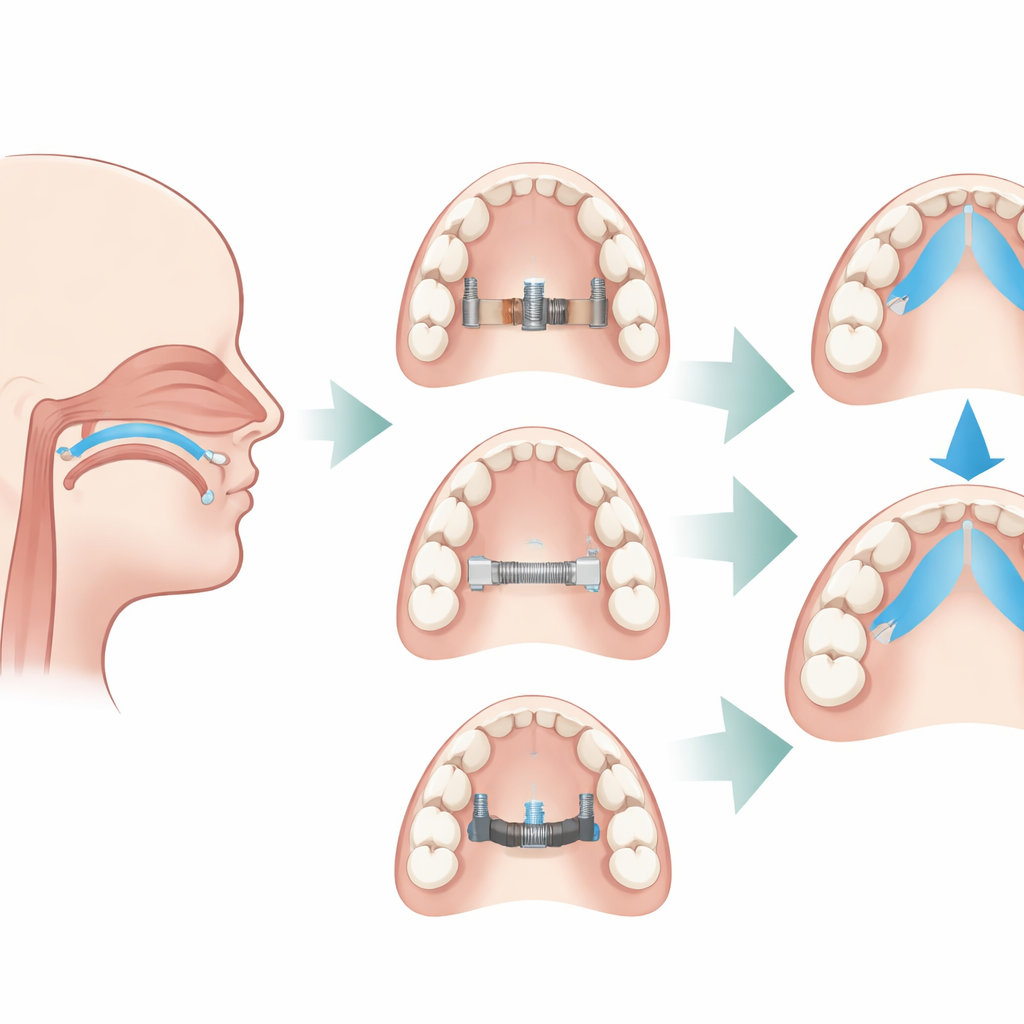
Three different ways to create space
The researchers compared three expansion methods in 39 adolescents with narrow upper jaws. One group received rapid maxillary expansion (RME), in which parents turn a screw twice a day to push the left and right halves of the upper jaw apart quickly. A second group had slow maxillary expansion (SME), using a very similar screw device turned every other day so that changes build up more gradually. The third group wore a custom magnetic maxillary expander (MME). In this appliance, paired permanent magnets are set to repel each other, creating a gentle, steady outward force that is reactivated by the orthodontist every two weeks.
Peering inside the face in 3D
To see what these devices actually do to bone and teeth, the team used cone‑beam computed tomography (CBCT), a low‑dose 3D X‑ray scan. Each patient was scanned before treatment, right after the desired widening was reached, and again three months later while the appliance was being held in place as a retainer. The researchers measured changes in the width of the upper jaw and nasal floor, the tilt and height of the back teeth, and even the 3D volume of the first molars. This allowed them to distinguish true bone expansion from simple tipping of teeth and to track how much of the correction stayed put.
Fast, slow, and magnetic: what actually changed
All three methods successfully widened the upper jaw and dental arch, giving patients more room for their teeth and helping correct the crossbite. The rapid protocol produced the largest immediate skeletal widening, especially near the nasal floor, confirming its power to separate the midline seam of the upper jaw in a short time. However, RME also showed more side effects: the anchor molars tipped outward more, their measured volume dropped the most (a possible sign of root or surrounding tissue change), and the widened nasal floor partially relapsed more during the three‑month retention period. Slow expansion and magnetic expansion produced slightly smaller but still meaningful increases in jaw width, with less tipping of the teeth and smaller reductions in molar volume.
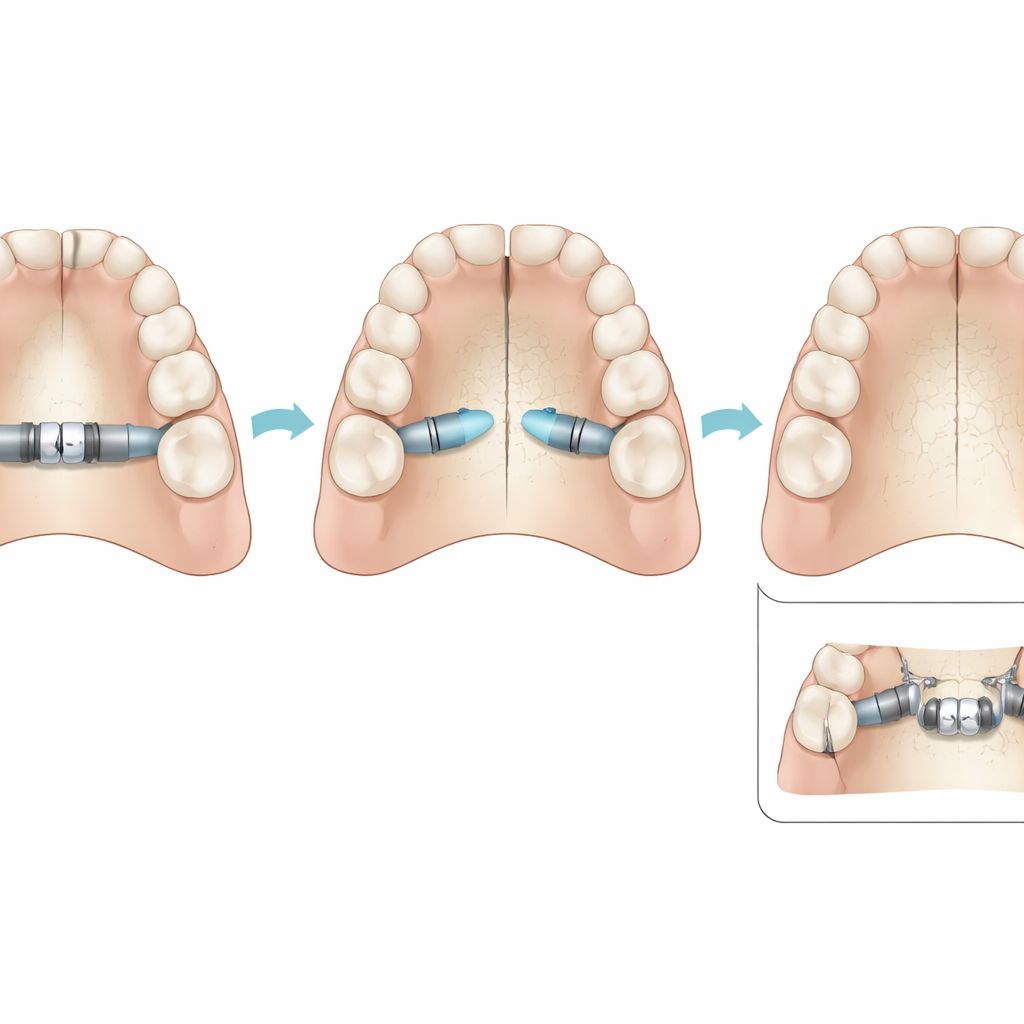
How the magnetic option stacks up
The magnetic expander behaved much like the slow screw device in how much it widened the jaw, but it showed some advantages. Because magnets deliver light, continuous forces instead of abrupt jolts, they appeared to produce expansion with fewer unwanted changes in the teeth and supporting bone. The magnetic group had relapse levels similar to or lower than the slow group and clearly less than the rapid group at key skeletal regions. Unlike the screw devices, which depend heavily on parents following turning instructions at home, the magnetic appliance was reactivated only by the clinician, ensuring consistent force levels and making treatment progress easier to control.
What this means for patients and parents
For families facing treatment decisions, this study suggests that all three options can fix a narrow upper jaw in growing patients. Rapid expansion works quickly and creates the most dramatic immediate change in bone, but it comes with higher risks of unwanted tooth movement, possible loss of tooth structure, and a greater tendency for the skeletal gains to shrink back. Slow screw‑based expansion offers steadier, more stable change with fewer side effects. The magnetic approach appears to match slow expansion in effectiveness while offering extra benefits: gentler forces, potentially healthier bone remodeling, less relapse, and less reliance on daily at‑home adjustments. Although longer and larger studies are needed, magnetic expansion emerges here as a promising, biologically friendly alternative for widening young smiles and improving airway space.
Citation: Algahefi, A.L., Alhammadi, M.S., Li, Z. et al. Skeletal and dentoalveolar effects of different hyrax maxillary expansion protocols compared with novel magnetic expansion: a CBCT-based study. Sci Rep 16, 12506 (2026). https://doi.org/10.1038/s41598-026-38665-7
Keywords: maxillary expansion, orthodontic appliances, magnetic expander, rapid versus slow expansion, CBCT imaging