Clear Sky Science · en
Feasibility of transumbilical and prior caesarean scar access in single-incision laparoscopic common bile duct exploration for extrahepatic bile duct stones
Smaller Scars for a Common Digestive Problem
Stones blocking the tubes that drain bile from the liver can cause intense pain, infection and even life‑threatening illness. Clearing these stones used to require a large cut across the abdomen, leaving a visible scar and a long recovery. This study explores a newer approach that uses just a single small opening in the belly button or a previous caesarean section scar to reach and clear these stones, aiming to combine effective treatment with faster healing and better cosmetic results.
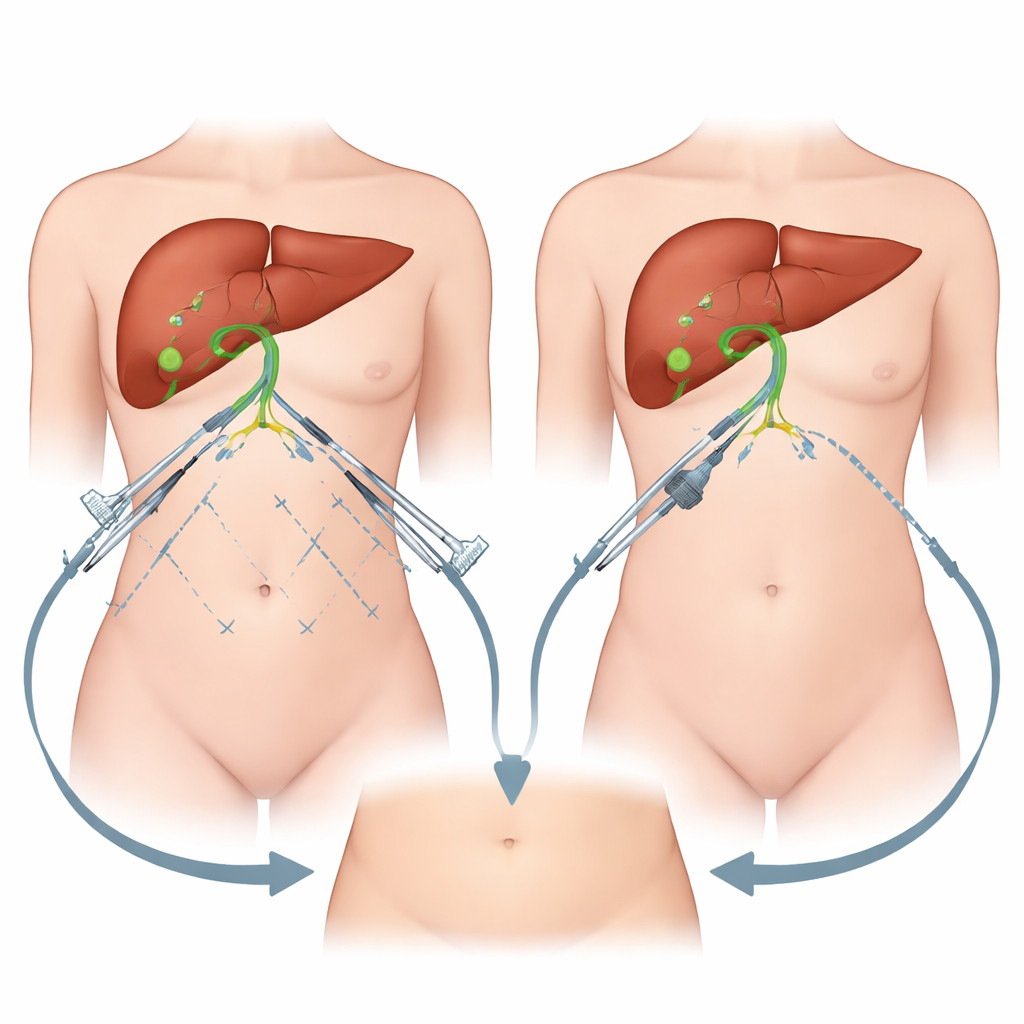
Why Blocked Bile Ducts Matter
Bile ducts are narrow channels that carry digestive fluid from the liver and gallbladder into the intestine. When stones form and lodge in the main duct outside the liver, they can block the flow of bile, causing jaundice, infection and severe abdominal pain. Doctors traditionally relied on either open surgery with a long incision or a two‑step combination of endoscopy and keyhole surgery. In recent years, keyhole surgery through several small cuts has become standard for many patients, but even this can leave multiple scars and still involves several punctures through the abdominal wall.
A Single Opening Instead of Several
The team behind this study focused on a technique called single‑incision laparoscopic common bile duct exploration. Instead of three or four separate ports, surgeons use one small opening to insert a camera and instruments to remove the stones. Most often, this opening is hidden in the natural fold of the belly button. The authors went a step further by testing whether a pre‑existing caesarean section scar could serve as the single entry point in suitable women, potentially avoiding any new visible scar on the abdomen.
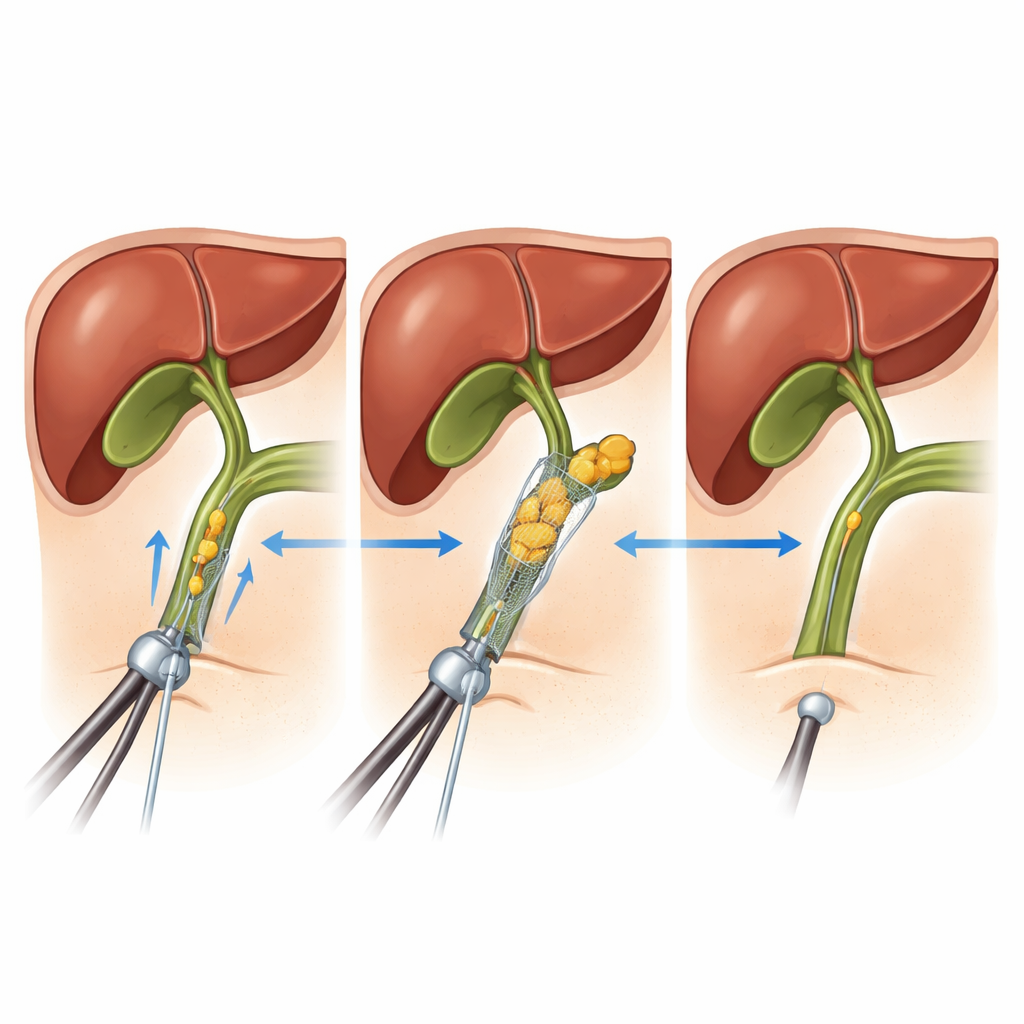
Who Was Treated and How
The researchers reviewed 18 adults treated at one hospital over a little more than two years. All had stones in the main bile duct but otherwise relatively straightforward anatomy and acceptable overall health. Fourteen people had surgery through the belly button, and four women had surgery through a healed caesarean section scar on the lower abdomen. Through the single opening, surgeons removed the gallbladder if needed, opened the bile duct, used a tiny camera inside the duct to find stones, and then fished them out with a basket‑like tool. The bile duct was then closed without leaving a tube inside it, and a temporary drain was sometimes placed near the area.
Results in the Operating Room and Afterward
In 17 out of 18 patients, the single‑incision method worked from start to finish; only one needed to be converted to a more conventional three‑port keyhole operation when the view of the anatomy was unclear. No patient was left with remaining stones, and there were no cases of narrowing of the duct or serious infections. Operating times were a bit long—around two and a half hours on average—but blood loss was minimal, and most people left the hospital within about five to six days. Only one patient had a bile leak from the duct closure; it was handled with drainage and resolved without further surgery. Pain levels in the early hours after surgery were moderate, and when patients were asked about the appearance of their scars months later, most rated their satisfaction as high, with slightly better scores in those who used the caesarean scar route.
What This Could Mean for Future Surgery
The study suggests that, in carefully chosen patients and experienced hands, clearing bile duct stones through a single small opening—whether at the belly button or through a previous caesarean scar—can be safe and effective while also improving cosmetic results. Because the study involved only 18 people, especially just four with caesarean‑scar access, the authors stress that larger, multi‑center studies are needed before this can become routine. Still, their early experience points toward a future in which many patients with bile duct stones may have less visible reminders of their surgery and a smoother recovery.
Citation: Niu, X., Zhang, M., Tai, J. et al. Feasibility of transumbilical and prior caesarean scar access in single-incision laparoscopic common bile duct exploration for extrahepatic bile duct stones. Sci Rep 16, 11172 (2026). https://doi.org/10.1038/s41598-026-38409-7
Keywords: bile duct stones, single-incision surgery, laparoscopic exploration, scar-sparing techniques, minimally invasive biliary surgery