Clear Sky Science · en
Effectiveness of pelvic floor rehabilitation after radical prostatectomy and continence recovery in relation to surgical technique
Why this matters for life after prostate cancer
Many men who undergo surgery for prostate cancer worry less about the tumor than about what comes next: will they still leak urine, need pads, or avoid social situations out of embarrassment? This study followed men after two common types of prostate removal surgery and asked a practical question: how much do the surgeon’s tools matter, and how much can targeted pelvic exercises help men regain control and confidence?
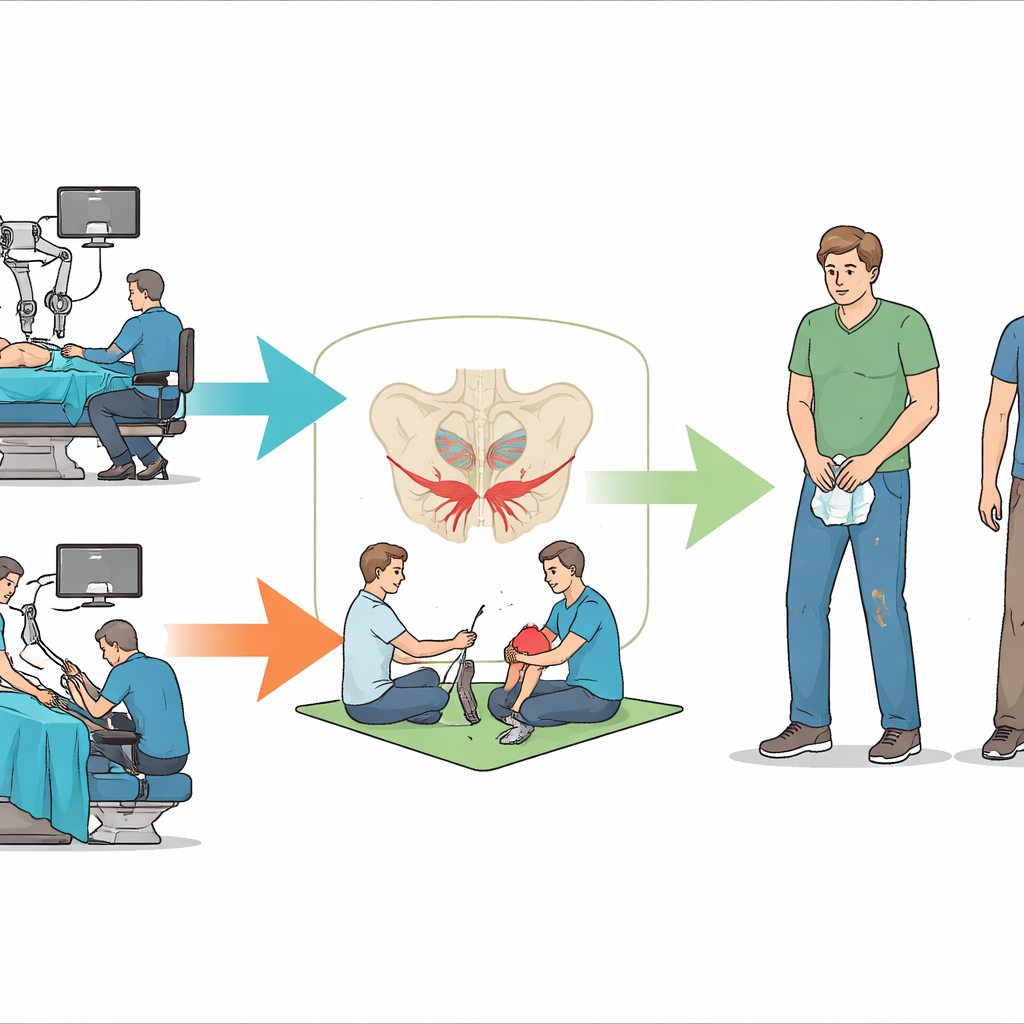
Two ways to operate, one shared problem
Today, surgeons can remove the prostate either with traditional keyhole instruments (laparoscopic surgery) or using a robot-assisted system controlled from a console. Robot-assisted procedures are often promoted as gentler and more precise, but both operations can damage the delicate muscles and nerves that keep urine in the bladder. The result is urinary incontinence, a condition that can disrupt sleep, intimacy, and everyday activities. Guidelines recommend starting with simple measures such as pelvic floor muscle training before moving on to more invasive treatments, yet it has remained unclear whether the type of surgery changes how well these exercises work.
How the study followed men through recovery
Researchers in Poland tracked 182 men treated for localized prostate cancer, 106 with standard laparoscopic surgery and 76 with robot-assisted surgery. All men were referred to a physiotherapist and taught how to find and activate their pelvic floor muscles, first before surgery when possible and then again after their urinary catheter was removed. Progress was measured using a standardized one-hour pad test, in which patients wear a pad during a series of everyday movements and the amount of leaked urine is weighed. The team classified leakage into stages from completely dry, through mild and moderate, to severe, and checked each man at about 1, 3, and 6 months after catheter removal.
Early advantage for robotic surgery
Shortly after surgery, men who had robot-assisted procedures were more likely to be dry or have only mild leakage when they began rehabilitation. Statistical analyses showed that, at this early point, their odds of being fully continent were more than five times higher than for men who had laparoscopic surgery. This likely reflects the finer control and better view that robotic systems give surgeons, helping them spare structures like the bladder neck and external sphincter that are crucial for holding urine. However, this early edge showed up mainly as a better starting point on the continence scale, not as a fundamentally different pattern of improvement over time.
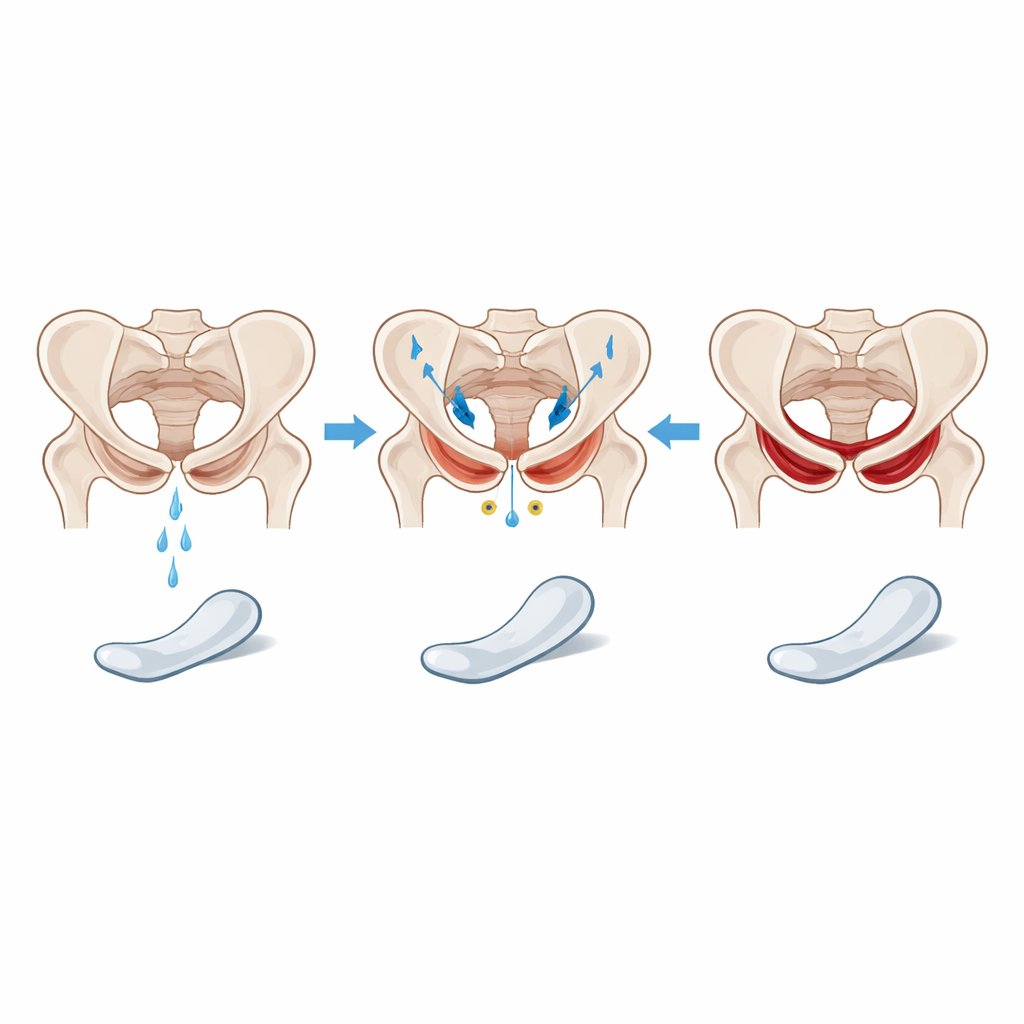
Pelvic exercises and timing shape the real recovery
When the researchers adjusted their models to account for how severe each man’s incontinence was at the start of therapy, the specific surgical technique no longer predicted who would recover best. Instead, two factors stood out: how bad the leakage was initially, and how soon rehabilitation began. Men who started exercises early and who were not leaking large amounts of urine progressed more quickly toward dryness. Delays in beginning physiotherapist-guided pelvic floor training, regardless of the operation used, were linked to poorer continence at three months. Individualized programs that used tools like surface muscle recordings and ultrasound to give real-time feedback appeared especially helpful in teaching men to contract the right muscles effectively.
What this means for patients and clinicians
For men facing prostate surgery, this study offers a nuanced message. Robot-assisted operations do seem to leave more men in better shape immediately after surgery, likely because key tissues are preserved. But over the following months, the biggest influences on regaining bladder control are how severe the leakage is at the outset and how quickly well-structured pelvic floor therapy begins. In everyday terms, careful surgery sets the stage, yet disciplined, early rehabilitation drives the main act of recovery. The authors argue that the best outcomes will come from combining precise surgical techniques with standardized, timely, and individualized physiotherapy pathways so that every man—regardless of the tools used in the operating room—has the best chance to return to a dry, active life.
Citation: Terek-Derszniak, M., Gąsior-Perczak, D., Biskup, M. et al. Effectiveness of pelvic floor rehabilitation after radical prostatectomy and continence recovery in relation to surgical technique. Sci Rep 16, 12378 (2026). https://doi.org/10.1038/s41598-026-36972-7
Keywords: urinary incontinence, prostate cancer surgery, pelvic floor exercises, robot-assisted prostatectomy, postoperative rehabilitation