Clear Sky Science · en
Morphological, structural and physical characterization of commercially available low voltage ZnO-based varistors
Why the health of surge protectors matters
Every time lightning hits a power line or a sudden spike races through the grid, tiny ceramic blocks hidden inside surge protectors quietly decide whether your electronics live or die. These blocks, called varistors, are supposed to soak up dangerous voltage surges and steer them safely to ground. This study looks under the hood of commercially available low-voltage surge arresters and asks a simple but important question: how well do the varistors inside them really stand up to repeated lightning-like strikes, and what in their internal structure separates durable parts from weak ones?
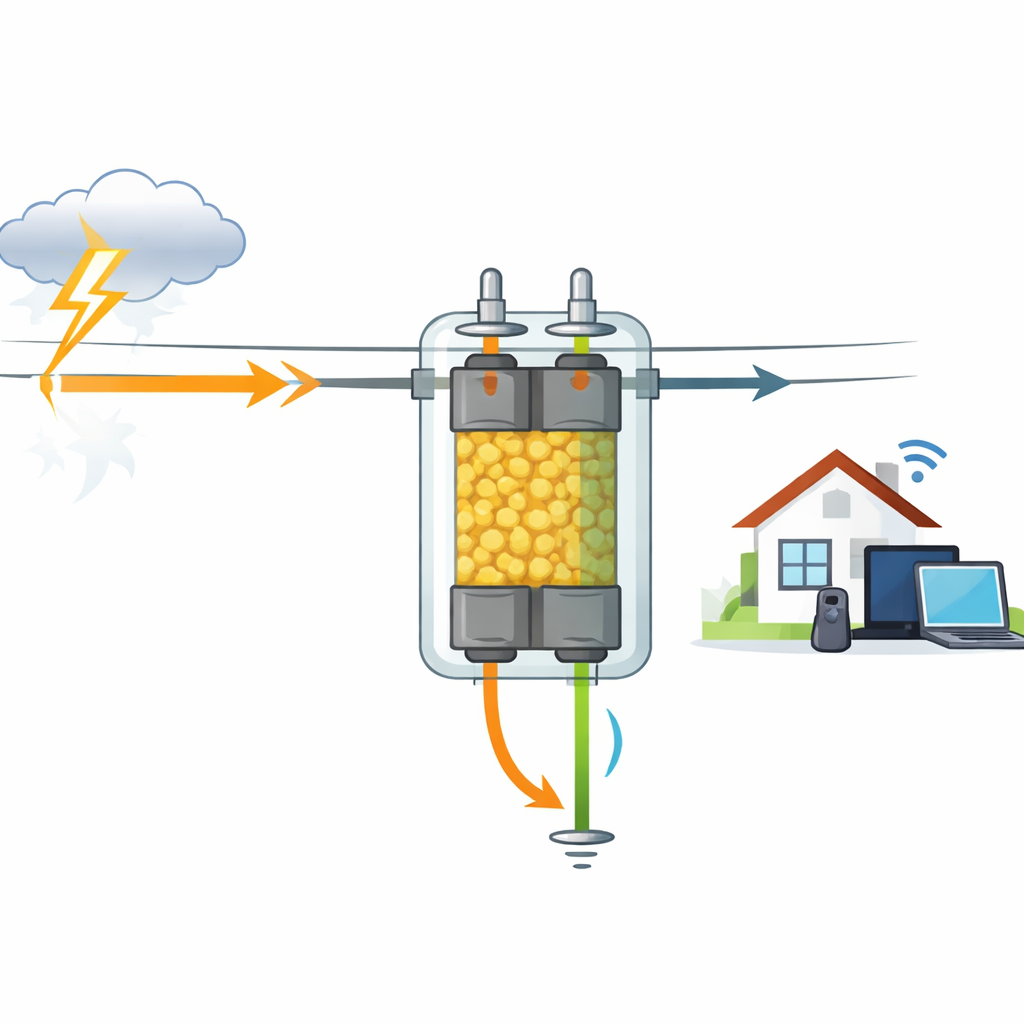
Inside the heart of a surge protector
Low-voltage surge arresters contain a ceramic disk made mostly of zinc oxide (ZnO) mixed with small amounts of bismuth, antimony, manganese, cobalt and other metal oxides. Electricity flows easily through the ZnO grains themselves, but not through the thin, dopant-rich boundaries between grains. Under normal conditions these boundaries block current, keeping leakage small. When a surge arrives, the boundaries abruptly become conductive, shunting the excess energy away. Because this behavior depends on microscopic structure and chemistry, even small differences in recipe or processing can change how much surge a varistor survives and how quickly it ages.
Putting real products through artificial lightning
The researchers tested surge arresters from four manufacturers, labeled only A through D, to mimic real lightning stress. Each device was hit with series of current pulses having the standard 8/20 microsecond shape used in industry tests, up to tens of strokes at 5 kiloamperes. Before and after aging, they measured key electrical quantities: the reference voltage at which the varistor starts to conduct strongly, the residual voltage during a surge, and the tiny leakage current that flows in normal operation. They then dismantled the arresters and subjected the ceramic disks to a battery of material probes, including X-ray diffraction to reveal crystal phases, electron microscopy to inspect grain structure and porosity, electron paramagnetic resonance to track certain dopant ions, and dielectric spectroscopy to see how the material’s response to alternating fields changed.
What the material reveals about hidden wear
Across all brands, aging made the devices leak more current—by as much as about one-quarter—and altered their surge behavior, with reference voltages typically dropping and residual voltages rising. X-ray patterns showed that all ceramics were dominated by hexagonal ZnO, but also contained bismuth-rich and antimony-rich secondary phases at the grain boundaries, along with pyrochlore and spinel compounds. After repeated surges, these patterns broadened and changed shape, signaling higher internal strain and partial recrystallization driven by Joule heating. Microscopy confirmed uneven grain sizes, incomplete sintering and significant porosity, often exceeding the level expected for robust parts. In some samples, lightning-like pulses increased porosity and the spread of grain sizes, conditions that foster hot spots and localized damage during later surges.
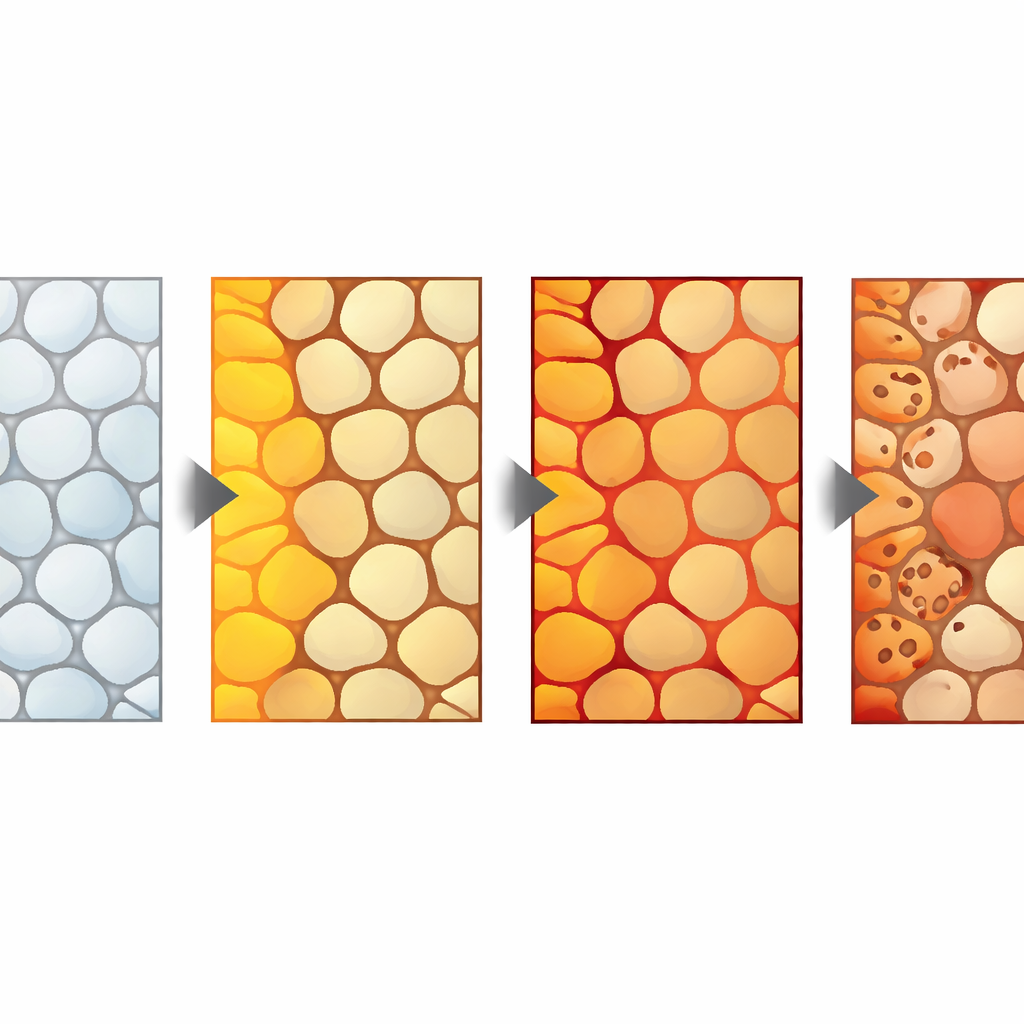
Tracing the role of hidden atoms and subtle signals
The magnetic resonance measurements showed that the concentrations of manganese and cobalt ions in their detectable forms grew in most ceramics after current pulses, consistent with a shift from less visible oxidation states to more easily probed ones. This change reflects a reshaping of the local crystal environment during heating. Dielectric spectroscopy added another piece: some products, especially from one manufacturer, showed large shifts—up to about 40%—in their ability to store electric energy and in their energy losses across frequency, while others were far more stable. By statistically correlating electrical performance with structural parameters like grain size variation, porosity and dopant state, the authors linked poor surge endurance to inhomogeneous dopant distribution, excessive secondary phases and microstructural disorder.
What this means for everyday reliability
In plain terms, not all commercial varistors are created equal, and their weaknesses lie deep in the ceramic rather than just in visible design details. Repeated lightning-like hits can subtly rearrange the grains, open more pores, and shift how key dopant atoms behave, leading to higher leakage currents and less predictable protection over time. The study shows that combining conventional electrical tests with modern material-analysis tools makes it possible to spot these hidden flaws and distinguish truly robust surge protectors from those more likely to fail when they are needed most.
Citation: Wójcik, K., Litzbarski, L., Olesz, M. et al. Morphological, structural and physical characterization of commercially available low voltage ZnO-based varistors. Sci Rep 16, 12385 (2026). https://doi.org/10.1038/s41598-026-36941-0
Keywords: surge protection, zinc oxide varistors, lightning aging, ceramic microstructure, power grid reliability