Clear Sky Science · en
Phytochemical composition and health risk assessment of heavy metals in herbal remedies from semi-arid Nigeria
Why Everyday Herbal Cures Deserve a Closer Look
In many parts of the world, especially in Nigeria’s semi-arid north, people turn to herbal remedies for everything from typhoid and malaria to piles and gonorrhea. These mixtures, sold in markets and trusted for generations, are seen as natural and therefore safe. This study challenges that assumption by asking a simple but vital question: alongside their healing plant compounds, are these remedies also delivering dangerous heavy metals into the body, particularly for children?
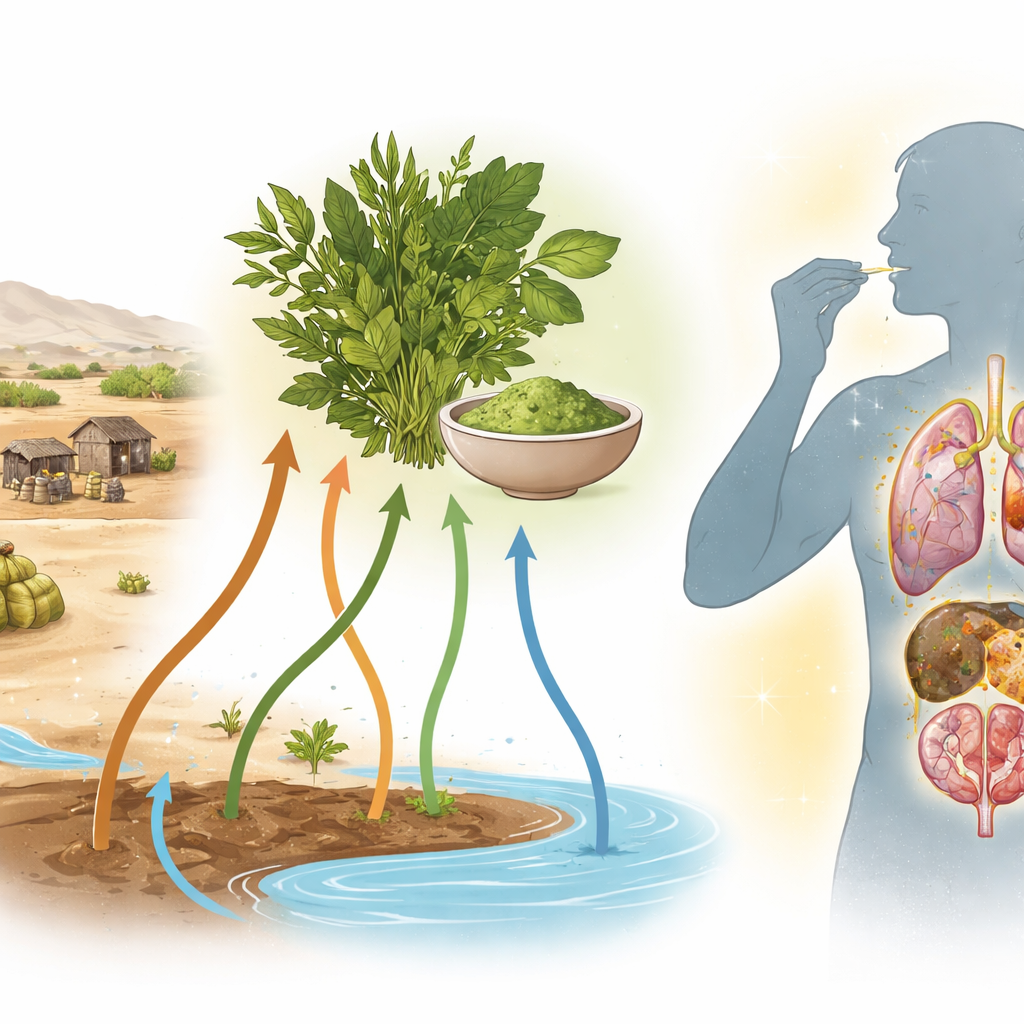
Herbs at the Heart of Community Health
The research focused on five popular powdered herbal remedies sold in Dutse, a fast-growing town in Jigawa State, northern Nigeria. Each product combined different local plants and was marketed for a specific illness, such as typhoid, malarial fever, yellow fever, or sexually transmitted infections. The scientists first prepared alcohol-based extracts of the powders and screened them for common plant chemicals linked to health benefits, including phenols, terpenoids, saponins, alkaloids, flavonoids, tannins, and steroids. All samples contained several of these bioactive ingredients, confirming that the remedies are far from inert—they carry compounds that can influence the body in powerful ways, for better or worse.
Hidden Metals in Traditional Powders
The same samples were then tested for five heavy metals: cadmium, cobalt, nickel, lead, and zinc. Using a sensitive technique called atomic absorption spectrophotometry, and strict quality controls in the laboratory, the team found that every remedy contained all five metals at varying levels. Cadmium, nickel, and zinc stayed within international safety limits, although one product showed a strikingly high zinc level. More troubling were the findings for lead and cobalt. Lead levels in all remedies slightly exceeded the World Health Organization’s recommended limit, while cobalt levels were more than ten times higher than the accepted guideline. Statistical tests showed that certain mixtures—especially two coded HR-4 and HR-5—were consistently richer in several metals, suggesting differences in plant choice, growing conditions, or how the remedies were prepared.
From Soil to Teacup to the Human Body
To translate metal concentrations into real-world health concerns, the researchers estimated how much of each metal an adult or child would likely ingest by following typical use patterns. They then applied widely used public health formulas to calculate non-cancer risks (target hazard quotient and hazard index) and cancer risks (target cancer risk). Even though the daily intake amounts were small, the combined effect of multiple metals told a worrying story. For both adults and children, the overall hazard index was above the level considered safe, meaning that regular use could plausibly lead to health problems. Children were far more vulnerable: their risk scores were several times higher than those for adults, because their bodies are smaller and still developing.
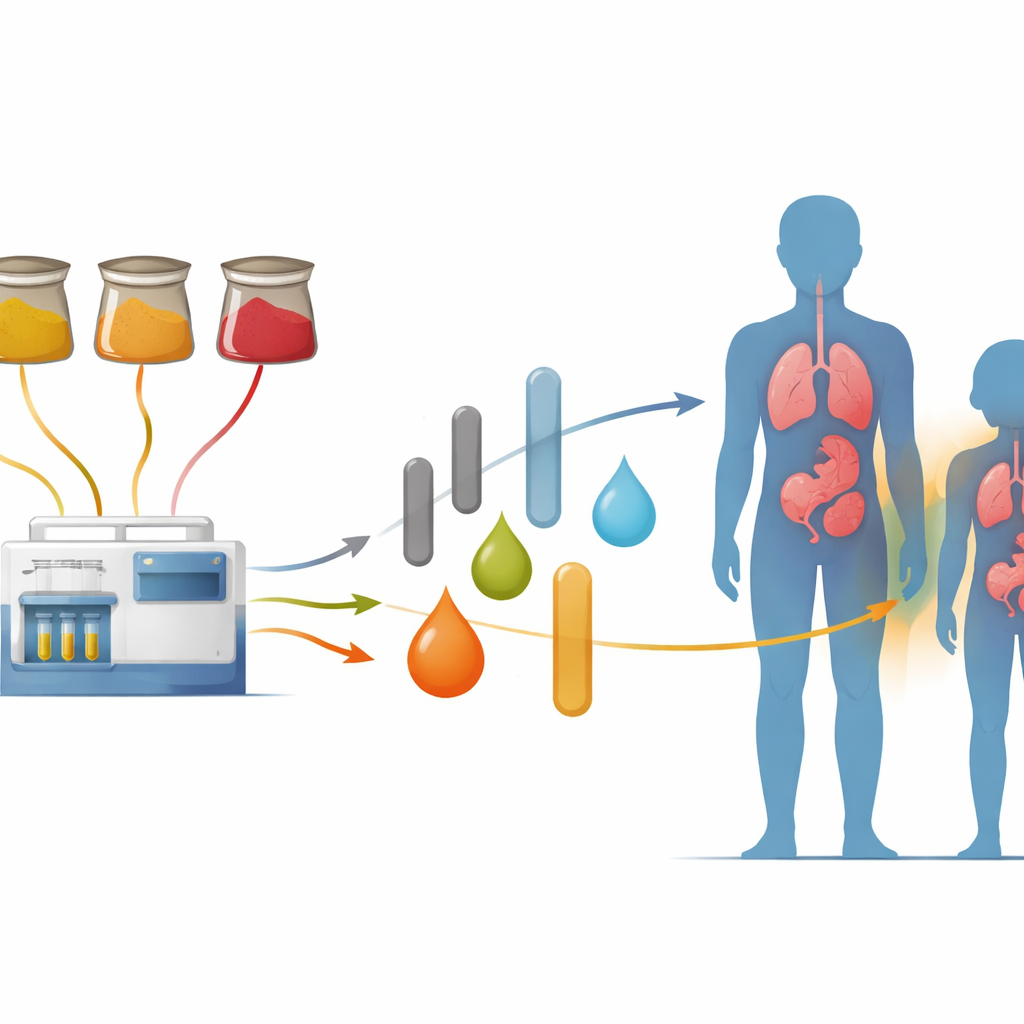
Lead and Cadmium Take Center Stage
When the team broke down which metals contributed most to potential harm, lead clearly dominated, accounting for roughly two-thirds to three-quarters of the total non-cancer risk. Cadmium and nickel also played important roles, with cobalt contributing less and zinc sometimes tipping from helpful to excessive. Advanced statistical analysis suggested that some metals, like cadmium, cobalt, and nickel, likely reflect contamination from local soil and water, while zinc and lead are more strongly tied to human activities such as farming inputs, industry, or processing and packaging practices. In some remedies, extremely high zinc levels or consistently elevated lead hinted at specific contamination sources that may be avoidable with better oversight.
What This Means for Everyday Users
For people who rely on these herbal mixtures, the message is not that all traditional medicine is dangerous, but that "natural" does not automatically mean "safe." The remedies studied do contain plant compounds that could support healing, yet they also deliver enough heavy metals—especially lead, cadmium, and cobalt—to pose a meaningful long-term risk, most acutely for children. The authors argue that Nigeria urgently needs stronger quality control, standardized preparation methods, and routine testing of herbal products for contaminants. Done well, such oversight would preserve the cultural and therapeutic value of traditional remedies while sharply reducing their hidden toxic load, allowing communities to enjoy the benefits of herbal medicine without paying a silent price in future health.
Citation: Momoh, H., Madugu, S.A., Yahaya, A. et al. Phytochemical composition and health risk assessment of heavy metals in herbal remedies from semi-arid Nigeria. Sci Rep 16, 12457 (2026). https://doi.org/10.1038/s41598-025-34751-4
Keywords: herbal medicine safety, heavy metal contamination, Nigeria semi-arid region, lead and cadmium exposure, traditional remedies risk