Clear Sky Science · en
Categorical characteristics of parenting concerns and their influencing factors in young and middle-aged breast cancer patients: a latent profile analysis
Mothers Caught Between Illness and Everyday Life
For many women, a diagnosis of breast cancer arrives in the middle of busy family life, when work deadlines, school runs, and bedtime stories are part of every day. For those who are raising children, the illness brings not only physical and medical challenges, but also deep worries about how their children will cope now and in the future. This study looks closely at those parenting worries in young and middle‑aged Chinese mothers with breast cancer, showing that not all mothers struggle in the same way and that support needs to be tailored rather than one‑size‑fits‑all.
Why Worries About Children Matter
Breast cancer is now the most common cancer among women worldwide, and in China many new patients are in their 20s to 50s, often with children still at home. These women must juggle the role of patient with the role of mother. Parenting concerns include fears about who will care for the children if the illness worsens, how treatment side effects will disrupt daily routines, and what emotional scars the experience may leave on sons and daughters. Past work showed that stronger parenting worries are linked to greater emotional distress, strained family communication, and even more aggressive treatment decisions that can hurt quality of life. Yet most research has treated all mothers as if they shared the same pattern of concern, overlooking important differences between them.
Finding Hidden Patterns in Mothers’ Worries
To uncover these differences, the researchers surveyed 490 women aged 18 to 59 with breast cancer who were raising at least one minor child, all treated at a large hospital in eastern China. The women completed questionnaires about their parenting worries, how they cope with illness, how threatening they feel their cancer to be, and how much support they receive from family and friends. Instead of averaging scores across everyone, the team used a statistical method called latent profile analysis to see whether mothers naturally clustered into distinct types based on their answers. 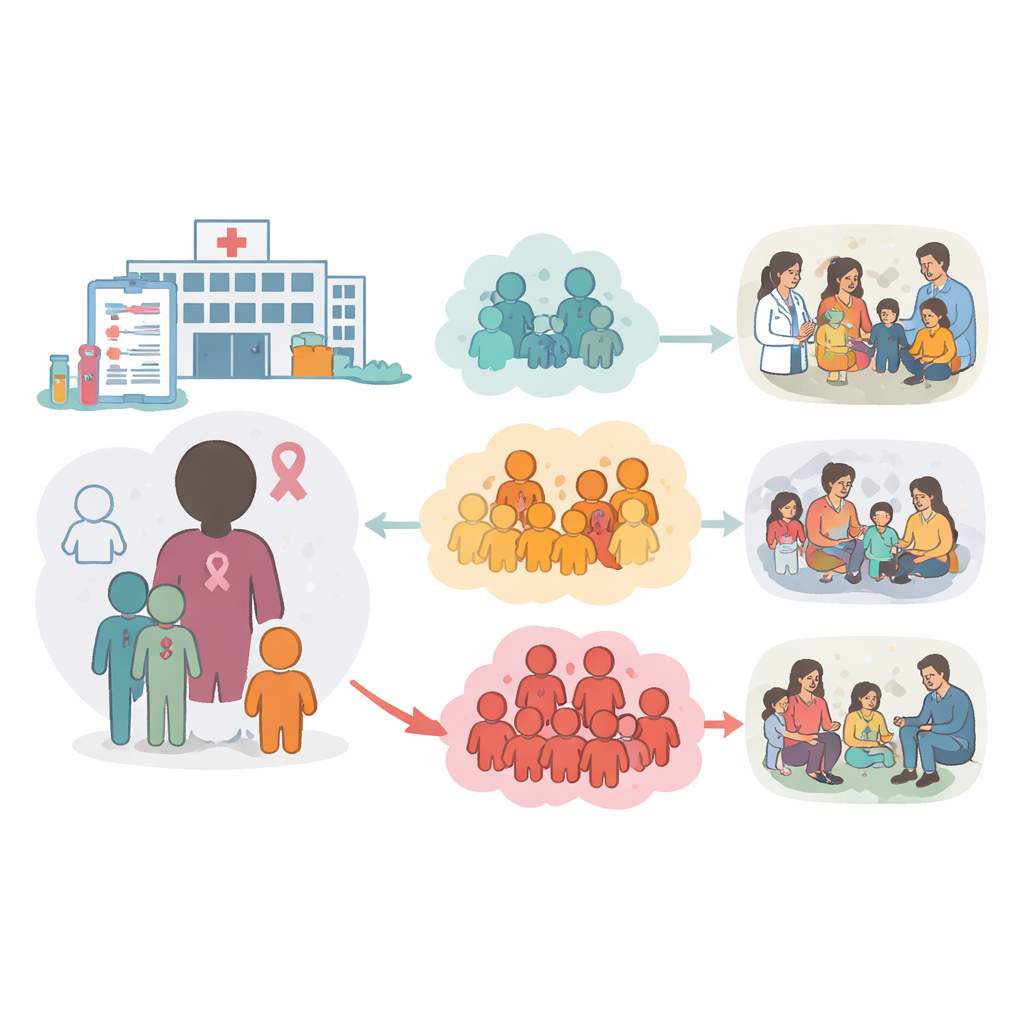
Three Distinct Groups of Concern
The largest group, nearly half of the sample, showed relatively low worry about how cancer would affect their children’s daily lives or emotions but higher concern about whether the children’s fathers could handle parenting if needed. A second, smaller group had moderate overall concern, with particular focus on how their illness might disturb their children’s routines and feelings, yet they were comparatively confident in their partners’ support. The third group, about one in three women, reported high worry across the board: about practical care, children’s emotional well‑being, and co‑parenting. These high‑concern mothers tended to have lower income, less generous health coverage, more intensive or absent surgery (such as mastectomy or no operation), and more advanced disease, all of which raise fears about the future.
Money, Mindset, and Support Shape Concern Levels
When the team examined what predicted membership in each group, several themes stood out. Women with lower household income and less education were more likely to fall into the moderate‑concern group, suggesting they have fewer resources and information to manage both illness and parenting. Those with resident health insurance, demanding jobs, and more aggressive or missing surgery were more often in the high‑concern group, likely reflecting financial strain, body‑image changes, heavier treatment, and fears about survival. 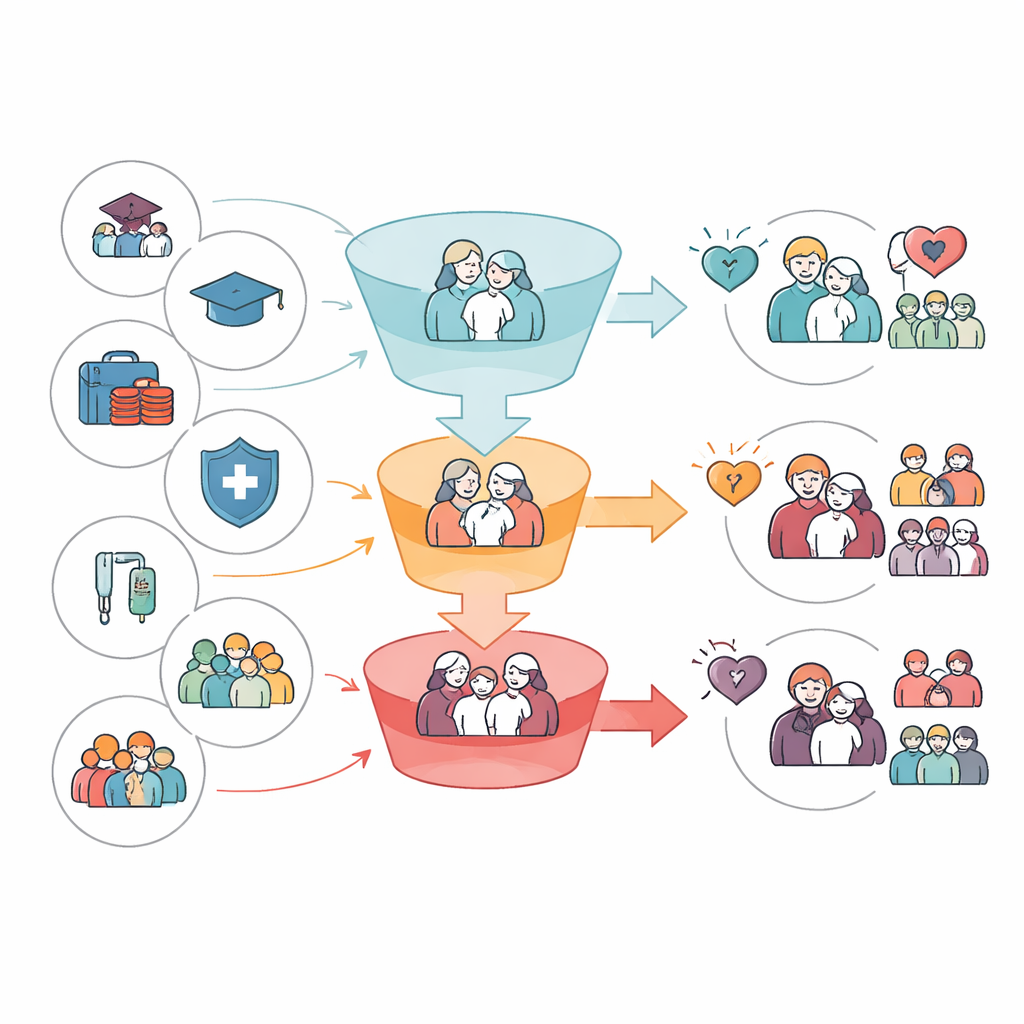
Turning Insights Into Tailored Help
These findings show that parenting worries in mothers with breast cancer are not uniform; instead, they fall into three recognizable patterns shaped by finances, treatment experiences, personal outlook, and social ties. For the highest‑concern group, the authors suggest intensive, family‑focused support that involves partners and children, helps couples share parenting duties, and addresses fears about the future. For the moderate‑concern group, guidance on how children typically react to a parent’s illness and how to talk with them openly could ease anxiety. Even mothers with lower overall concern may benefit from brief check‑ins that strengthen co‑parenting confidence. By recognizing these different profiles, clinicians and nurses can move beyond generic advice and offer the right kind of psychosocial support to the right mothers at the right time.
Citation: Chu, H., Liu, C., Yang, S. et al. Categorical characteristics of parenting concerns and their influencing factors in young and middle-aged breast cancer patients: a latent profile analysis. Sci Rep 16, 13705 (2026). https://doi.org/10.1038/s41598-025-29885-4
Keywords: breast cancer, parenting concerns, psychosocial support, family coping, young mothers