Clear Sky Science · en
Conceptual modeling of child temperament, emotional and behavioral problems, and parenting style in relation to children’s oral health and dental visit behavior
Why This Study Matters for Parents and Caregivers
Many parents wonder whether their child’s personality or their own parenting style affects how well their child looks after their teeth or behaves at the dentist. This study looked at preschool children and their families to see how temperament, emotional and behavioral difficulties, and parenting approaches might be connected to kids’ oral health and dental visit behavior. The findings offer reassurance in some areas and highlight where parenting still makes an important difference, even if not always in the way we might expect.
Looking at Children, Parents, and Teeth Together
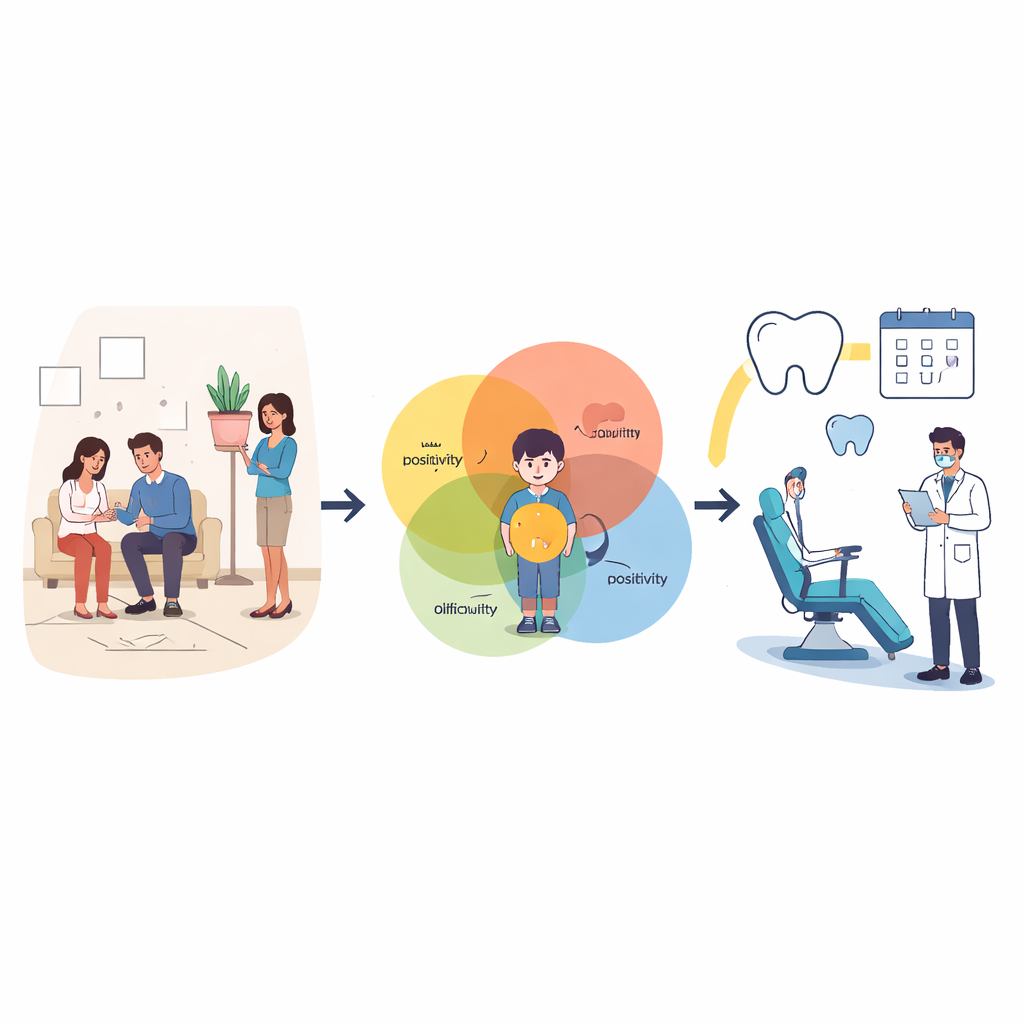
The researchers followed 167 children between 3 and 6 years old who visited a pediatric dentistry clinic in Turkey. They collected basic information about the families and performed careful dental examinations, measuring tooth decay, plaque, and gum health. Parents filled out standard questionnaires that rated their child’s temperament (such as impulsiveness, shyness, and positivity), emotional and behavioral problems, and parenting style (authoritative, authoritarian, or permissive). Using a statistical technique called path analysis, the team then built a conceptual model to see how all of these pieces fit together and which factors might influence one another.
How Parenting Style Shapes Children’s Temperament
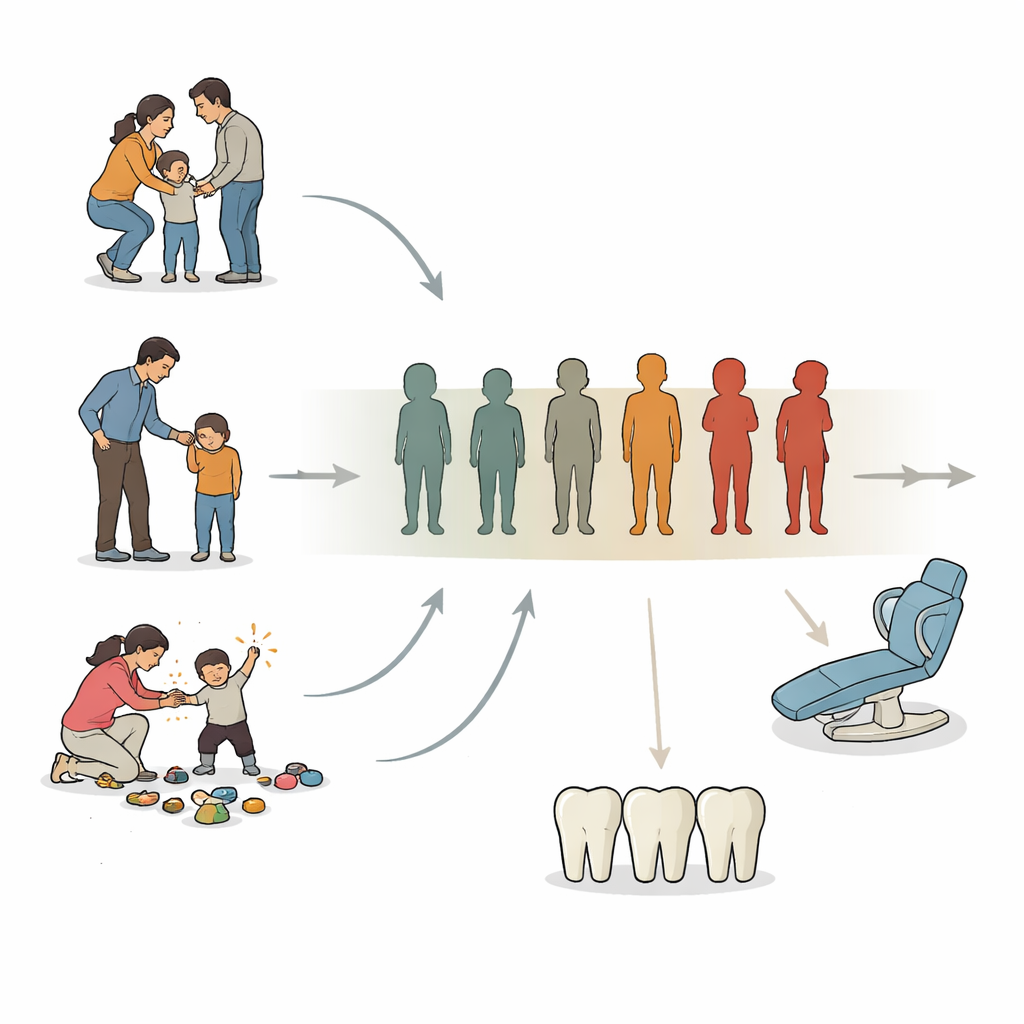
One of the clearest patterns the study found was between parenting style and children’s temperament. Most parents in the sample were classified as authoritative, a style typically marked by warmth, clear expectations, and consistent but reasonable rules. In these families, higher authoritative parenting scores were strongly linked to more positive temperament in children. Put simply, the more parents reported this warm-yet-structured style, the more their children tended to show positive mood and better self-control. This supports a broader body of research suggesting that how parents set limits and express care can nurture children’s emotional balance and social skills.
Emotional and Behavioral Difficulties and Gender Differences
The study also found that a child’s gender was meaningfully related to emotional and behavioral difficulties. Using a widely used screening tool, the researchers observed that girls tended to have lower overall difficulty scores than boys—that is, fewer combined problems with behavior, emotions, attention, and peer relationships. This does not mean that individual boys cannot be well-adjusted or that girls never struggle; rather, in this group of young children, boys as a whole showed more challenges. Other family factors, such as the parent’s age or whether the responding parent was the mother or father, were not strongly linked to children’s behavior scores in this model.
What Did Not Show a Strong Link to Teeth
Perhaps the most surprising result is what the researchers did not find. Despite examining multiple routes of influence, they did not see a strong statistical connection between children’s temperament or emotional and behavioral problems and their actual oral health—such as how many teeth were decayed—or their behavior during dental visits. Likewise, once everything was accounted for together, parenting style itself was not clearly tied to how often children visited the dentist, how cooperative they were in the chair, or how much tooth decay they had. The model describing these relationships fit the data well mathematically, but most proposed pathways from family and child factors to dental outcomes turned out to be weak or non-significant in this sample.
What This Means for Everyday Families
For parents and dentists, the study carries a double message. On one hand, it suggests that simply having a shy, impulsive, or behaviorally challenging child—or using a particular parenting style—does not automatically doom a child to poor oral health or difficult dental visits. Many other influences, such as diet, daily brushing habits, access to care, and broader social conditions, likely play major roles. On the other hand, the strong link between authoritative parenting and more positive child temperament underscores that parenting still matters greatly for children’s overall emotional well-being. A child who feels secure, supported, and guided is better positioned to handle stressful situations, including the dental chair. The authors argue that pediatric dentists can benefit from understanding children’s temperament and family dynamics, both to tailor behavior guidance during visits and to help parents adopt approaches that support their child’s broader well-being—even if those approaches do not show up directly in cavity counts.
Citation: Önsüren, A.S., Arslan, S.C. Conceptual modeling of child temperament, emotional and behavioral problems, and parenting style in relation to children’s oral health and dental visit behavior. Sci Rep 16, 18 (2026). https://doi.org/10.1038/s41598-025-25243-6
Keywords: child temperament, parenting style, pediatric dentistry, early childhood caries, child behavior