Clear Sky Science · en
A near telomere-to-telomere chromosome-level genome assembly of Rhodiola yunnanensis (Crassulaceae)
Mountain Medicine Meets Modern DNA
High in the mountains of southwestern China grows Rhodiola yunnanensis, a hardy succulent plant valued in traditional medicine for compounds thought to help the body handle stress and harsh environments. This study delivers the most detailed genetic blueprint to date for this little-known species, giving scientists a powerful reference to explore how it survives thin air and cold, and how it makes its sought‑after chemical ingredients. 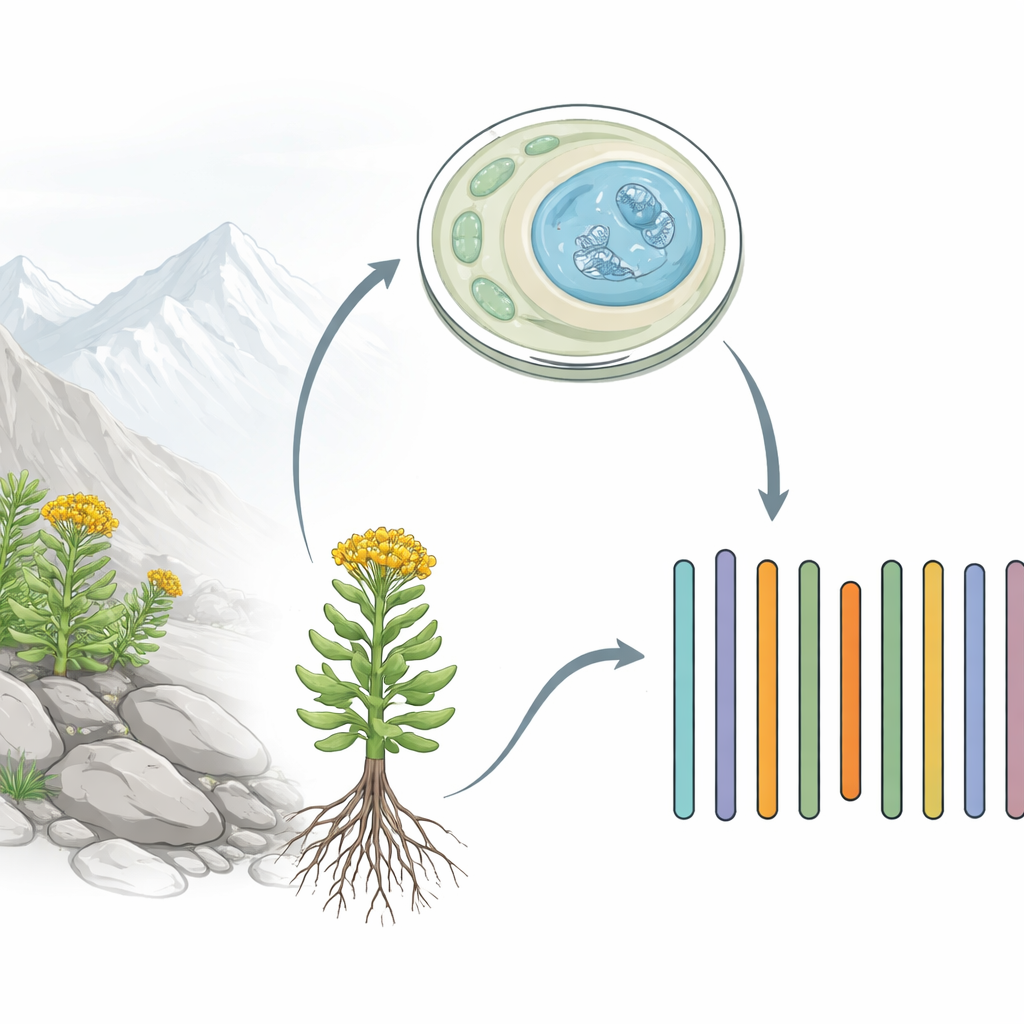
A Tough Plant in a Harsh Home
Most species in the Rhodiola group live on windswept, high‑altitude slopes where temperatures swing wildly, sunlight is intense, and oxygen is scarce. Their thick underground stems and fleshy leaves store water and energy, helping them ride out these extremes. These same tissues are packed with special molecules, including salidroside and rosavin, that have attracted attention from both herbal traditions and modern laboratories. Yet different Rhodiola species produce very different amounts of these compounds, and until now, scientists lacked a complete genetic map to understand why and to trace how these plants adapted to life above the clouds.
Building a Complete Genetic Blueprint
To create a near‑complete map of the Rhodiola yunnanensis genome, the researchers first collected leaves from a wild plant growing at about 3,400 meters in the Hengduan Mountains of Sichuan, China. They extracted high‑quality DNA and read it using multiple sequencing technologies. Long DNA fragments were captured by a portable device that can read very long stretches in one go, while another platform produced huge numbers of shorter, highly accurate reads. A third approach, called Hi‑C, captured how pieces of DNA sit next to each other inside the cell nucleus, providing a guide for stitching fragments together into full chromosomes.
From Fragments to Chromosomes
Using specialized computer programs, the team first assembled the long reads into continuous stretches of DNA and removed duplicate copies that arise because each plant carries two versions of its genome. They then polished these stretches with the more accurate short reads to correct errors. Finally, they used the Hi‑C contact data to arrange and orient the pieces into 11 long structures that correspond to chromosomes. The result is a genome about 643 million “letters” long, with almost all of it anchored into chromosome‑sized units. In many cases, each chromosome runs nearly uninterrupted from one end to the other, and typical features like telomeres at the tips and centromeres in the middle can be clearly spotted. 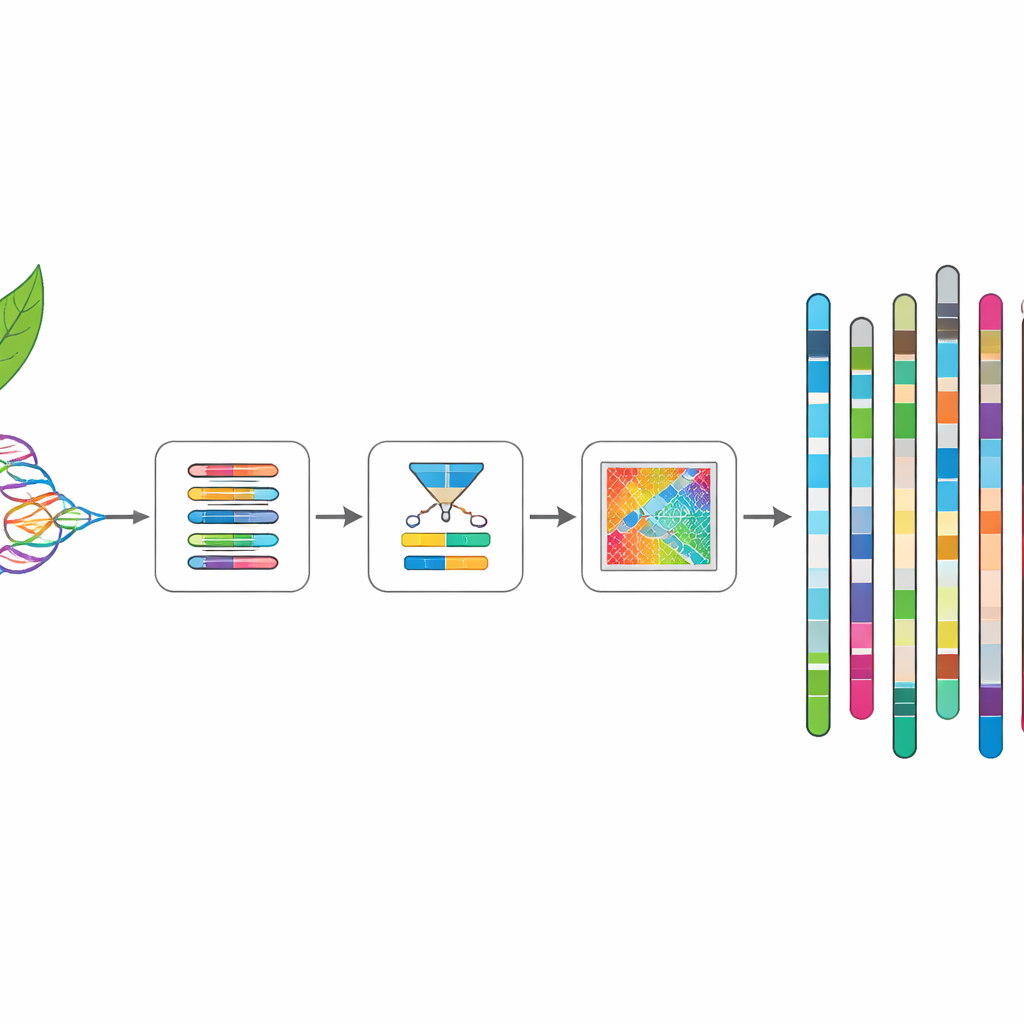
What the Genome Reveals Inside
Once the genome was assembled, the researchers set out to identify its working parts. They found that roughly two‑thirds of the DNA consists of repeated sequences, especially a common type known as long terminal repeat elements. On top of this repeated background, they predicted 36,495 genes that can code for proteins, with the vast majority supported by actual RNA molecules observed in leaves, stems, and fruits. Most of these genes could be matched to known families and functions from other plants, including more than 1,600 that act as transcription factors—key switches that turn other genes on and off. The team also cataloged thousands of non‑coding RNA genes, which help translate and regulate genetic information.
A New Foundation for Future Discoveries
Extensive tests show that this genome is both highly complete and accurate, meeting modern benchmarks for quality. For non‑specialists, the bottom line is that we now have a reliable, near end‑to‑end genetic map of Rhodiola yunnanensis. This resource will help researchers uncover how this alpine plant copes with cold, bright, low‑oxygen conditions and how it builds its valuable medicinal compounds at the molecular level. In turn, that knowledge could inform conservation of these threatened mountain plants, guide breeding for sustainable cultivation, and support efforts to recreate useful Rhodiola ingredients in microbes or crops, reducing pressure on wild populations.
Citation: Wang, M., Du, P., Tong, C. et al. A near telomere-to-telomere chromosome-level genome assembly of Rhodiola yunnanensis (Crassulaceae). Sci Data 13, 707 (2026). https://doi.org/10.1038/s41597-026-07044-2
Keywords: Rhodiola yunnanensis, medicinal plants, genome assembly, high-altitude adaptation, plant specialized metabolites