Clear Sky Science · en
Continuous observation of Parkinsonian symptoms using symptom diaries & wearable accelerometry
Why Tracking Symptoms All Day Matters
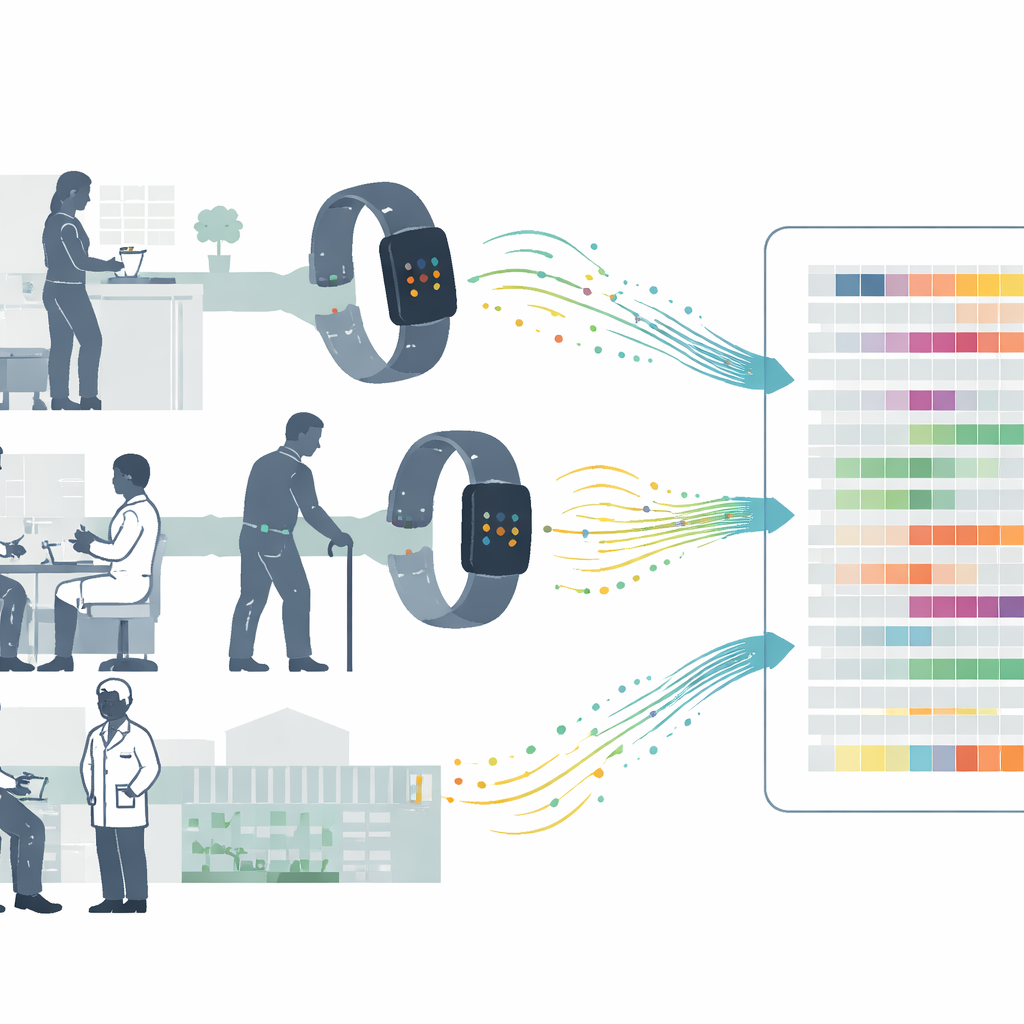
For people living with Parkinson’s disease, symptoms can change from hour to hour. A doctor’s quick exam in the clinic often captures only a snapshot, missing important ups and downs in movement, tremor, and stiffness across the day and night. This study describes a new, openly shared dataset that follows people with Parkinson’s in their everyday lives using both wrist-worn motion sensors and simple symptom diaries. It lays the groundwork for smarter tools that could one day help tailor treatment in real time, without asking patients to constantly write things down.
The Daily Challenge of Changing Symptoms
Parkinson’s disease is best known for its movement problems: slowness, stiffness, and a shaking tremor. Medicines can help a great deal, but their effects wear off, and many people cycle between hours of too little movement and periods of unwanted extra movements. Today, the main way to capture these real-world swings is with paper diaries, where patients or caregivers mark how they feel throughout the day. These diaries are hard to keep up, depend on memory and attention, and can be biased by poor self-awareness of symptoms. As a result, doctors often lack a clear picture of how treatments work outside the clinic.
Wrist Sensors Step Into Everyday Life
Modern wrist devices contain tiny motion sensors that can measure how a person moves every second. Researchers have begun using such accelerometers to monitor Parkinson’s symptoms continuously at home, showing that people generally accept wearing them and may even prefer them to filling in diaries. However, most past studies have involved small, highly selected groups of patients, and they often used different measures and methods. In particular, there have been very few large datasets that combine real-world sensor recordings with traditional symptom diaries, making it hard to test and compare new digital approaches fairly.
How the Study Followed People Around the Clock
To close this gap, the authors conducted a study called Continuous Observation of Parkinsonian Symptoms. Sixty-six adults with Parkinson’s, treated at a single neurology center in Germany, wore motion sensors on both wrists for up to seven days while going about their usual routines, either in the hospital, at home, or both. At the same time, they completed a simple hourly diary. In each entry, they marked their overall movement state, the presence and strength of tremor, any freezing of walking, any falls, and when they took Parkinson’s medications, as well as when they slept. The only requirements to join were a Parkinson’s diagnosis, being over 18, and being able to consent, so the group reflects a broad range of disease stages and treatments, including many people with deep brain stimulation.
Turning Raw Signals into an Open Resource
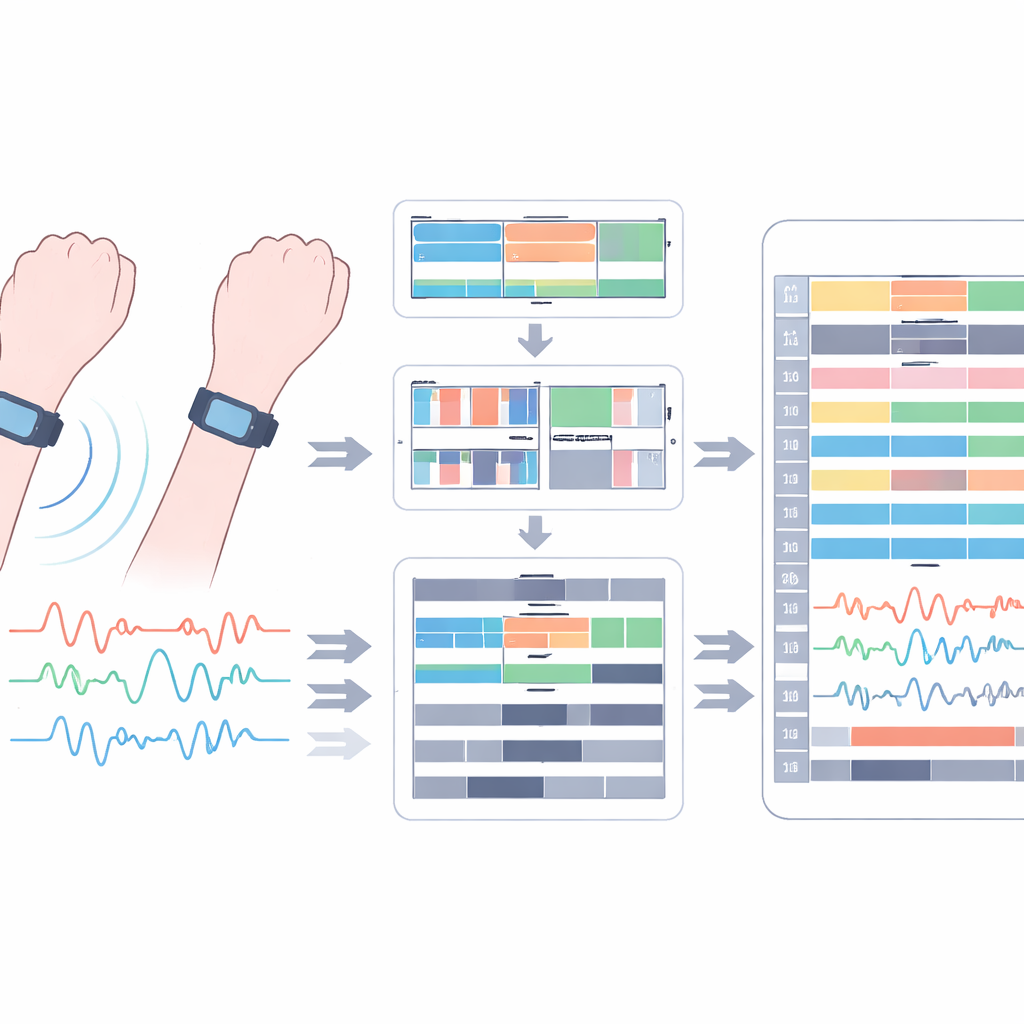
The wrist devices recorded three-dimensional motion 100 times per second, along with light and skin temperature to tell when the watches were actually being worn. After the study, the team digitized all paper diaries, synchronized them with the time-stamped sensor data, and broke the motion signals into one-hour chunks matching each diary entry. They visually checked the data to spot times when devices were off the wrist, marking those hours as missing. In total, the dataset contains about 394 days of overlapping diary and sensor information, covering both waking hours and sleep, with only a small fraction of missing entries. All files—demographics, diaries, motion data, and example code to work with them—are freely available through an online open-science platform.
What This Means for Future Care
This work does not yet deliver a new device or app for patients, but it supplies the raw material needed to build and test them. By sharing a rich, carefully organized record of how people with Parkinson’s move and feel over many days, the authors invite other scientists to develop algorithms that can read patterns in the wrist signals and link them to real-life symptoms. If successful, such tools could one day reduce the burden of paper diaries, give doctors a clearer view of each person’s good and bad hours, and support more precise adjustments of medication and other therapies in everyday life.
Citation: Nesser, T.P.R., van der Linden, C., Schedlich-Teufer, C. et al. Continuous observation of Parkinsonian symptoms using symptom diaries & wearable accelerometry. Sci Data 13, 587 (2026). https://doi.org/10.1038/s41597-026-06999-6
Keywords: Parkinson’s disease, wearable sensors, accelerometry, symptom tracking, digital health