Clear Sky Science · en
A validated Mandarin Chinese Auditory Emotion Database of Subject-Personal-Pronoun Sentences (MCAE-SPPS)
Why Simple Words Like “I” and “You” Matter
Everyday phrases such as “I have a plan” or “You did well” carry more than just information—they carry feeling. Subtle changes in who is talking about whom can shape how we hear and interpret emotion in a voice. This study introduces a large, carefully checked sound library of Mandarin Chinese sentences that all center on personal pronouns like “I,” “you,” and “he.” It is designed to help scientists, clinicians, and engineers better understand how our choice of pronoun colors the emotions we hear, and to build smarter tools for mental health and human–machine communication.
Building a Library of Emotional Voices
To create this resource, the researchers first wrote 40 short, emotionally neutral sentences in Mandarin, all with a simple pattern such as “I have a plan.” They confirmed with independent raters that these sentences felt neutral rather than happy or sad. Then they swapped the subject word to make six versions of each sentence—“I,” “we,” singular “you,” plural “you,” “he,” and “they”—while keeping the rest of the sentence identical. This produced 200 neutral base sentences, each differing only in the pronoun, so any changes in how people heard emotion could be traced back to that single word.
Turning Neutral Sentences into Emotional Speech
Six highly trained Mandarin-speaking actors—three men and three women—recorded every sentence in seven emotional styles: neutral, happiness, sadness, anger, fear, disgust, and surprise. That meant each actor produced 1,400 recordings, for a total of 8,400 clips. Recordings took place in a professional sound studio and were carefully edited and normalized so that sound quality was consistent. After removing a small number of clips with technical or pronunciation errors, 8,379 utterances remained to be tested with listeners.
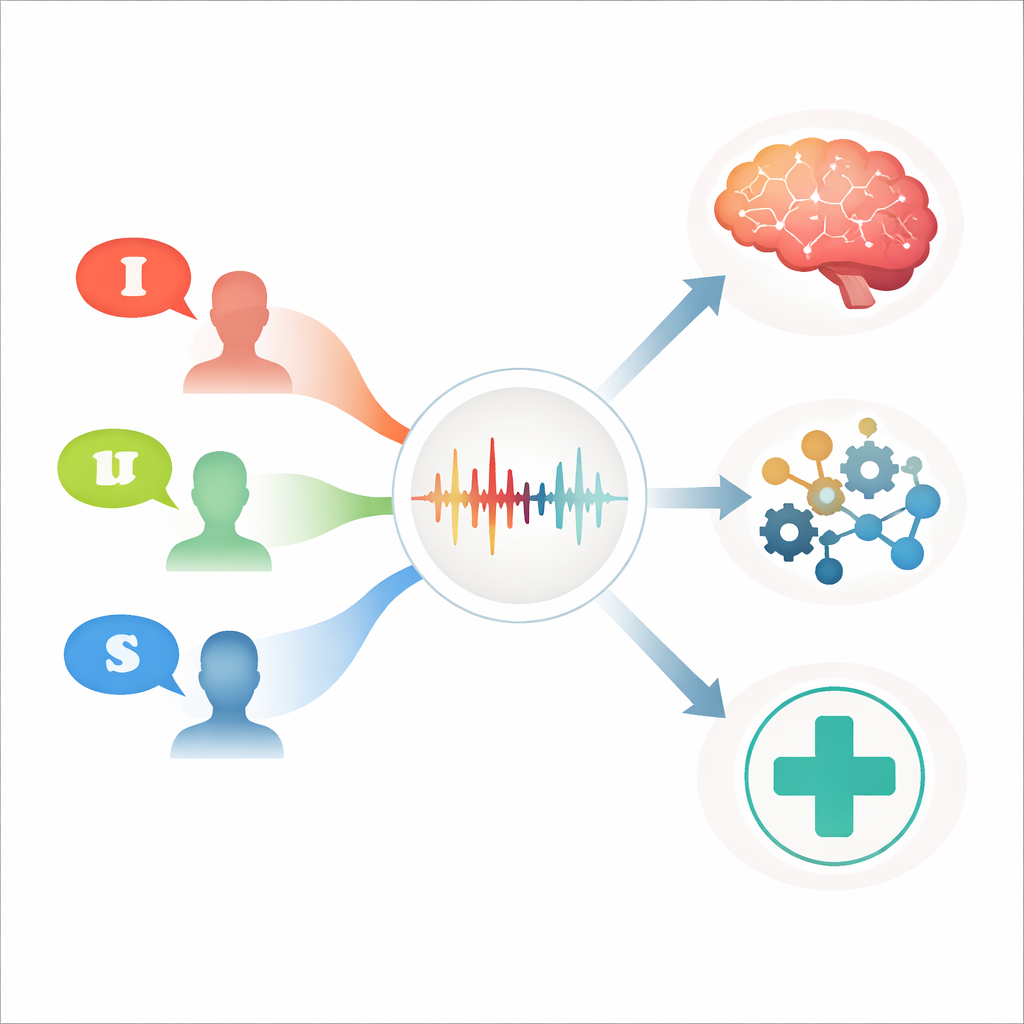
How Listeners Judged Feelings in the Voice
To find out how clearly each clip expressed emotion, the team recruited 720 Chinese college students. Each person listened to a few hundred clips online and, for every one, chose which of the seven emotions they heard and how strong it felt on a nine-point scale. Each clip was judged by 40 different listeners, providing a rich picture of how consistently people recognized the intended feelings. The researchers then kept only those recordings that were correctly identified at least three times more often than chance and were not frequently mistaken for another emotion. This quality filter left 6,675 “valid” recordings, still covering all emotions and pronoun types.
What the Data Reveal About Emotion and Pronouns
The final database shows that some emotions are much easier to hear than others: neutral and sadness were recognized most accurately, while fear and disgust were more easily confused. Women, on average, were slightly better than men at identifying the emotions in speech. Crucially, the team found that pronouns matter: sentences addressing “you” were distinguished from third-person sentences about “he” or “they” across all emotions, suggesting that directly addressing the listener heightens emotional clarity. Pronoun choice also changed how intense speech sounded. For example, “you” sentences tended to feel stronger for anger and fear, while “I” sentences felt more intense for happiness and disgust. Acoustic analyses further linked features like pitch, loudness, and voice quality to how accurately each emotion was recognized.
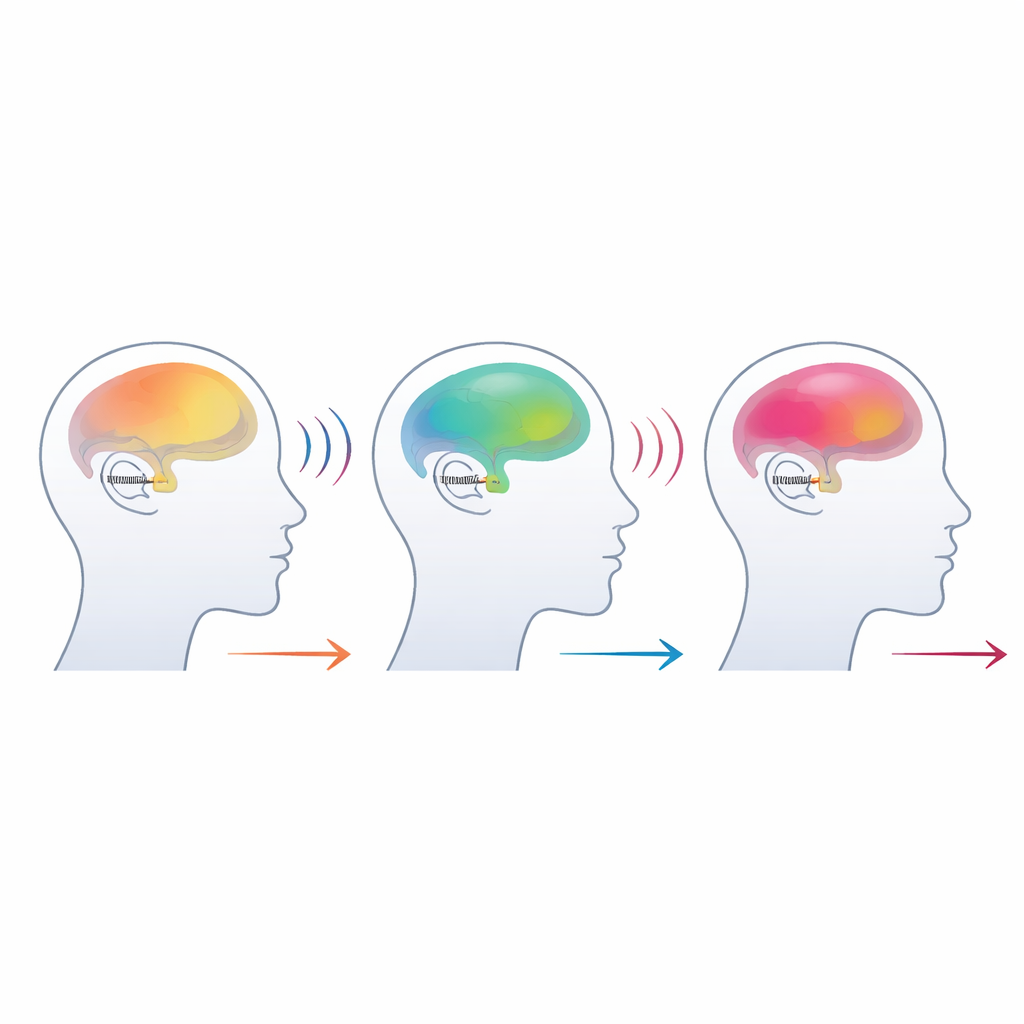
Why This Resource Matters Going Forward
In plain terms, this work shows that tiny words like “I” and “you” can change not only what we say but how strongly our feelings are heard. By offering thousands of carefully labeled recordings where only the pronoun and emotional tone vary, the Mandarin Chinese Auditory Emotion Database of Subject-Personal-Pronoun Sentences gives researchers a powerful tool to study how language, emotion, and social perspective interact. It can support advances in brain research, more sensitive emotion-aware artificial intelligence, and clinical tools that listen for changes in mood or mental health, all grounded in the simple but profound question of who is speaking about whom.
Citation: Li, M., Zhou, A., Yan, H. et al. A validated Mandarin Chinese Auditory Emotion Database of Subject-Personal-Pronoun Sentences (MCAE-SPPS). Sci Data 13, 602 (2026). https://doi.org/10.1038/s41597-026-06976-z
Keywords: emotional speech, Mandarin Chinese, personal pronouns, emotion recognition, speech database