Clear Sky Science · en
Epigenetic and transcriptional profiling of secondary hair follicle stem cells during cashmere growth
Why Soft Cashmere Starts with Tiny Stem Cells
Cashmere sweaters feel luxurious because the fibers are extraordinarily fine, soft, and warm. But behind every strand of cashmere is a microscopic drama playing out in the skin of goats. This study takes a close look at the stem cells that grow cashmere fibers and the chemical "switches" on their DNA that tell them when to wake up, work, or rest. By mapping these switches across the goat genome, the researchers created a reference atlas that could ultimately help breeders, biologists, and textile producers understand—and perhaps improve—cashmere production.
From Goat Coat to Living Fiber Factory
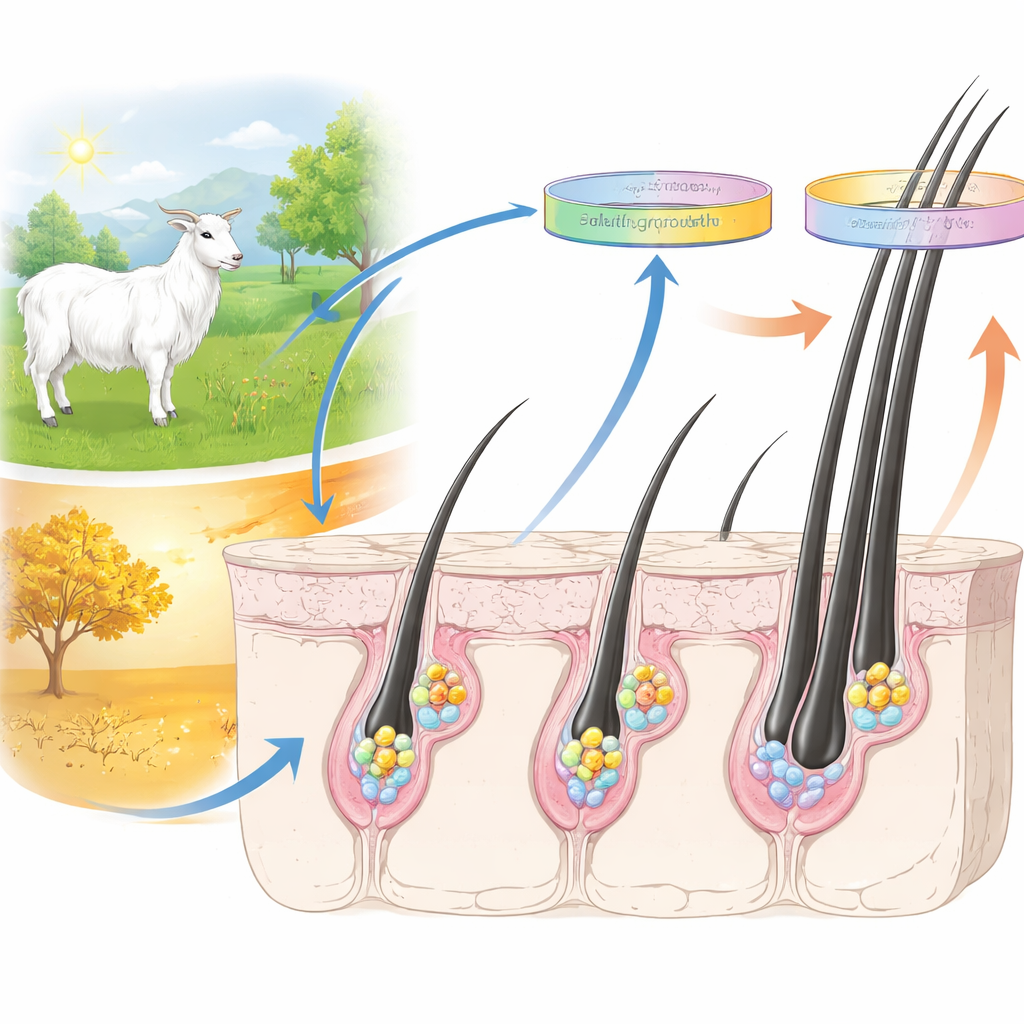
Cashmere comes from special structures in the skin called secondary hair follicles, which act like tiny factories that grow fine undercoat fibers. Each follicle has a reservoir of stem cells that can repeatedly regenerate new fibers in a seasonal cycle, much like a field that is replanted every year. In cashmere goats, these cycles are closely tied to the environment, with fibers starting to grow in early spring and reaching full production by autumn. The team focused on the stem cells from these follicles during two key moments in this cycle—early growth and mid growth—to see how their inner control systems change over time.
Reading Chemical Marks on DNA
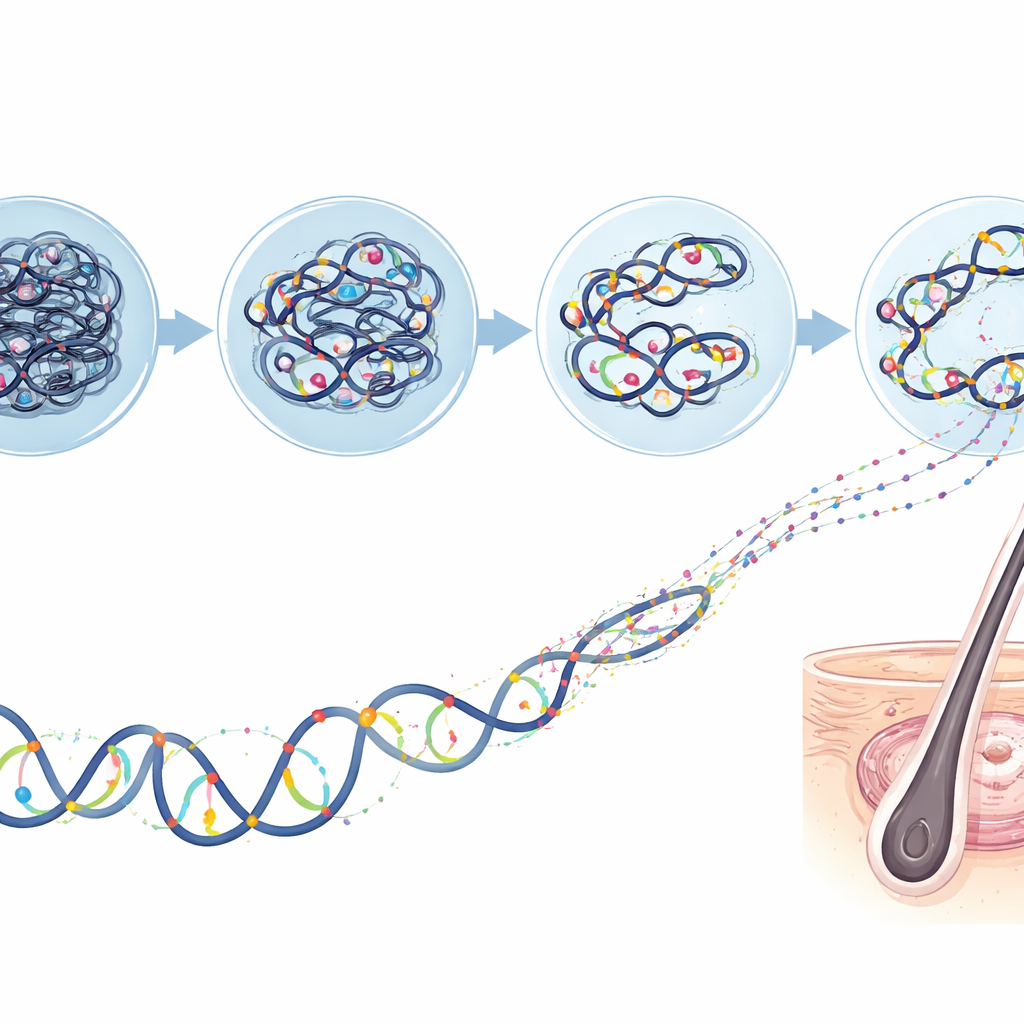
The researchers were interested in "epigenetic" marks—small chemical tags attached to proteins that package DNA. These tags do not change the genetic code itself, but they strongly influence which genes are turned on or off, much like sticky notes placed on the pages of a book saying "read this now" or "skip this chapter." The team studied four specific marks on histone proteins that are known to be connected with active genes, silent genes, or gene bodies in use. They used a technique called ChIP-seq to pull out DNA regions carrying each mark and then sequenced them across the entire goat genome, generating millions of reads for each sample and building a detailed map of where these marks sit.
Linking Epigenetic Patterns to Gene Activity
To understand how these chemical tags actually affect the work of the stem cells, the scientists also measured which genes were being actively read in the same cells using RNA sequencing. They then combined the two types of data, comparing how the presence or absence of each histone mark near gene starting points lined up with changes in gene activity between early and mid growth. Regions marked with tags commonly linked to active genes tended to sit near genes that were more strongly expressed, while marks linked to gene silencing showed the opposite pattern. By using computational tools, they grouped regions of the genome into active, poised, or repressed states and tracked how these states shifted as cashmere growth progressed.
Careful Checks for Reliable Data
Because this work is meant to serve as a shared resource for other scientists, the authors devoted substantial effort to quality control. They cultured stem cells from carefully selected male and female goats, verified the identity and purity of these cells with specific markers, and ensured that the RNA and DNA they extracted were of very high quality. They then checked that repeated experiments gave nearly the same results, showing strong agreement between samples from different animals. The patterns of histone marks around gene start sites and at known hair-related genes behaved as expected, adding biological confidence that the maps they produced truly reflect how cashmere stem cells are regulated.
What This Means for Cashmere and Beyond
For non-specialists, the key takeaway is that cashmere growth is controlled not just by genes, but by an intricate layer of chemical markings that help decide when those genes act. This paper does not propose a single magic gene for better cashmere; instead, it offers a high-resolution atlas of the switches that steer stem cells through the cashmere growth season. By making all of their raw and processed data publicly available, the researchers provide a foundation for future work aimed at improving fiber yield and quality, exploring how environment and breeding shape these epigenetic patterns, and applying similar approaches to other animals and even human hair biology.
Citation: Liang, X., Liu, B., Liu, Y. et al. Epigenetic and transcriptional profiling of secondary hair follicle stem cells during cashmere growth. Sci Data 13, 592 (2026). https://doi.org/10.1038/s41597-026-06972-3
Keywords: cashmere, hair follicle stem cells, epigenetics, histone modification, RNA sequencing