Clear Sky Science · en
World Ocean Database 2023: A Foundational Data Resource for and by the Global Ocean and Coastal Communities
Why a Giant Ocean Memory Matters
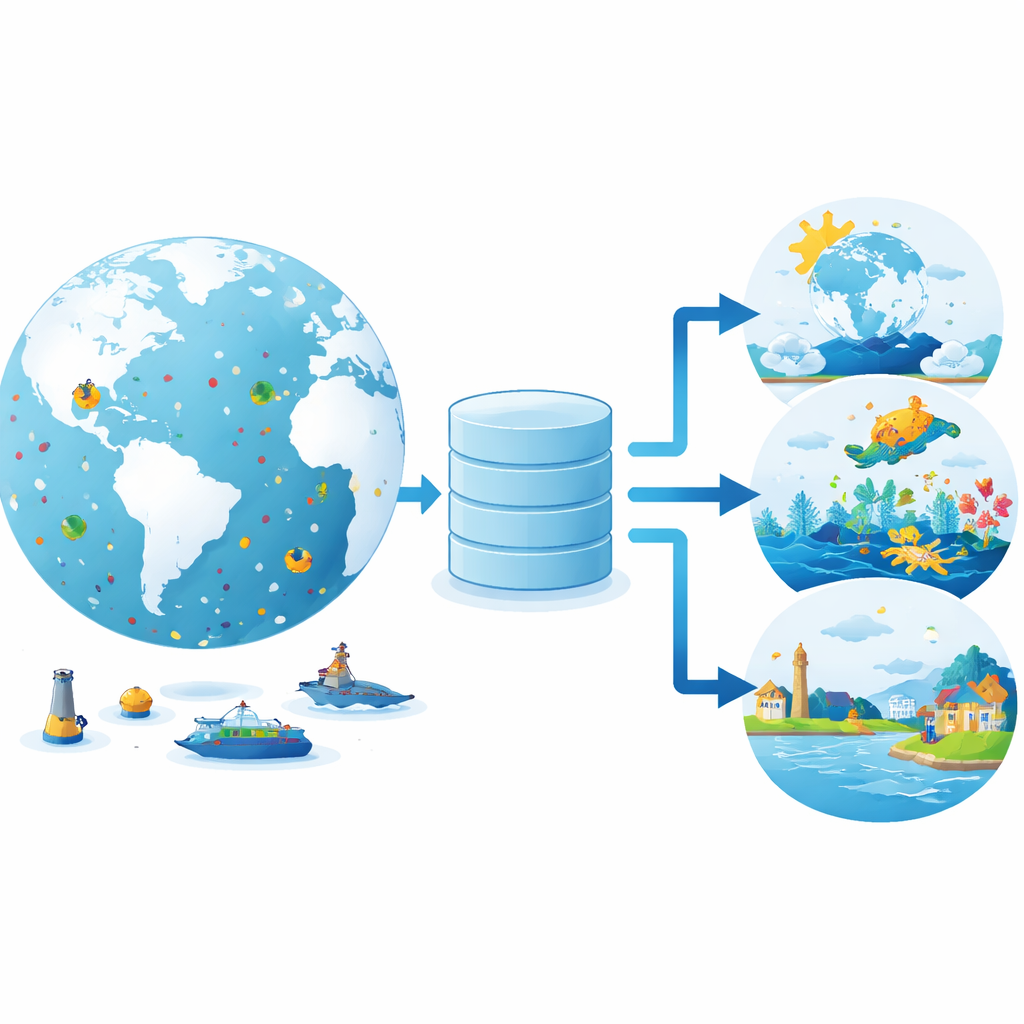
The oceans quietly absorb most of the heat and a large share of the carbon pollution humans add to the planet. They shape storms, fish stocks, shipping routes, and coastal economies. Yet until recently, much of what we knew about the oceans was scattered across dusty logbooks, aging tapes, and dozens of incompatible digital systems. This article describes the World Ocean Database 2023 (WOD23), a massive global effort to pull centuries of ocean measurements into a single, carefully checked, easy-to-use resource that scientists, governments, and coastal communities can rely on to understand a rapidly changing sea.
Bringing the World’s Ocean Measurements Together
WOD23 is the most complete digital collection so far of direct, in‑water ocean measurements, reaching back to 1772 and extending through 2022. It gathers about 18.6 million vertical profiles of the water column, containing roughly 3.6 billion individual readings of temperature, saltiness, oxygen, nutrients, carbon chemistry, and other key properties. The database also holds more than 22 million observations of winds, waves, and weather at sea, plus hundreds of thousands of plankton samples. These data come from 97 countries, more than 1,500 institutions and research programs, and a wide array of tools, from 18th‑century thermometers on wooden ships to modern robotic floats and gliders.
From Ship Logs to Smart Floats
The collection traces the evolution of ocean observing itself. Early records include measurements from voyages such as Captain James Cook’s expeditions and the 19th‑century Challenger cruise, where sailors lowered bottles and thermometers by hand to sample the deep. In the 20th century, mechanical devices and more precise instruments—bathythermographs, Nansen and Niskin bottles, and later electronic sensors—greatly expanded coverage. Since about 2000, fleets of battery‑powered profiling floats, gliders, tethered instruments under sea ice, and even tagged marine animals have been recording the ocean’s vital signs in remote regions and at all seasons. WOD23 brings these generations of measurements together, providing a four‑dimensional view (latitude, longitude, depth, time) of the ocean that spans 250 years.
Turning a Data Patchwork into a Coherent Picture
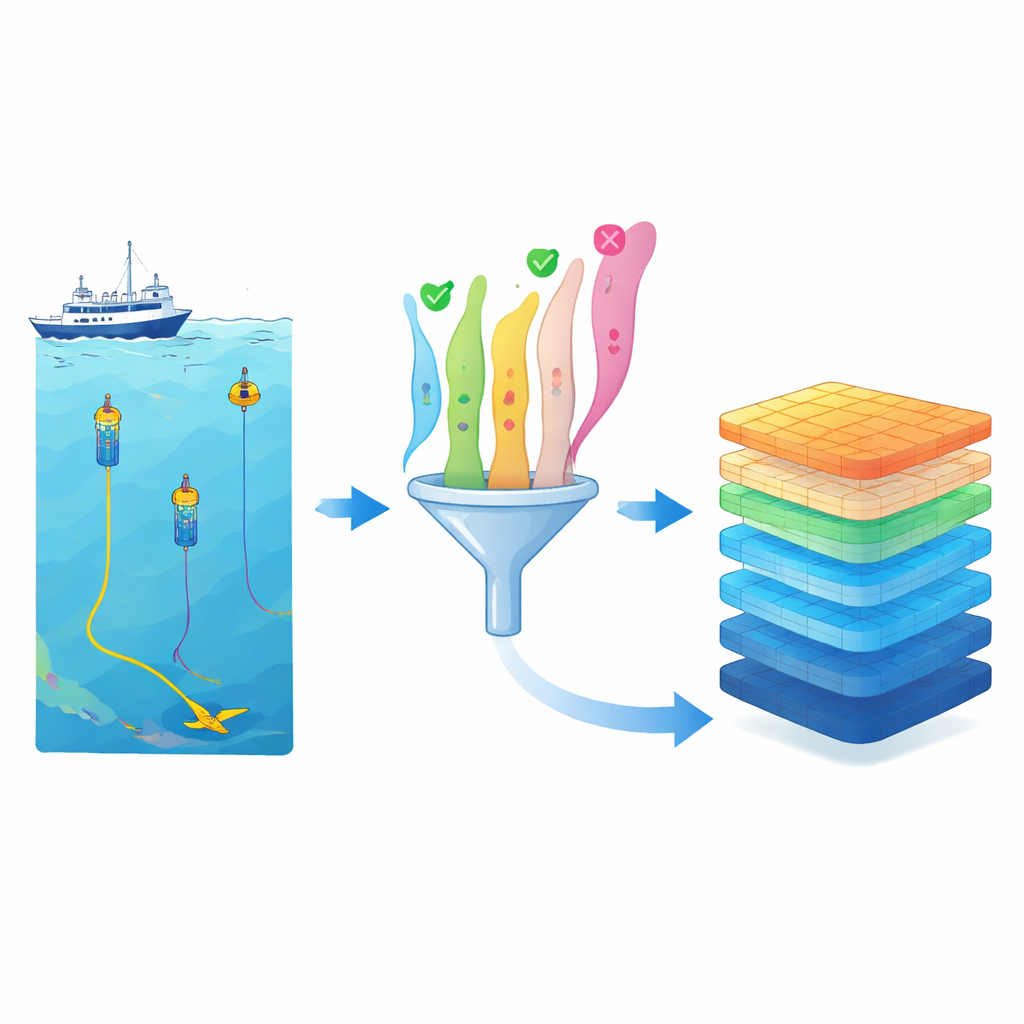
Simply collecting all these observations is not enough: they arrive in different formats, units, and levels of quality, often with gaps or errors in their descriptive information. The WOD23 team converts everything into common units, adds standardized metadata about how, where, and when each measurement was taken, and then performs extensive quality checks. Automated tests look for impossible values, sudden jumps with depth, conflicting positions, and duplicate records shared by multiple centers. Subject‑matter experts then inspect maps and vertical slices of the data to catch suspicious patterns and regional oddities. Importantly, flagged measurements are not discarded but labeled, allowing future users or new methods, such as machine‑learning tools, to revisit and possibly rescue them.
Making Ocean Data Truly Usable
To serve the global community, WOD23 follows the FAIR principles: data should be Findable, Accessible, Interoperable, and Reusable. The database is openly available online through several portals and can be searched by region, time period, variable, observing platform, research project, or even specific quality‑control choices. Users can download data in standard formats compatible with widely used analysis software and visualization tools. Because WOD23 is built directly from long‑term archives at the U.S. National Centers for Environmental Information and is versioned over time, studies based on the database can be reproduced years later and compared fairly as new data are added.
Why This Ocean Archive Changes the Game
In plain terms, WOD23 is a shared ocean memory that the world can tap again and again. By gathering scattered measurements into a curated, well‑documented whole, it gives climate scientists the evidence they need to track ocean heating, sea‑level rise, deoxygenation, and acidification; it supports weather and hurricane forecasting, fisheries management, and assessments of long‑term risks to coasts and marine ecosystems. The database shows that no single nation could have built this record alone, and its continued growth depends on global cooperation in sharing and standardizing observations. For anyone who depends on the ocean—from coastal residents to ship operators and policymakers—WOD23 is a foundational resource for understanding what has already changed, what is changing now, and what may lie ahead.
Citation: Garcia, H., Boyer, T., Levitus, S. et al. World Ocean Database 2023: A Foundational Data Resource for and by the Global Ocean and Coastal Communities. Sci Data 13, 613 (2026). https://doi.org/10.1038/s41597-026-06957-2
Keywords: ocean observing systems, climate change, ocean data, marine ecosystems, Earth system science