Clear Sky Science · en
Chromosome-level genome assembly and annotation of the Rhinogobio ventralis, an endangered endemic fish from the Yangtze River
A River Fish on the Brink
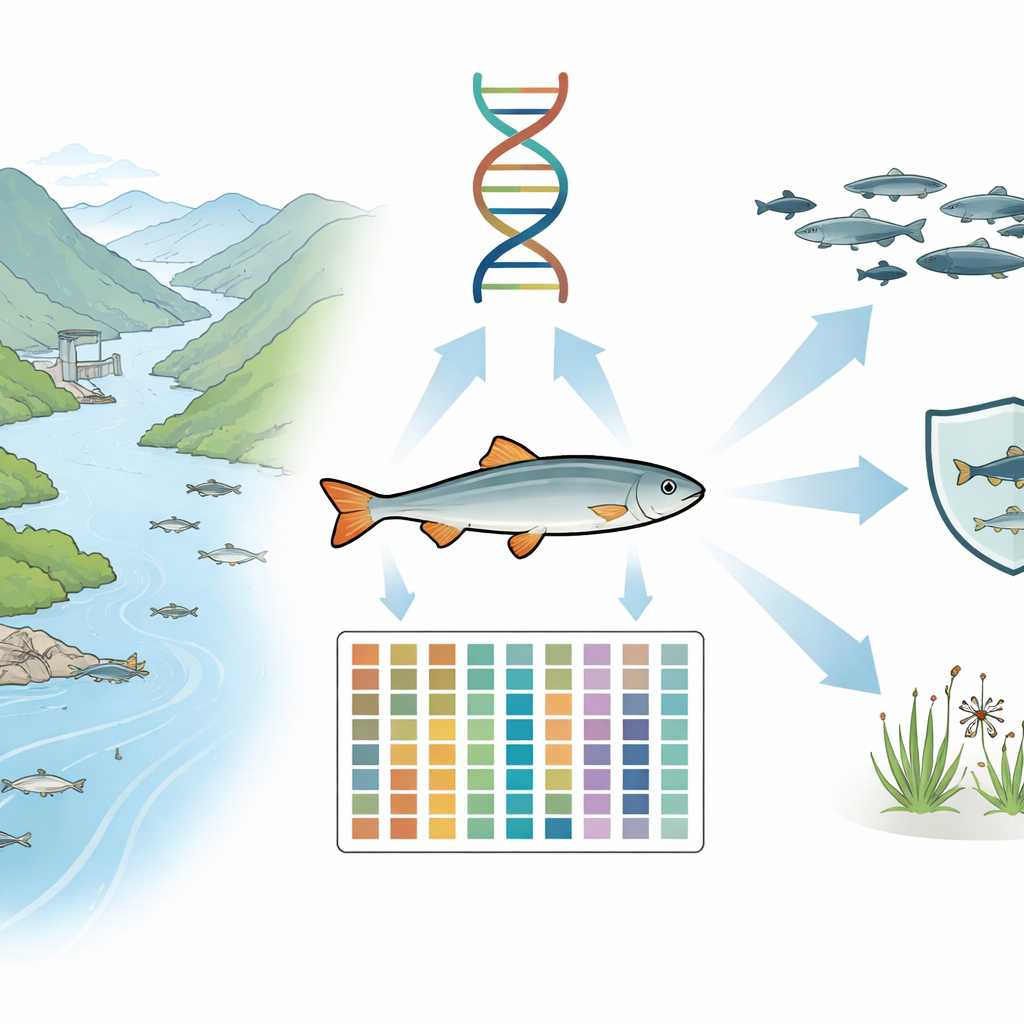
The Rhinogobio ventralis is a small, silvery fish that lives only in the fast-flowing upper reaches of China’s Yangtze River. Once valued as a local food fish, it has been pushed to the edge of extinction by dams, pollution, and overfishing. This study builds a complete genetic blueprint for the species, giving conservationists a powerful new tool to understand how the fish lives, adapts, and might be saved.
Why This Little Fish Matters
Rhinogobio ventralis is part of the carp family and has evolved to thrive in strong currents, laying drifting eggs that ride the river’s flow. Because it is found nowhere else on Earth, its decline signals both a loss of unique natural heritage and a warning about the health of the upper Yangtze. Until now, most research focused on its basic biology and attempts at captive breeding. What has been missing is a detailed map of its DNA, the instruction set that shapes its body, behavior, and ability to cope with environmental change.
Building a Genetic Blueprint
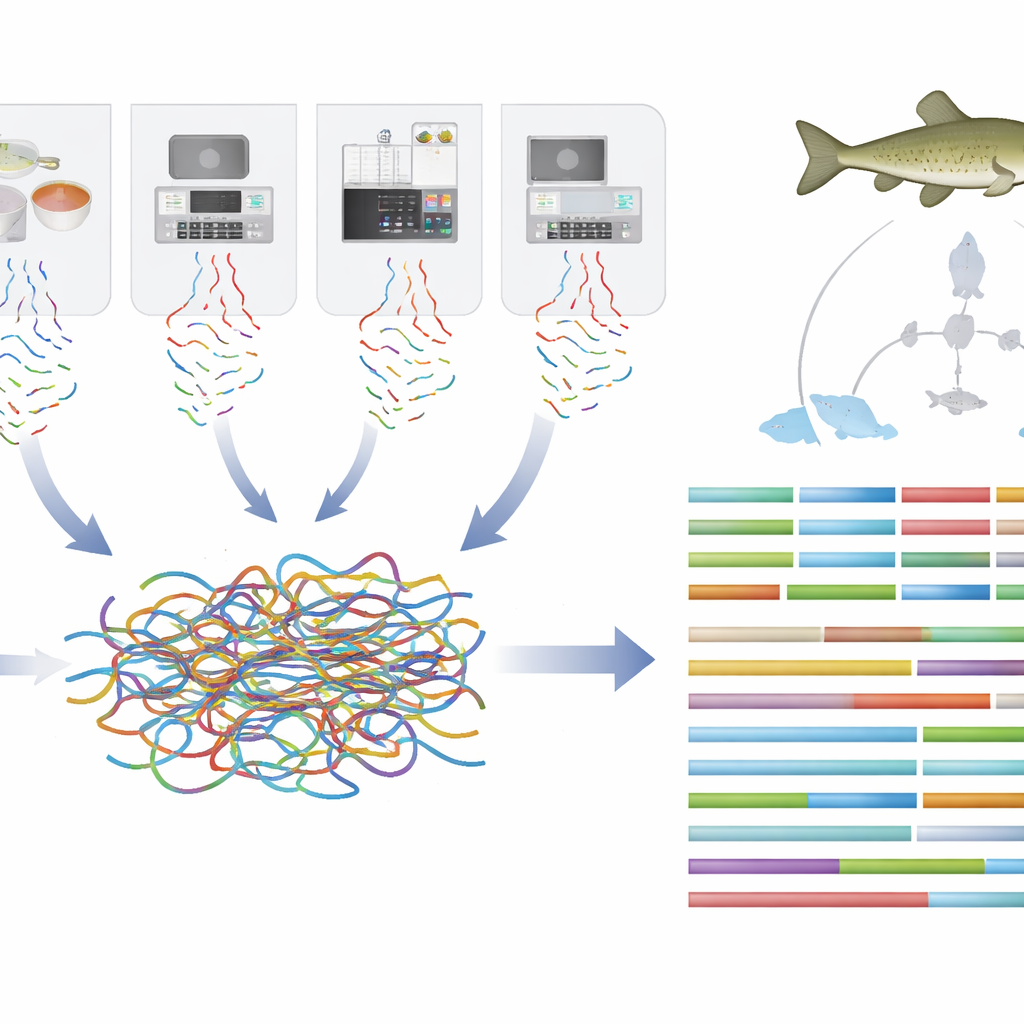
To create that map, the researchers collected tissues from a healthy adult female fish raised in captivity. They used several advanced DNA reading technologies that each capture different pieces of the puzzle. Long-read sequencing reveals large stretches of DNA in a single pass, short-read sequencing checks fine details with very high accuracy, and a method called Hi‑C records how pieces of DNA are physically arranged inside the cell’s nucleus. By carefully combining these data, they assembled the fish’s genome into 25 long DNA units corresponding to its chromosomes, with very few gaps or errors.
What the Genome Reveals
The finished genome is just over one billion “letters” long and passes strict quality checks normally applied to reference genomes of model species. Nearly two-thirds of it is made up of repeating segments, many of them mobile DNA elements that can copy and move within the genome. These repeats help explain why the DNA is so complex and may influence how the fish adapts to its changing environment. Within this framework, the team identified more than 23,000 genes that code for proteins, and they were able to assign likely functions to almost all of them by comparing them to genes already studied in other fish.
Placing the Fish on the Tree of Life
With this detailed genome in hand, the scientists compared Rhinogobio ventralis to a range of other ray-finned fishes. They grouped its genes into families shared across species, uncovered several hundred gene families unique to this fish, and traced which families have expanded or shrunk over time. Their evolutionary analysis shows that Rhinogobio ventralis is closely related to another Yangtze River fish, Coreius guichenoti, and that their lineages split roughly 23.5 million years ago. These comparisons confirm that the new genome is both biologically reasonable and technically robust.
A Foundation for Saving a Species
The authors have deposited all raw data and the assembled genome in public databases so that other researchers can use them freely. This genetic roadmap will support future work on how Rhinogobio ventralis populations are structured in the wild, which DNA changes underlie important traits, and how best to design breeding and release programs. In plain terms, the study turns a little-known endangered fish into a genetically well-understood species, giving conservation biology a firmer scientific foundation for keeping it from disappearing from the Yangtze River for good.
Citation: Zhao, Y., Wu, X., Zheng, W. et al. Chromosome-level genome assembly and annotation of the Rhinogobio ventralis, an endangered endemic fish from the Yangtze River. Sci Data 13, 615 (2026). https://doi.org/10.1038/s41597-026-06949-2
Keywords: endangered fish, genome assembly, Yangtze River, conservation genetics, freshwater biodiversity