Clear Sky Science · en
Genome-wide fine-mapping improves identification of causal variants
Why finding true genetic signals matters
Many common conditions—from height and body weight to schizophrenia and Crohn’s disease—are influenced by thousands of tiny DNA changes scattered across our genome. Modern studies can spot regions of DNA that are linked to a trait, but they often cannot tell which specific changes in those regions truly cause the effect. This paper introduces a new way to scan the entire genome at once to home in on the most likely causal changes, helping scientists move from rough “neighborhoods” of interest to precise “street addresses” in our DNA.
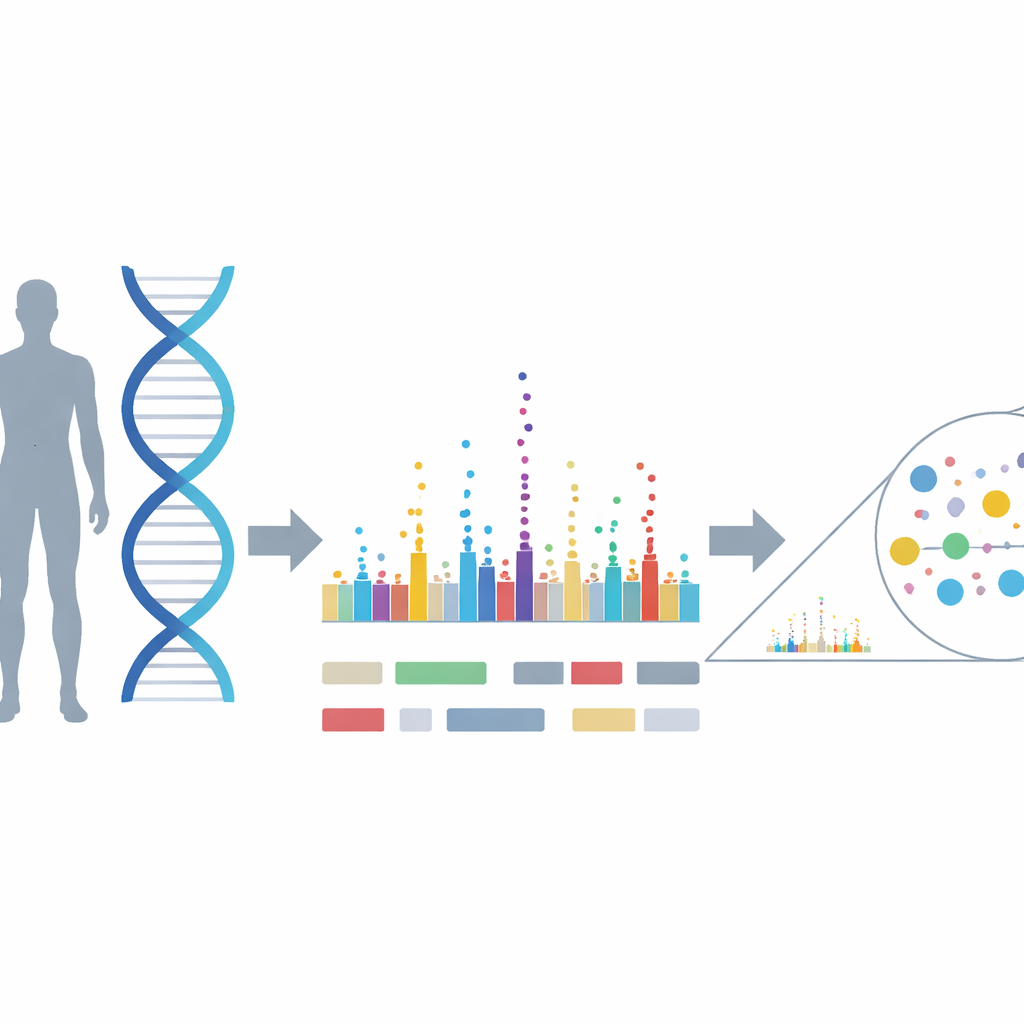
From rough maps to precise locations
Standard genome-wide association studies (GWAS) look for statistical links between millions of DNA markers and a trait, producing a skyline-like plot of peaks across the chromosomes. Each peak marks a neighborhood where several nearby markers all appear linked to the trait because they tend to be inherited together. This makes it hard to tell which marker—or combination of markers—is truly responsible. Traditional fine-mapping methods zoom in on one region at a time, usually only on the tallest peaks, and analyze those windows separately. That strategy leaves out many real but weaker signals, struggles in tangled regions of DNA, and offers little guidance on how big future studies need to be to reveal more causal changes.
A whole-genome approach to pinpointing variants
The authors present a “genome-wide fine-mapping” approach that analyzes all common DNA markers across the genome at once. Their key tool, called SBayesRC, uses a Bayesian mixture model: instead of assuming each marker is either important or not, it allows markers to fall into several effect-size categories, from zero to large. Crucially, it also borrows information from functional genomic data—such as whether a marker sits in a gene, a regulatory region, or a conserved stretch of DNA—to tilt the odds toward biologically plausible candidates. By fitting all markers jointly and learning from these annotations, the method can more accurately estimate which changes are likely to be causal and how big their effects are.
Testing performance in simulations and real traits
Through large-scale computer simulations based on real human genetic data, the team compared their genome-wide method with widely used region-by-region tools. They showed that SBayesRC gives better-calibrated probabilities for each marker, captures a larger share of true causal changes, and needs fewer markers in its “credible sets”—the small groups of candidates most likely to contain the causal variant. When applied to real data from the UK Biobank and major psychiatric and immune disease studies, the method identified variants that replicated more often in independent samples and predicted traits more accurately, even across different ancestry groups. It also systematically found important variants outside of the regions that pass the traditional strict GWAS significance threshold, revealing signals that standard analyses would ignore.
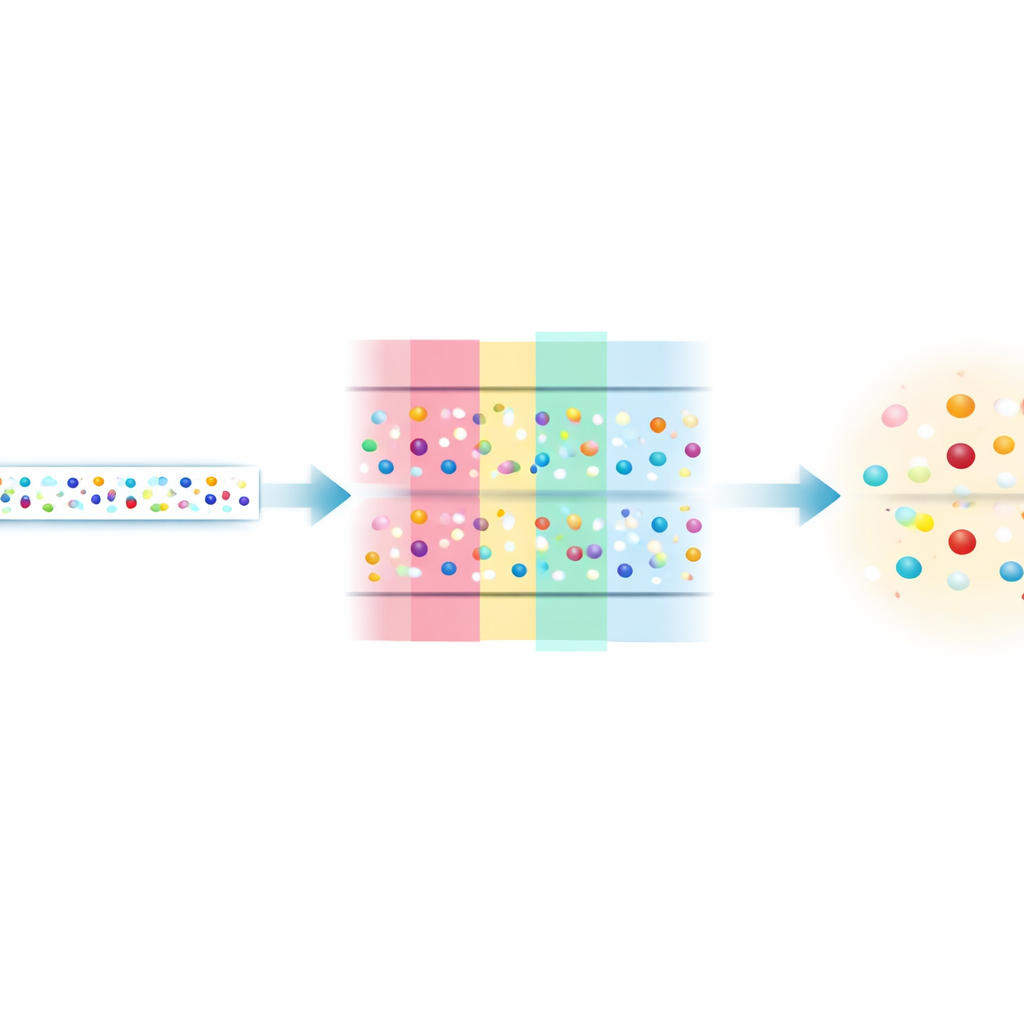
Seeing how much heritability we can capture
Because SBayesRC estimates the overall genetic architecture—the number of causal variants and how their effects are distributed—it can be used to look ahead. The authors developed a power calculator that predicts, for a given future sample size, how many causal variants we can expect to pinpoint and what fraction of the trait’s genetic influence (its SNP-based heritability) those variants should explain. Using this, they estimate that studies with around two million participants could typically fine-map variants explaining more than half of the common genetic component of many traits. They also show that some traits, such as blood cell counts, are easier to fine-map than highly polygenic traits like cognition, which may require even larger samples.
Real-world examples of causal variants
The authors highlight specific DNA changes to illustrate the method’s value. At the well-known FTO region linked to obesity, the genome-wide fine-mapping approach correctly prioritizes a variant previously proven in laboratory studies to affect fat biology, helped by conservation signals across species. In schizophrenia, the method elevates rare but functionally compelling changes in genes involved in brain cell structure and signaling, including variants in ACTR1B and SLC39A8 that have strong support from protein and cell-type data. In Crohn’s disease, it finds additional likely causal variants that sit below classical GWAS cutoffs but make biological sense once surrounding markers are considered jointly.
What this means for future genetic studies
Overall, the study shows that analyzing the entire genome at once, while integrating functional clues, can sharpen our view of which DNA changes truly matter for complex traits. Instead of treating GWAS as a list of broad regions, this approach turns them into a high-resolution map, revealing which variants deserve follow-up in experiments and drug development. By also forecasting how much more can be learned as sample sizes grow, the work provides a roadmap for designing future genetic studies that move us closer to explaining, and eventually intervening in, the biology underlying common diseases.
Citation: Wu, Y., Zheng, Z., Thibaut, L. et al. Genome-wide fine-mapping improves identification of causal variants. Nat Genet 58, 940–951 (2026). https://doi.org/10.1038/s41588-026-02549-3
Keywords: genome-wide fine-mapping, causal genetic variants, complex traits, functional genomic annotations, GWAS methods