Clear Sky Science · en
Systematic analysis of snRNA genes reveals frequent RNU2-2 variants in dominant and recessive developmental and epileptic encephalopathies
Why tiny RNA pieces matter for children’s brains
Doctors can now read nearly every letter of a child’s DNA, yet many children with severe developmental delay and epilepsy still leave the clinic without a clear diagnosis. This study shines a spotlight on a surprisingly small and overlooked part of our genetic code: miniature RNA genes that help cells cut and paste messages before they are turned into proteins. The authors show that changes in one such gene, called RNU2-2, are a frequent cause of serious neurodevelopmental disorders, affecting as many as 1 in 300 children with these conditions.
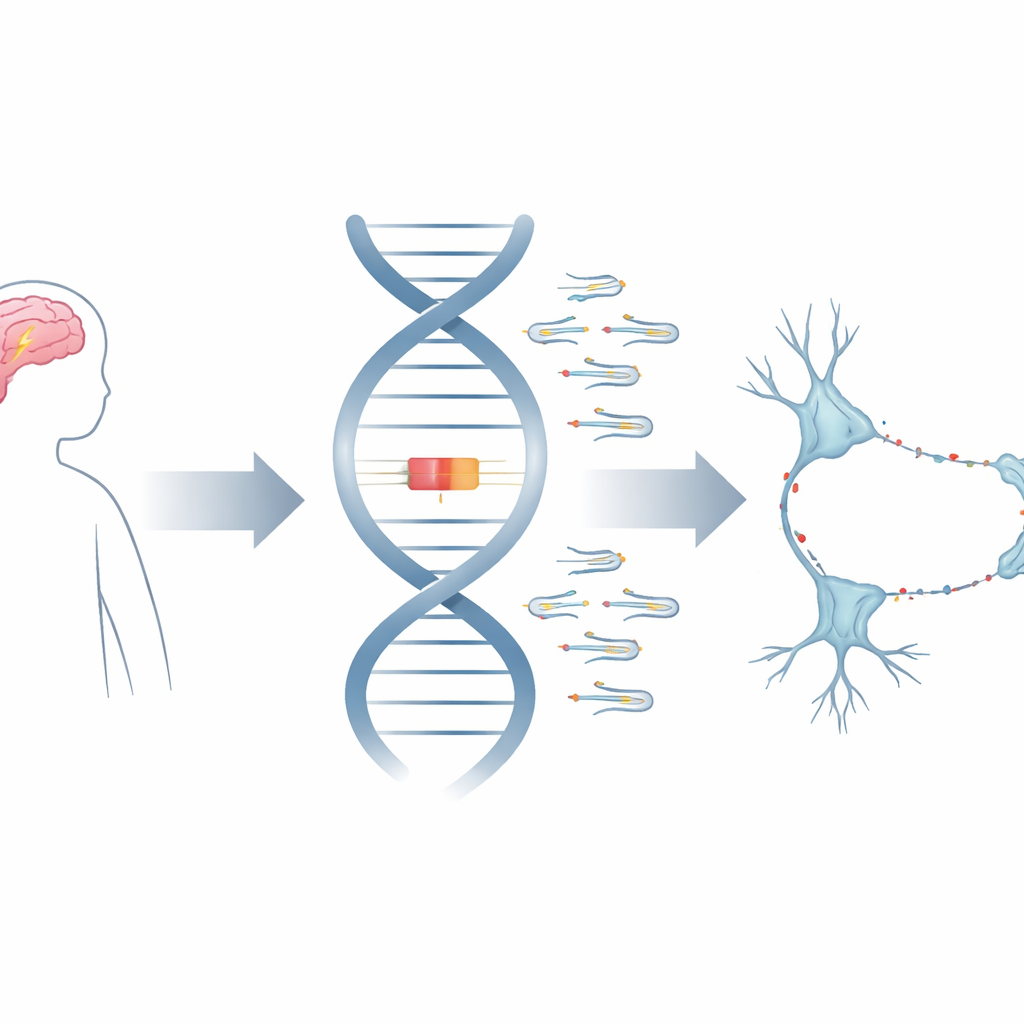
A hidden layer of the genetic instruction manual
Most genetic tests focus on protein-coding genes, but our cells also rely on many short RNA molecules that never become proteins. Among them are small nuclear RNAs, or snRNAs, which form the core of the spliceosome—the molecular machine that trims raw RNA messages and stitches the useful pieces together. The RNU2-2 gene makes one version of the U2 snRNA, a crucial component that helps select the exact cutting point in RNA. Because many copies of snRNA genes exist and look highly similar, they have been hard to study and were often dismissed as inactive “pseudogenes.”
Scanning thousands of genomes for active snRNA genes
The team first combed through over 2,000 annotated snRNA genes in the human genome, using public brain RNA data and regulatory maps to separate likely working genes from inactive relics. This effort identified 200 snRNA genes that appear functional, many of them previously labeled as pseudogenes. The researchers then searched genome data from more than 34,000 people with rare diseases in France, focusing on unusual new mutations that appear only in a child, as well as on pairs of mutations inherited from both parents. Strikingly, variants in RNU2-2 stood out in both analyses, especially among individuals with neurodevelopmental disorders.
A common cause of developmental delay and epilepsy
By pooling data from France and international collaborators, the authors assembled 141 patients from 122 families carrying changes in RNU2-2. Thirty-five children carried one of two recurrent mutations that act in a dominant fashion, meaning a single altered copy of the gene is enough to cause disease. An even larger group—91 affected individuals from 73 families—carried damaging variants on both copies of the gene, revealing a recessive form of the disorder that is at least twice as frequent as the dominant one. Regardless of inheritance, nearly all affected people had developmental delay and intellectual disability, and about 85% experienced epilepsy, most often starting before age three. Many also showed autistic features, movement problems, and subtle but recurring facial traits.
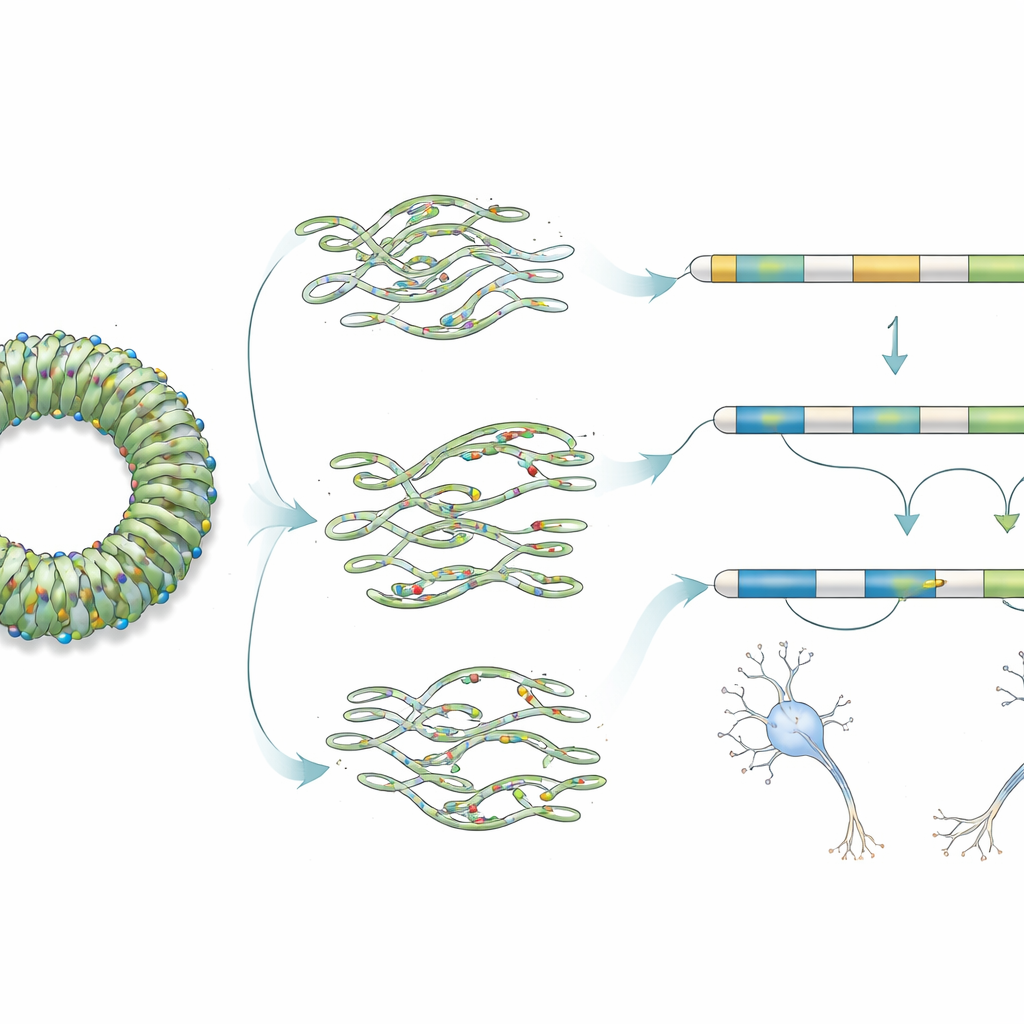
How small RNA changes disrupt brain function
To understand how RNU2-2 variants harm cells, the researchers mapped each mutation onto detailed three-dimensional models of the U2 RNA within the spliceosome. Some changes fall in regions that help U2 recognize the correct “branch point” in RNA, while others hit structural elements needed to assemble and import the RNA into the nucleus. The authors show that certain variants likely destroy U2 function entirely, whereas others partially weaken it. When they examined blood cells from patients, they saw only subtle shifts: some exons were skipped a bit more often, and DNA methylation patterns—a chemical marking system on DNA—were mildly altered in variant-specific ways. These modest signatures match the idea that RNU2-2 mutations slightly disturb RNA processing across many genes, with particularly strong consequences in the developing brain where RNU2-2 is more active.
A continuum between dominant and recessive disease
One of the most intriguing findings is that dominant and recessive forms of the RNU2-2 disorder look remarkably similar in the clinic. Instead of two separate diseases, the authors propose a “gradient-of-impact” model. Very disruptive variants in key functional spots can cause disease on their own, acting dominantly. Milder changes may have little effect unless a child inherits a second damaging variant on the other copy of the gene, producing a recessive disease. Still other combinations—such as one strong and one weak variant—can modulate how severe the symptoms become. Because snRNA genes like RNU2-2 accumulate new mutations at an unusually high rate, these different genetic scenarios arise often in the population.
What this means for families and future research
For families seeking answers, this work shows that RNU2-2 variants together account for roughly 0.35% of all neurodevelopmental disorders—making this tiny RNA gene one of the most frequently implicated noncoding genes in childhood brain disease, comparable in impact to the recently discovered ReNU syndrome gene RNU4-2. The study also warns clinicians to look carefully for a second hidden variant when they see a new mutation in RNU2-2 or related snRNA genes, rather than assuming a purely dominant effect. More broadly, the findings suggest that many other “noncoding” RNA genes may quietly underlie unexplained developmental disorders. As genome sequencing and long-read technologies improve, systematically exploring these overlooked regions could reveal a new class of common yet previously invisible genetic causes of severe childhood epilepsy and intellectual disability.
Citation: Leitão, E., Santini, A., Cogne, B. et al. Systematic analysis of snRNA genes reveals frequent RNU2-2 variants in dominant and recessive developmental and epileptic encephalopathies. Nat Genet 58, 782–797 (2026). https://doi.org/10.1038/s41588-026-02547-5
Keywords: neurodevelopmental disorders, epileptic encephalopathy, spliceosome, noncoding RNA, RNU2-2 variants