Clear Sky Science · en
Evolution and spillover dynamics of yellow fever at the forest–urban interface in Brazil
Why a Forest Park Outbreak Matters to City Life
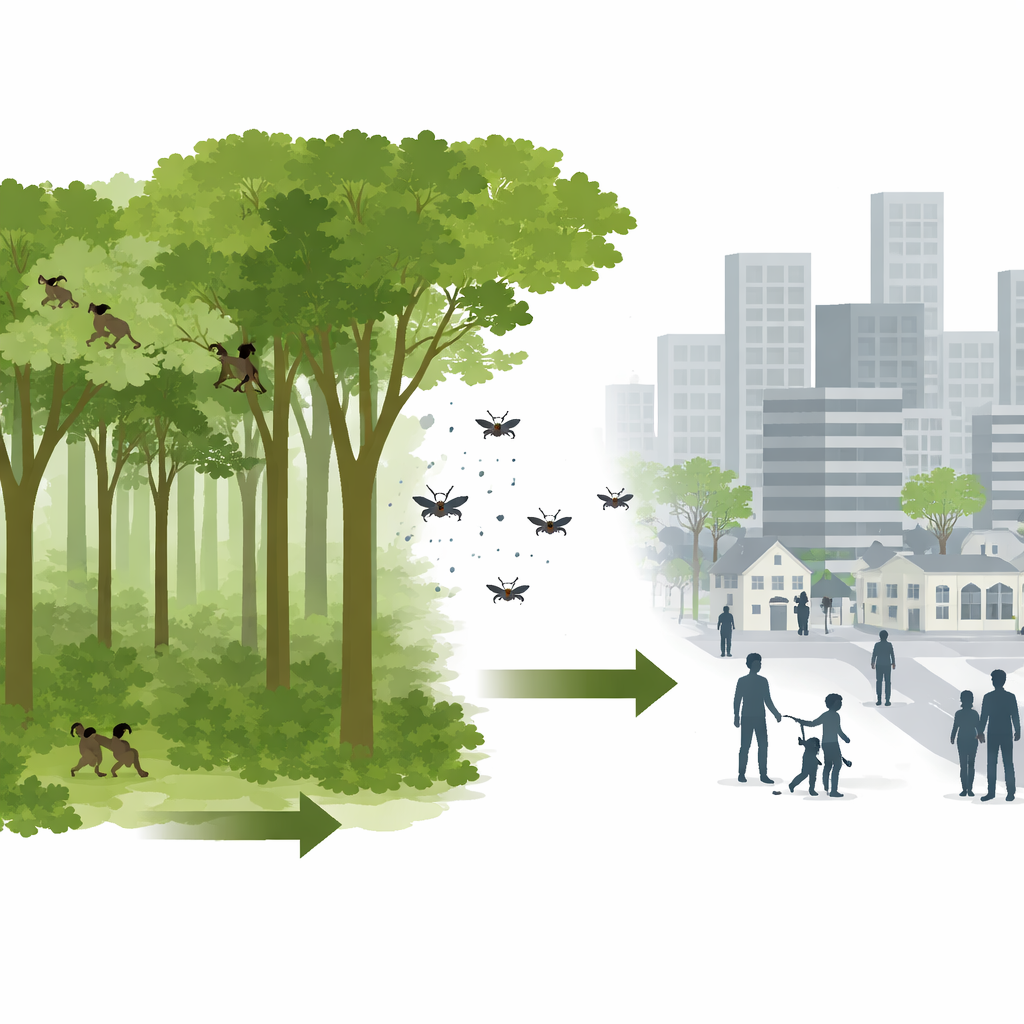
Yellow fever is often thought of as a disease of remote jungles, yet this study follows an explosive outbreak that unfolded inside a small forest park surrounded by the skyscrapers of São Paulo, Brazil. By watching mosquitoes, monkeys and viruses at the same time, the researchers show how a deadly virus can flare up on the very doorstep of a mega-city, what speeds it along, and how early warning from wildlife could protect both animals and people.
A Small Forest Island in a Sea of Buildings
The team focused on Parque Estadual Alberto Löfgren (PEAL), a 186-hectare patch of Atlantic Forest embedded within metropolitan São Paulo, home to more than 23 million people. In late 2017, the first dead brown howler monkey found in the park signaled that yellow fever had arrived. Howler monkeys are especially vulnerable to the virus, often dying before nearby humans fall ill. Over just a few months, nearly the entire howler population in the park was wiped out, turning this green refuge into a natural laboratory for understanding how the virus behaves where forest meets city.
Following Mosquitoes from Tree Tops to Ground Level
To uncover how the virus was moving, researchers carried out intensive mosquito surveys across 39 locations in and around the monkey carcass sites, sampling at both ground level and the tree canopy. They collected more than two thousand mosquitoes from 24 species. Only one species, Haemagogus leucocelaenus, a forest-dwelling mosquito, consistently carried yellow fever virus. These mosquitoes were found not just in the treetops, where they normally feed on monkeys, but also down near the ground, where they can bite people. The study showed that warmer temperatures strongly boosted the abundance of these mosquitoes, whereas rainfall played a smaller, less clear role.
Reading Viral Clues in DNA and Animal Remains
Beyond counting insects, the scientists used high-throughput genetic sequencing to read the viruses present in mosquito pools and monkey tissues. This “metagenomics” approach, which does not presuppose which pathogen is present, yielded almost complete yellow fever genomes from both hosts and vectors, even from monkey carcasses several days old. All together, the team reconstructed 88 yellow fever virus genomes from the park and nearby areas. Surprisingly, in one howler monkey they also detected a near-complete hepatitis A virus genome closely related to a human strain from São Paulo, hinting at contamination from human sewage and showing how wildlife can be exposed to multiple human-linked infections at once.
One Viral Lineage, Fast Spread and a Grim Outcome
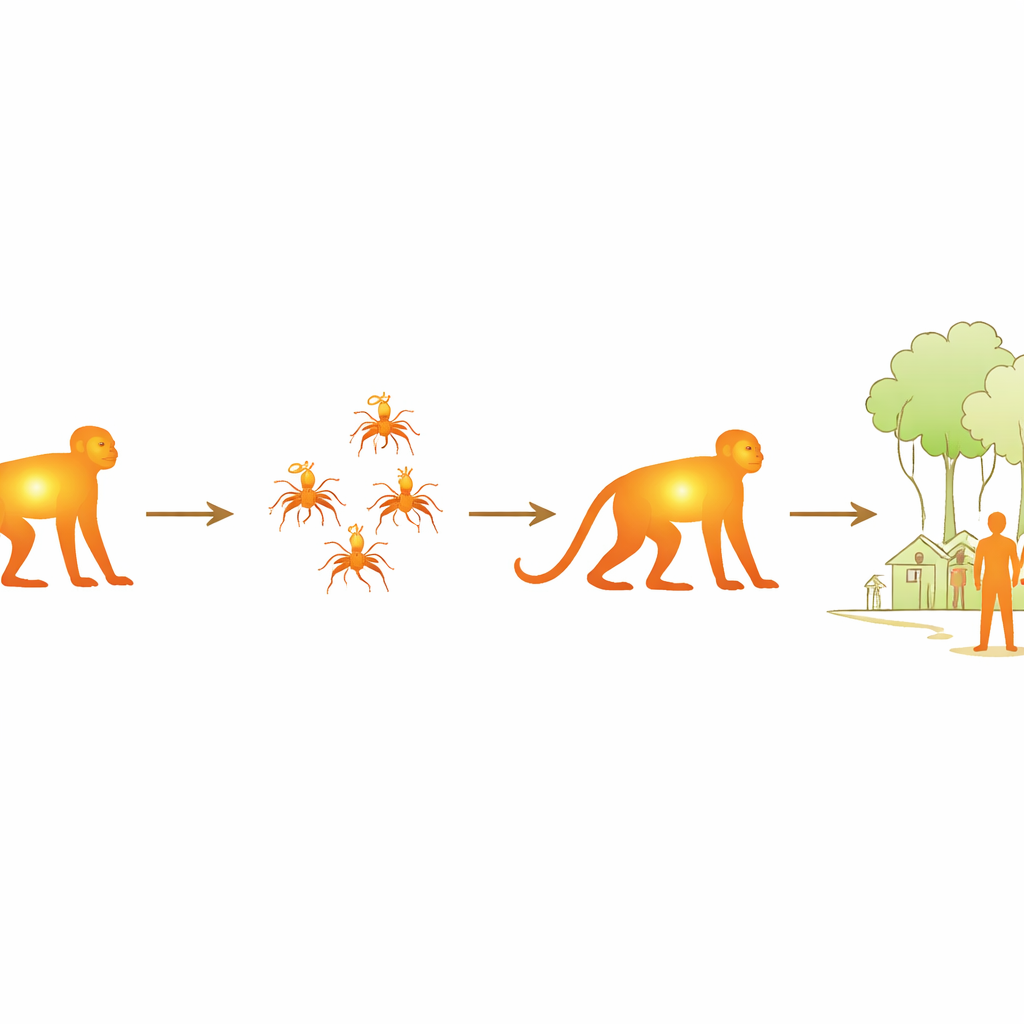
By placing the virus genomes onto evolutionary trees and combining them with outbreak data, the researchers discovered that several separate viral lineages entered the region, but only one took off inside the park. That successful lineage arrived during a warm spell when Haemagogus mosquitoes were especially abundant, sparking a short but intense chain of transmission. Using an individual-based computer model of each howler monkey’s infection and death, informed by laboratory studies of how quickly mosquitoes and monkeys become infectious, they estimated that each infected monkey–mosquito pair gave rise to about eight new monkey infections on average. This basic reproduction number, around 8.2, is higher than typical estimates for classic city outbreaks that rely on urban mosquitoes like Aedes aegypti. The brutal efficiency of transmission in this small forest fragment ultimately drove the local extinction of howler monkeys there.
Turning Wildlife Loss into Early Warning
The work shows that dramatic yellow fever surges at forest edges are not random; they emerge when highly susceptible monkeys, efficient forest mosquitoes and favorable weather coincide in small, human-adjacent patches of habitat. Because monkey deaths tend to precede human cases, systematic surveillance of non-human primates, coupled with mosquito monitoring and modern sequencing, can offer precious days or weeks of warning to start vaccination campaigns. The authors argue that investing in multi-pronged surveillance—ranging from citizen reporting of dead monkeys to improved mosquito traps in the canopy—will be crucial to keep future forest outbreaks from spilling over into crowded cities, protecting both vulnerable wildlife and the people living next door.
Citation: Telles-de-Deus, J., Claro, I.M., Bertanhe, M. et al. Evolution and spillover dynamics of yellow fever at the forest–urban interface in Brazil. Nat Microbiol 11, 877–891 (2026). https://doi.org/10.1038/s41564-026-02302-w
Keywords: yellow fever, mosquito-borne disease, forest–urban interface, non-human primates, zoonotic spillover