Clear Sky Science · en
From promise to pitfalls: immunological lessons from dengue vaccines and their implications
Why this matters for everyday health
Dengue fever is spreading into more countries, yet we still do not have a simple, one-size-fits-all vaccine. This review explains why making a dengue vaccine is uniquely tricky, how the first vaccines have performed in the real world, and what those experiences teach us about protecting people safely. Understanding these lessons matters not only for dengue, but for future vaccines against other emerging mosquito-borne diseases.
The growing reach of dengue
Dengue viruses are carried by Aedes mosquitoes and now cause an estimated hundreds of millions of infections every year across more than 80 countries. In many people, dengue is a week of high fever, rash, and aching joints; in others it can suddenly turn deadly, with dangerous bleeding, fluid leakage, and organ failure. No antiviral drugs exist, so public health efforts rely on mosquito control and vaccination. A major complication is that dengue comes as four closely related versions, or serotypes. Infection with one serotype can protect against that same version in the future, but it may actually worsen disease if a person later encounters a different serotype. Any successful vaccine must therefore give strong and lasting protection against all four at once, without accidentally priming the body for more severe illness.
A tightrope between protection and harm
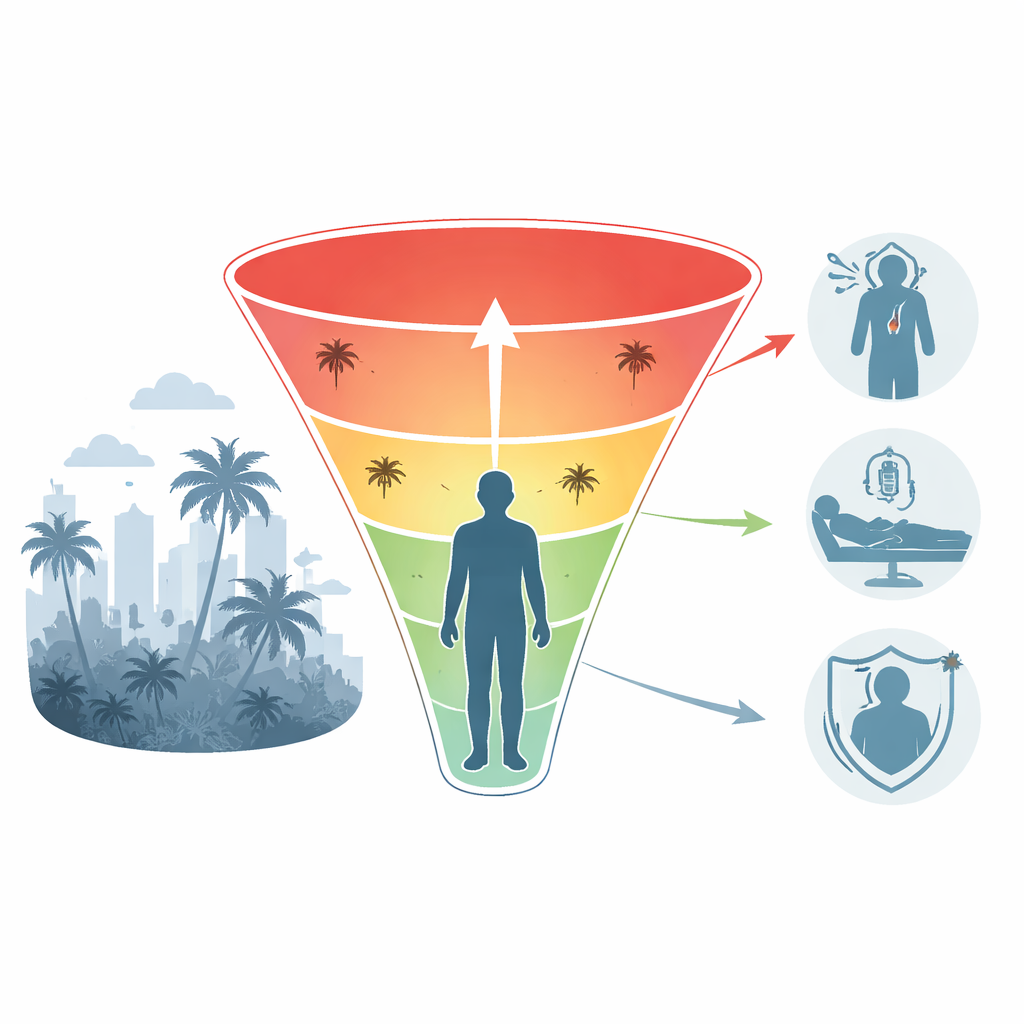
The immune system’s response to dengue walks a narrow line. High levels of the right kinds of antibodies can block the virus effectively. But if antibody levels are too low, wane over time, or focus on the wrong parts of the virus, they can help dengue enter immune cells more easily and multiply, a phenomenon known as enhancement. Prior exposure to dengue or related viruses like Zika and yellow fever further twists the picture, because immune cells can be “imprinted” by the first infection and respond in a biased way later on. Mosquito saliva itself also alters early immune reactions at the bite site in ways that most vaccine tests—done with needle injections—do not fully capture. Together, these factors create a narrow immunological window where responses are protective on one side and potentially harmful on the other, making dengue vaccines far more complex than standard shots such as measles or polio.
What we have learned from current vaccines
Three major tetravalent (four-in-one) live vaccines illustrate both progress and pitfalls. Dengvaxia, the first licensed product, used a yellow fever backbone carrying dengue surface proteins. It showed moderate protection overall but worked unevenly across the four serotypes and, crucially, increased the risk of severe dengue in children who had never been infected before. That experience forced health agencies to restrict its use to people with confirmed past dengue and highlighted that high antibody levels alone are not a reliable safety or protection signal. The newer Qdenga vaccine, built on a weakened dengue-2 virus backbone, adds key internal dengue proteins that stimulate T cells and has not shown the same safety problems in dengue-naive recipients. It offers strong short-term protection—especially against serotype 2—and reduces hospitalizations, but its performance against other serotypes fades over several years. A third candidate, Butantan-DV, derived from U.S. National Institutes of Health constructs and tested in Brazil, uses four weakened dengue strains and has shown promising protection against serotypes 1 and 2 after a single dose, with good safety in both previously exposed and naive volunteers, though its real-world performance against serotypes 3 and 4 still needs to be measured over longer follow-up.
Beyond antibody counts: what really predicts protection
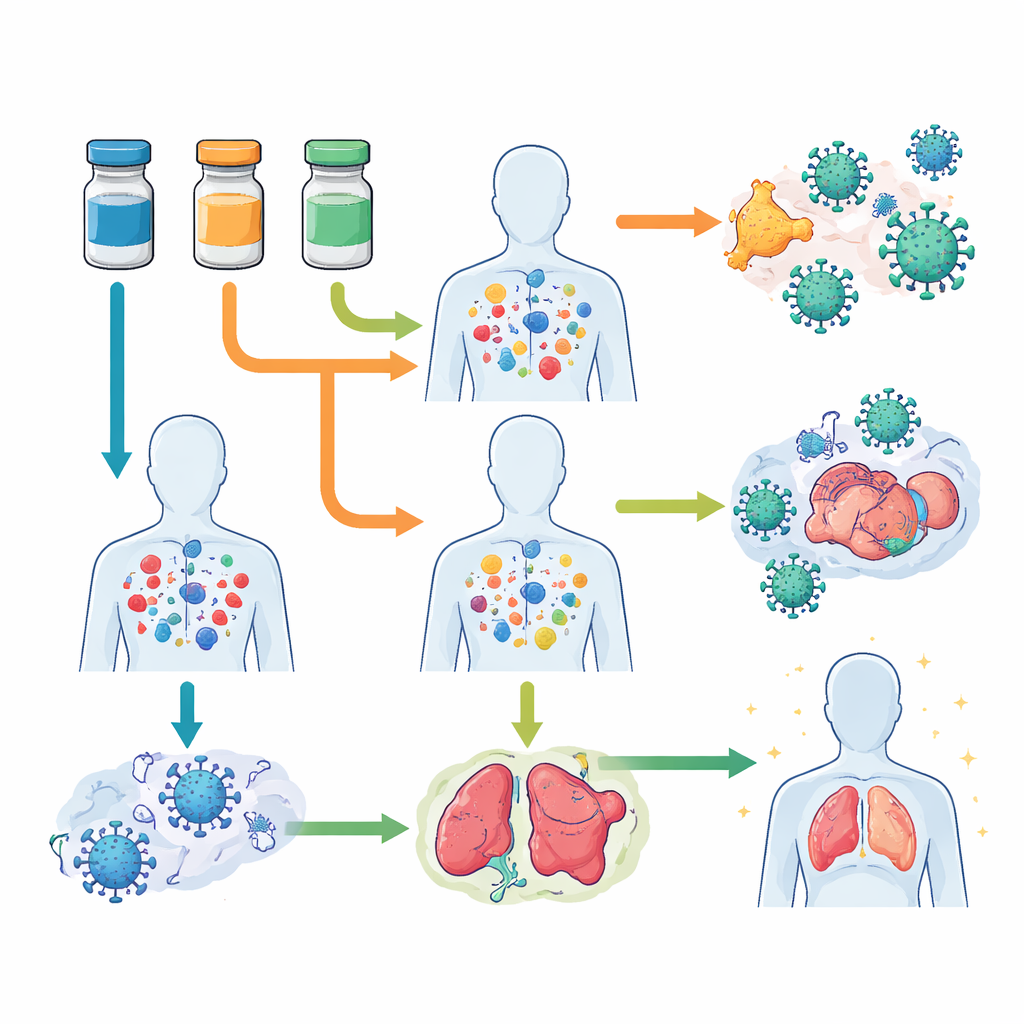
Across these vaccines, a clear message emerges: simple lab tests that measure how well blood can neutralize virus particles do not fully predict who will be protected. The quality of antibodies—where on the virus they bind, how strongly they stick, and how they recruit other immune defenses—matters as much as their quantity. Responses that target complex structures on the virus surface tend to be more broadly protective and less likely to enhance infection. At the same time, robust T cell responses against internal viral proteins help clear infected cells and may sustain protection as antibody levels naturally decline. The authors argue that future dengue vaccines and trials must track a composite set of markers, including neutralization breadth, antibody strength, memory B cells, and T cell function, rather than relying on a single number. They also call for experiments and challenge studies that better mimic natural mosquito transmission and account for people’s prior exposure to other flaviviruses.
Looking ahead to safer and longer-lasting protection
The review concludes that while effective dengue vaccination is possible, it requires a more sophisticated, predictive understanding of the immune system than most current vaccines demand. Next-generation approaches may blend live-attenuated viruses with newer platforms such as mRNA, viral vectors, and subunit vaccines that target not only infection but also the disease-causing effects of viral proteins. By learning from both the successes and setbacks of Dengvaxia, Qdenga, and Butantan-DV, scientists aim to design vaccines that give balanced, long-lived protection against all four dengue serotypes, are safe regardless of prior infection, and can be deployed widely in the regions that need them most.
Citation: Estofolete, C.F., Saivish, M.V., Nogueira, M.L. et al. From promise to pitfalls: immunological lessons from dengue vaccines and their implications. npj Vaccines 11, 68 (2026). https://doi.org/10.1038/s41541-026-01400-4
Keywords: dengue vaccines, antibody-dependent enhancement, tetravalent live vaccines, mosquito-borne viruses, vaccine immunology