Clear Sky Science · en
Synaptic rescue in an Alzheimer’s mouse model: low-temperature steam-derived black ginseng oligosaccharides remodel protein S-nitrosylation-NADPH oxidase axis
Why this study matters for brain health
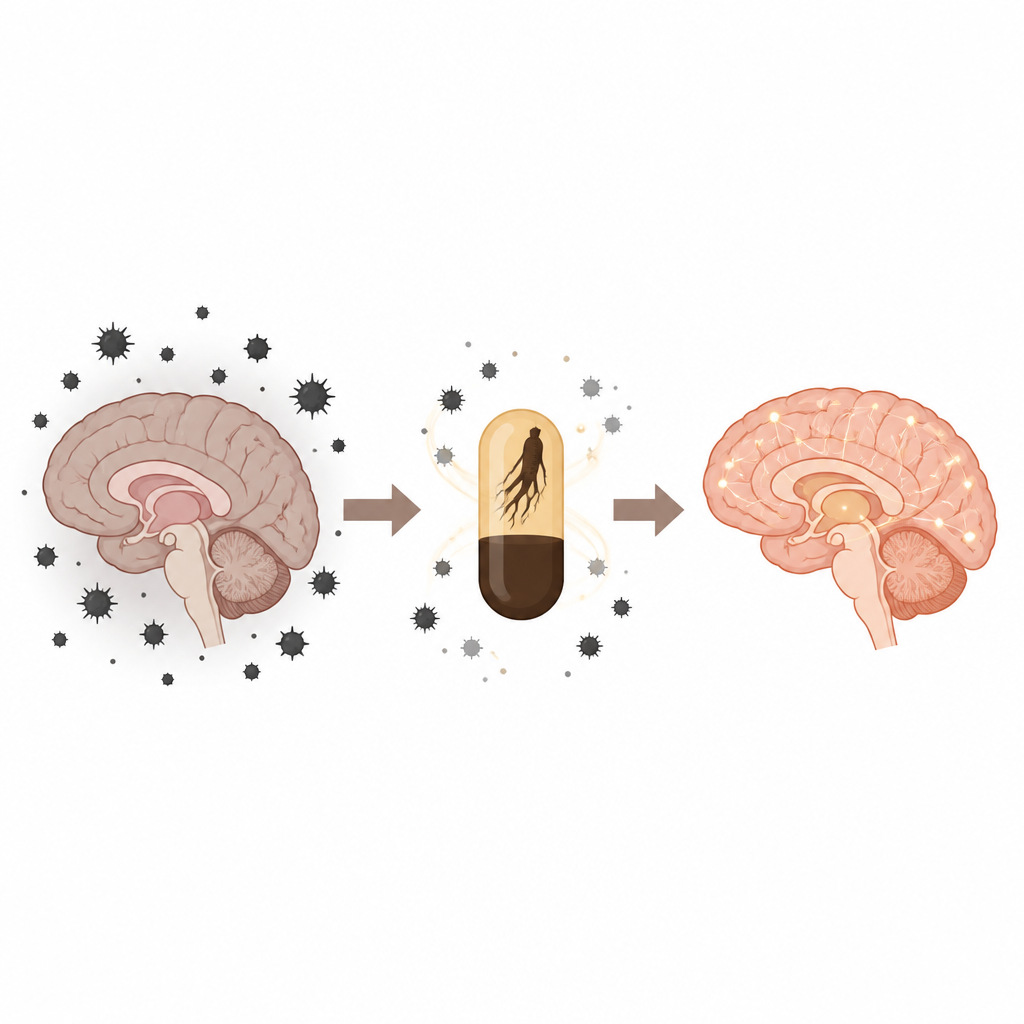
Alzheimer’s disease robs millions of older adults of memory and independence, and current drugs only ease symptoms for a short time. This study explores whether compounds from a special form of ginseng, called black ginseng, can protect brain connections in a mouse model of Alzheimer’s by calming chemical stress inside brain cells.
Alzheimer’s disease and chemical wear and tear
Alzheimer’s disease involves more than just the well known protein plaques and tangles. As we age, our cells face constant attack from highly reactive molecules often grouped under the term oxidative stress. These molecules can damage DNA, fats, and proteins in the brain, and such damage is strongly linked with the memory loss seen in Alzheimer’s. In patients and animal models, brain regions most affected by the disease show especially high levels of these harmful byproducts, suggesting that controlling oxidative stress could help protect brain function.
A closer look at how brain proteins are altered
The brain uses nitric oxide, a tiny gas molecule, to help nerve cells talk to each other. One way nitric oxide acts is by attaching itself to specific spots on proteins, a reversible change that can fine tune cell signaling. In Alzheimer’s, this process becomes unbalanced, and key proteins may be modified in ways that promote stress instead of healthy communication. The researchers used a specialized chemistry and mass spectrometry approach to survey thousands of these modified proteins in the brains of healthy mice, Alzheimer’s model mice, and Alzheimer’s mice treated with black ginseng oligosaccharides, a mixture of small carbohydrates plus some peptides extracted from black ginseng.
How black ginseng shifted harmful brain chemistry
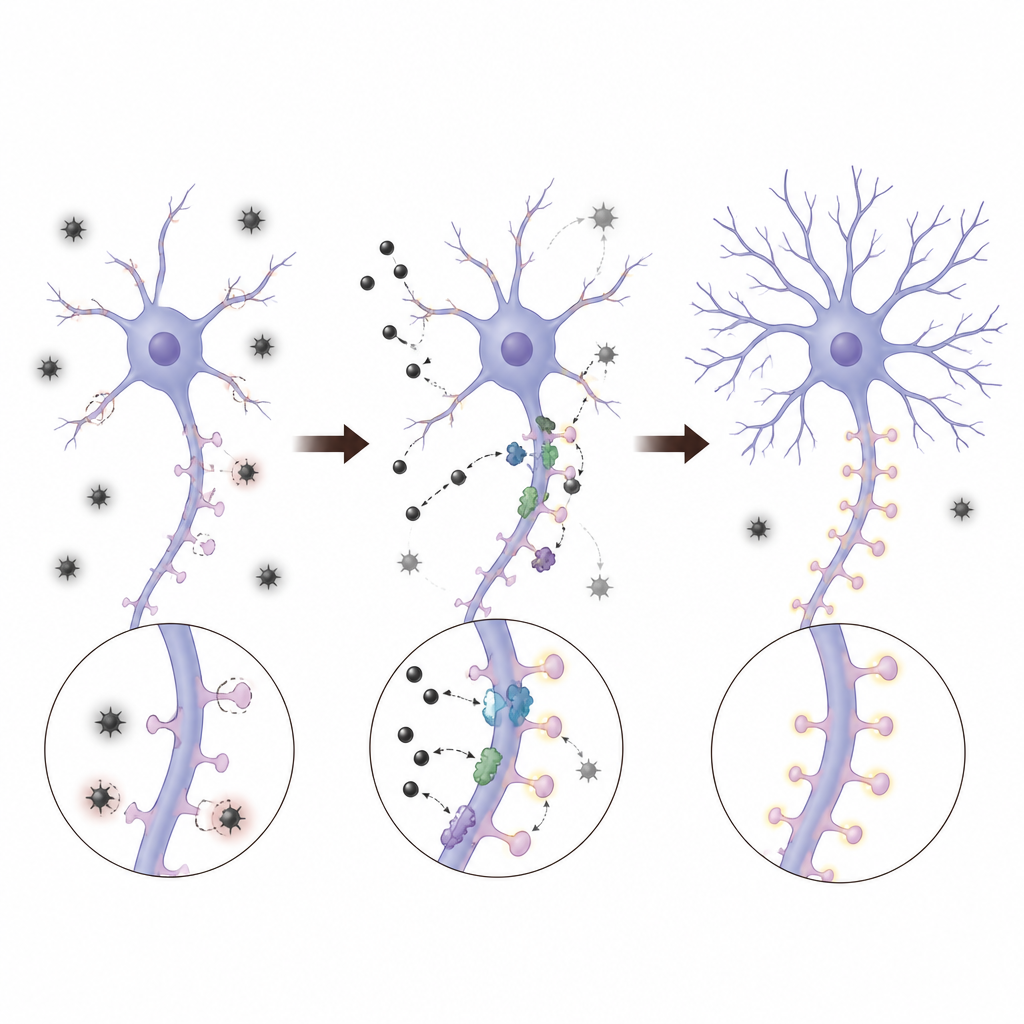
By comparing groups, the team found that many proteins were modified differently in Alzheimer’s mice, especially those involved in energy production, nerve signaling, and a family of enzymes known as NADPH oxidases. These enzymes are an important source of reactive oxygen species in cells. In Alzheimer’s mice, specific NADPH oxidase components carried more nitric oxide related modifications and were linked to pathways of oxidative stress. Treatment with the black ginseng extract partly reversed these changes, reducing the modified forms of key NADPH oxidase proteins and lowering the overall activity of this stress producing system both in mouse brains and in cultured nerve like cells.
Protecting nerve connections and brain tissue
Beyond chemical markers, the researchers examined the physical health of nerve connections. They measured levels of PSD-95 and SYN1, two proteins that help maintain synapses, the tiny contact points where nerve cells exchange signals. In Alzheimer’s mice, these markers were reduced, pointing to synapse loss. After black ginseng treatment, both proteins increased at the gene and protein level, and microscopic imaging showed stronger signals in the hippocampus, a key memory region. Standard tissue staining also revealed that hippocampal cells in treated mice were better organized, with fewer signs of cell shrinkage and structural damage compared with untreated Alzheimer’s mice.
What this could mean for future therapies
Taken together, the findings suggest that low temperature steam derived black ginseng oligosaccharides ease oxidative stress in an Alzheimer’s mouse model by dialing down NADPH oxidase activity and rebalancing nitric oxide related protein changes. This biochemical shift appears to spare synapses and improve the structure of memory related brain tissue. While these results are early and limited to mice and cell cultures, they point to a food based natural product that may one day complement other strategies aimed at protecting brain connections in Alzheimer’s disease.
Citation: Yu, P., Liu, J., Xu, W. et al. Synaptic rescue in an Alzheimer’s mouse model: low-temperature steam-derived black ginseng oligosaccharides remodel protein S-nitrosylation-NADPH oxidase axis. npj Sci Food 10, 163 (2026). https://doi.org/10.1038/s41538-026-00812-9
Keywords: Alzheimer’s disease, oxidative stress, black ginseng, synaptic plasticity, NADPH oxidase