Clear Sky Science · en
Lycium L. flavonoids: extraction, purification, signal transduction pathways, and interactions with intestinal microbiota
From Bright Berries to Better Health
Wolfberries, also known as goji berries, have long been prized in traditional diets for boosting vitality and longevity. This review looks beyond the popular berry itself to focus on a specific group of natural chemicals inside it—flavonoids—and explains how they are obtained, how they behave in the body, and why they may help protect our gut, metabolism, and immune system. By following these compounds from field to factory to intestine, the authors show how careful processing and a healthy gut microbiome can turn a simple fruit into a sophisticated health partner.
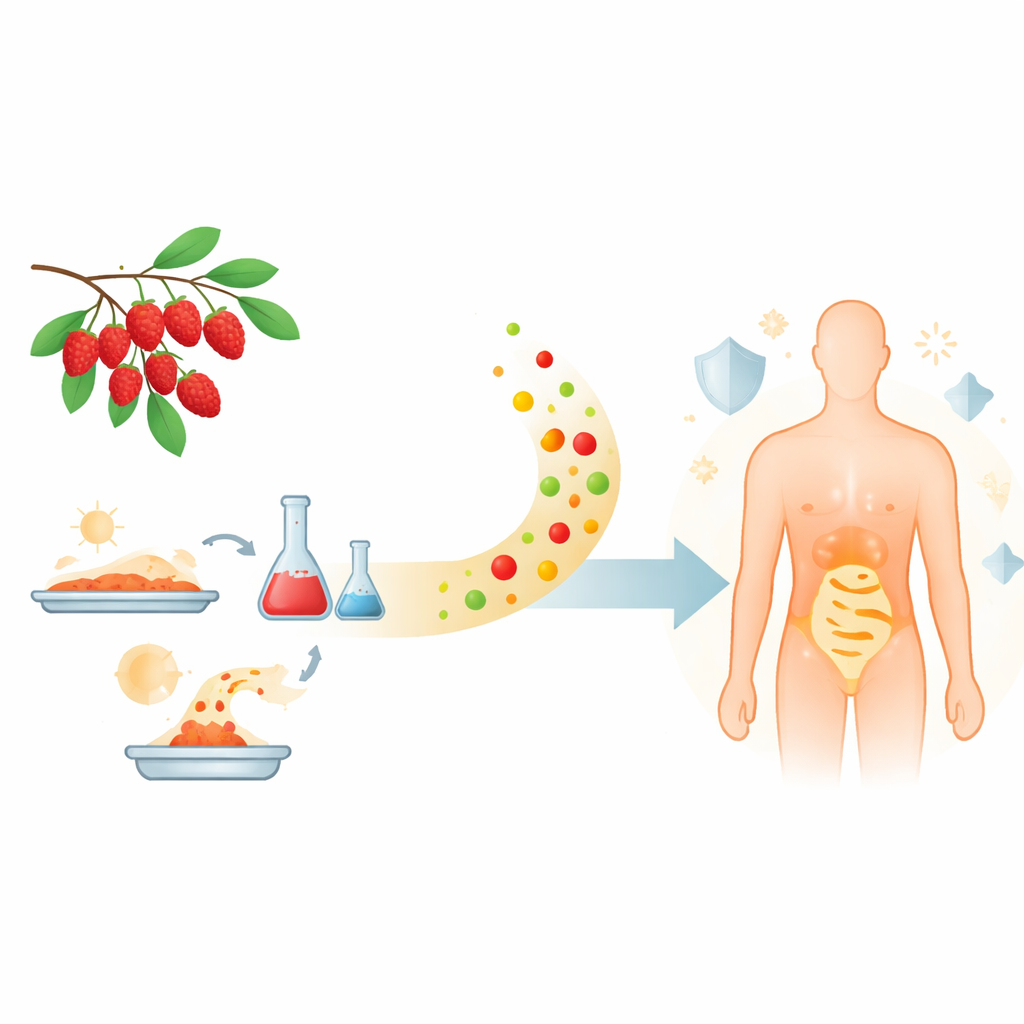
What Makes These Berries Special
Wolfberries are rich in many nutrients, but flavonoids stand out as one of their most abundant and versatile components. These plant pigments include well-known molecules such as quercetin, rutin, and colorful anthocyanins, especially abundant in the dark-fruited species Lycium ruthenicum. Their basic ring-shaped structures can be decorated with sugar chains or chemical groups that subtly change how they dissolve, how stable they are, and how easily they pass through cell membranes. Small tweaks—like adding a hydroxyl group or a sugar—can dramatically shift antioxidant strength or how well they can be absorbed, which in turn shapes their impact on inflammation, aging, and metabolic health.
How Processing Shapes Potency
Turning fresh, fragile wolfberries into shelf-stable, flavonoid-rich ingredients is not trivial. The berries have a waxy skin and very high moisture, so pretreatments such as mild alkaline soaking or ultrasound are used to remove surface wax and improve drying. Different drying methods—from sun and hot air to vacuum and freeze-drying—strongly affect how many flavonoids survive. Gentle hot-air conditions can preserve or even increase flavonoid levels by inactivating degrading enzymes, whereas excessive heat causes losses. Once dried, a suite of extraction methods is available, ranging from simple alcohol soaking to more advanced microwave, ultrasound, enzyme-assisted, and supercritical carbon dioxide techniques. These choices change not only yield and cost but also which flavonoids are pulled out—some methods favor sugar-linked forms, others favor aglycones or anthocyanins—so the biological effects of the final product are tightly tied to the processing route.
From Molecules to Cell Signals
Inside the body, wolfberry flavonoids do far more than simply mop up free radicals. The review describes how they interact with major cellular control systems that govern inflammation, stress responses, and cell survival. They can dampen the NF-κB pathway, a master switch for inflammatory genes, while activating Nrf2, a key defender against oxidative damage. Other routes, including p38-MAPK, PI3K–Akt, and PINK1/Parkin, connect these compounds to processes as diverse as stress resistance, programmed cell death, and the cleanup of damaged mitochondria. Rather than acting on a single target, flavonoids appear to nudge interconnected networks of signals toward balance, which may explain their broad effects in models of metabolic disease, skin aging, and even mood and brain health.
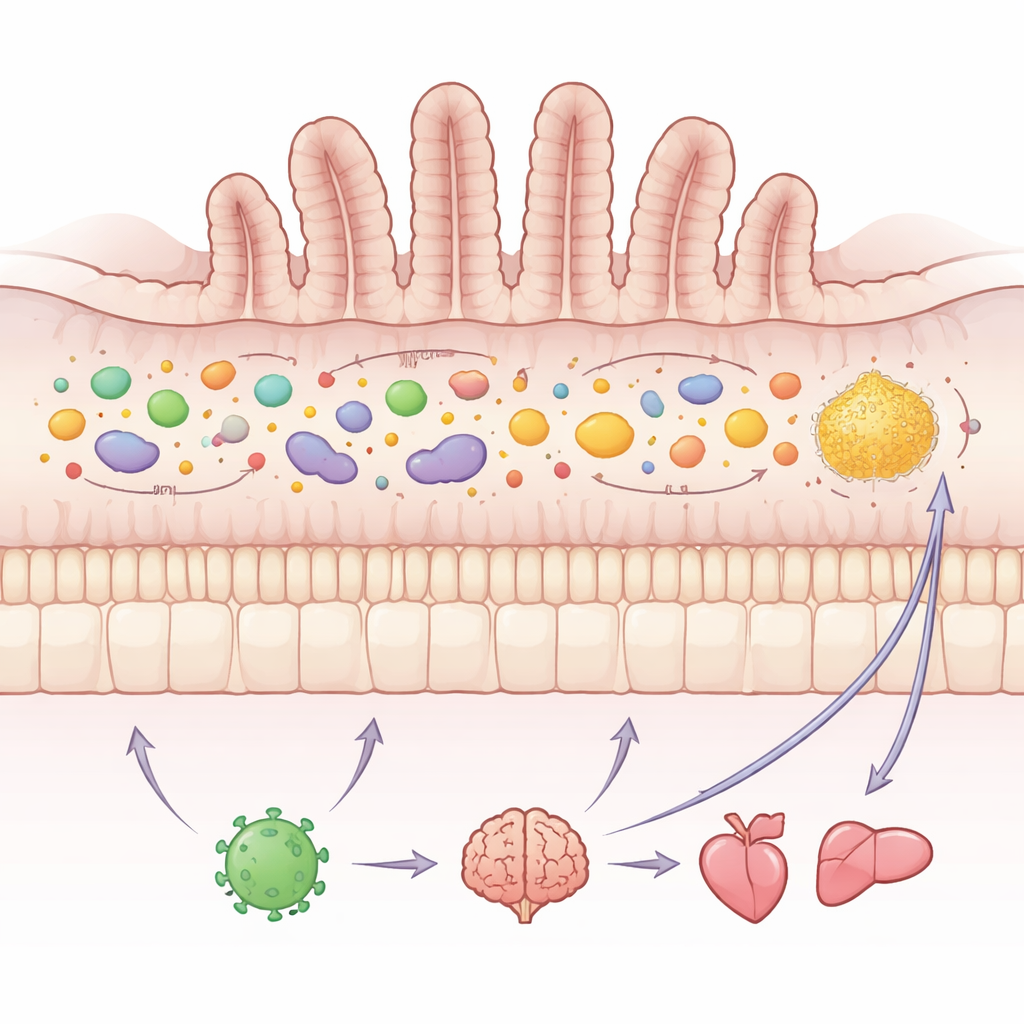
Teamwork with the Gut Microbiome
A central message of the article is that many benefits of wolfberry flavonoids are inseparable from the microbes living in our intestines. Because many flavonoids reach the colon largely intact, gut bacteria can break their sugar attachments, remodel their structures, and generate smaller phenolic compounds. At the same time, these flavonoids act much like prebiotics: they foster helpful groups such as Bifidobacterium, Lactobacillus, and Akkermansia while rebalancing the overall community in ways linked to better metabolic health. This microbial makeover boosts production of short-chain fatty acids like butyrate, which feed colon cells, tighten the intestinal barrier, calm inflammation, and send metabolic and immune signals to distant organs, including the liver, adipose tissue, and brain.
Where the Science Is Headed
The authors conclude that wolfberry flavonoids are promising natural tools for supporting gut integrity, moderating inflammation, and improving metabolic balance, largely through their partnership with intestinal microbes and their influence on key cellular pathways. However, most evidence so far comes from cell and animal studies. To turn these insights into reliable functional foods or therapies, future work must standardize processing and quality control, map precise structure–activity relationships, and conduct larger, longer human trials. If these challenges are met, the humble wolfberry could help pave the way for targeted, microbiome-aware nutrition and safer, plant-based approaches to chronic disease prevention.
Citation: Lan, T., Zhou, K., Duan, G. et al. Lycium L. flavonoids: extraction, purification, signal transduction pathways, and interactions with intestinal microbiota. npj Sci Food 10, 128 (2026). https://doi.org/10.1038/s41538-026-00784-w
Keywords: wolfberry flavonoids, goji berry, gut microbiota, short-chain fatty acids, anti-inflammatory nutrition