Clear Sky Science · en
Comparing meat alternatives for a sustainable food system
Why Rethinking Meat Matters
What we eat has a surprisingly large impact on the planet, animals, and our wallets. Conventional meat takes up most of the world’s farmland, drives a big slice of climate-warming emissions, and involves billions of animals each year. At the same time, global meat demand keeps rising, and calls to simply “eat less meat” have had limited success. This article asks a practical question with real-world stakes: among the new meat alternatives now being developed—plant-based meats, single-cell proteins from fermentation, cultivated meat grown from animal cells, and insect-based proteins—which ones genuinely look capable of helping us build a more sustainable food system?
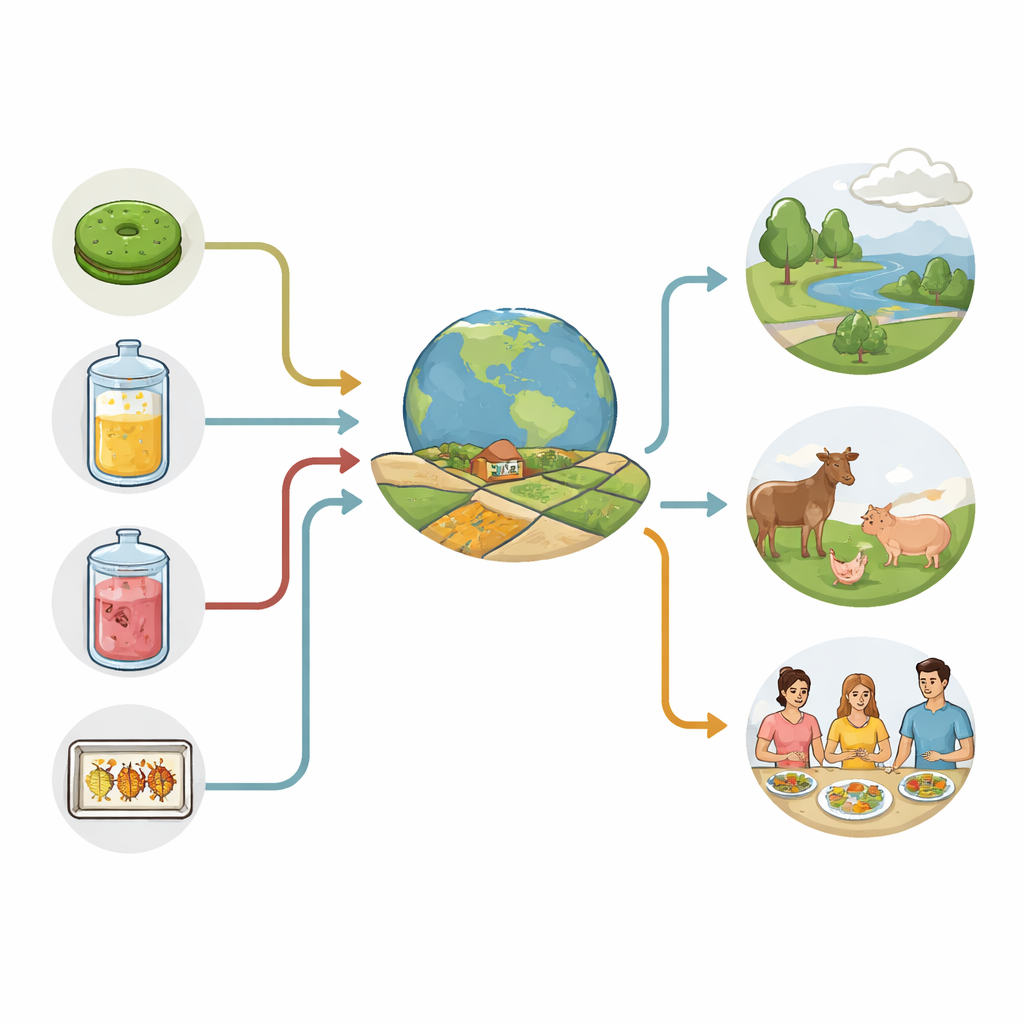
Four New Ways to Get a Burger
The author defines “alternative proteins” narrowly: they must be designed to replace animal meat on the plate—matching its taste, texture, and role in meals—while delivering similar amounts of protein. That rules out traditional staples like beans or tofu, which are nutritious but not meant to mimic meat. The review focuses on four categories. Plant-based meats use ingredients like soy or pea protein, oils, and flavorings structured to resemble burgers, sausages, or even whole cuts. Single-cell proteins are edible microbes such as fungi, yeasts, or bacteria grown in fermentation tanks; some are already sold as mycoprotein products, while others rely on emerging “power-to-food” processes that feed microbes with renewable electricity and captured carbon dioxide. Cultivated meat grows real animal cells in bioreactors using nutrient-rich liquids and sometimes scaffolds to create tissue. Insects, finally, can be eaten whole or ground into flours and incorporated into foods, including experimental “insect steaks.”
Environment: Land Winners and Energy Hogs
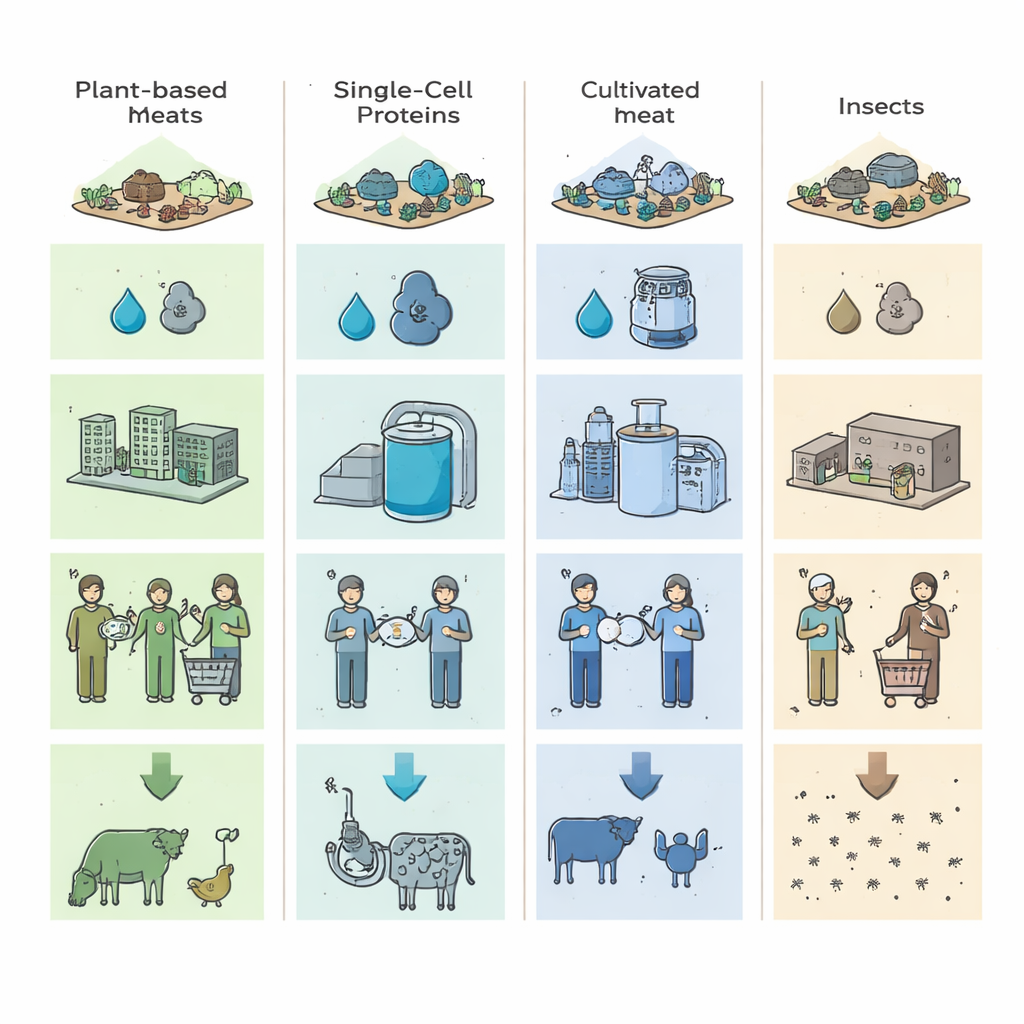
Across environmental measures, plant-based meats consistently outperform conventional meat, especially beef. Life-cycle studies suggest they can slash climate pollution by up to tenfold and use far less land and water. This land saving is crucial: converting pasture and feed cropland back to natural vegetation could lock away enormous amounts of carbon and help protect biodiversity. Single-cell proteins show even stronger land efficiency and very low water needs, particularly in power-to-food systems that do not depend on farmland at all. Their weak point is energy: running fermenters and producing inputs can be electricity-intensive, so their climate benefits depend heavily on clean power. Cultivated meat also promises dramatic land savings and lower air and water pollution than beef, but projected energy use is very high and current climate estimates range widely. Insects can beat beef on emissions, yet often offer little advantage over chicken or pork once realistic heating, feed and regulatory constraints are included, especially in temperate countries.
Can These Foods Scale Up?
For any alternative to matter, it must be able to compete on price and volume. Plant-based meats are already a global multi-billion-dollar market, using much of the existing food-processing infrastructure. They still cost more than meat on average, but the price gap is shrinking, and further progress in crop breeding, use of by-products, and manufacturing scale could drive costs down. Mycoprotein products demonstrate that fermentation-based foods can be produced at scale, though they remain pricier than cheap meats; power-to-food systems could become competitive if renewable electricity gets cheaper and more abundant. By contrast, cultivated meat faces daunting hurdles. Culture media ingredients account for most projected costs, and the industry would need bioreactor capacity many times larger than today’s entire pharmaceutical sector even to supply a small fraction of global meat demand. While recent pilot work with hybrid products (half plant-based, half cell-based) shows rapid cost improvements, full-scale facilities remain speculative. Insect farming for human food, meanwhile, struggles with expensive heating, labor, and competition for feedstocks, so it is likely to stay a niche in wealthy regions.
What People Will Actually Eat
Consumer acceptance may be the most unforgiving test. Surveys in Europe and other wealthy regions show that plant-based meats are far more acceptable than newer options, though many people still prefer conventional meat and worry about price, taste, and processing. Mycoproteins and other single-cell products are less familiar but generally viewed more positively than cultivated meat or insects, particularly among younger, urban, and environmentally minded diners. Cultivated meat tends to provoke a mixture of curiosity and unease: perceived ethical benefits help, but feelings of disgust, fears about “unnaturalness,” and mistrust of new food technologies hold many people back. Insects face the steepest uphill climb in Western countries, where most adults say nothing could convince them to try them; disgust and food neophobia dominate, even though people who do taste insect-based foods often find them acceptable. Cultural context matters, however—entomophagy is far more normal in parts of Africa, Asia, and Latin America.
How Animals Fare in Each Option
From an animal welfare perspective, plant-based meats and single-cell proteins are clear winners: they drastically reduce the number of sentient animals used for food and free up land that can support wild habitats. Cultivated meat still requires a small number of donor animals and currently sometimes relies on fetal bovine serum, a controversial by-product of slaughter. The field is moving quickly toward serum-free growth media, which would improve both ethics and costs, though questions remain about how donor animals are bred, housed, and treated over their lifetimes. Insects represent a moral grey zone that grows darker at scale. Evidence increasingly suggests at least some insects may feel pain-like states, yet billions are already farmed in very dense conditions, and replacing a single cow could require millions of individual insects. With no established welfare standards and almost no research on humane killing methods, a massive shift to insect protein could create immense but invisible animal suffering.
Where This Leaves Our Food Future
Pulling these threads together, the review concludes that not all meat alternatives are equal. Plant-based meats stand out as the best all-around bet today: strong environmental performance, realistic paths to scale, relatively high consumer acceptance, and excellent animal welfare credentials. Single-cell proteins could become powerful allies, particularly if powered by clean energy, but still face cost and familiarity challenges. Cultivated meat may eventually carve out a role, especially for consumers who refuse plant-based options, yet its environmental and economic profiles remain highly uncertain. Insects appear least promising for transforming the food system in wealthy countries, given limited environmental gains, low public acceptance, and serious ethical concerns. For policymakers and investors, the message is clear: prioritize support for plant-based meats and promising fermentation approaches, remain cautious but open-minded about cultivated meat, and treat insects as a narrowly useful solution rather than a silver bullet.
Citation: Bry-Chevalier, T. Comparing meat alternatives for a sustainable food system. npj Sci Food 10, 119 (2026). https://doi.org/10.1038/s41538-025-00694-3
Keywords: alternative proteins, plant-based meat, cultivated meat, single-cell protein, insect farming