Clear Sky Science · en
Rethinking language, cognition and assessment in psychosis: How bilingualism challenges psychiatry and how natural language processing can help
Why Two Languages Matter for Mental Health
Many people around the world grow up speaking more than one language, yet psychiatry still tends to treat patients as if they were speakers of just one. This matters because almost everything in mental health care—from telling your life story to taking memory tests—depends on language. This article explains why ignoring bilingualism can distort how we understand and treat serious conditions like psychosis and schizophrenia, and how new computer-based tools for analyzing speech could help make care fairer and more accurate for millions of people.
How Language and Thought Shape Psychosis
Psychosis, which includes conditions like schizophrenia, often involves changes in thinking, memory, and communication long before full-blown symptoms appear. Children who later develop psychosis tend, on average, to score lower on thinking and problem-solving tests, and these difficulties usually continue into adulthood. Brain scans show differences in areas related to planning, attention, and memory, but no single “psychosis spot” in the brain. Instead, a complex mix of early brain development, life experiences, and health factors shapes how the illness unfolds. Because speech is both a window into thought and the main tool for clinical interviews, language sits at the heart of diagnosis and follow-up.
What Bilingual Brains Bring to the Picture
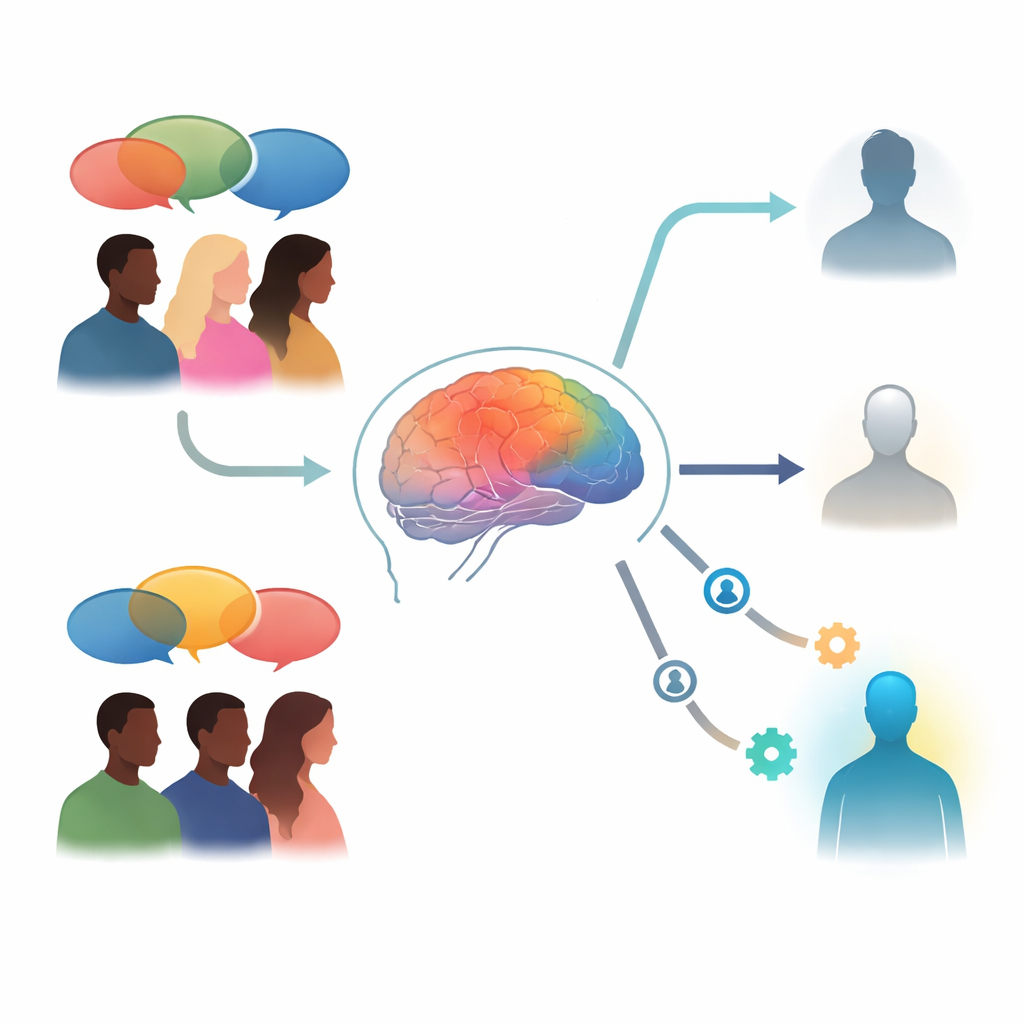
Being bilingual is not simply knowing two vocabularies; it means constantly managing which language to use, and when. This juggling act relies on attention, control, and memory systems in the brain. Research shows that active bilinguals often develop subtle changes in brain structure and function in regions that support these skills, and sometimes show stronger performance on tasks that require focusing, switching, or holding information in mind. These effects are not uniform: they depend on how early someone learned their languages, how often they use them, in what settings, and how much they switch between them. In older adults, bilingualism can even help preserve thinking skills as the brain ages. All of this suggests that bilingualism and psychosis may interact in important ways, especially because they both affect the same broad networks for control and cognition.
When Words Mislead in the Clinic
In everyday practice, mental health professionals rely heavily on how patients speak: what they say, how quickly they respond, how organized their thoughts sound. But bilingualism changes these surface features in ways that can be mistaken for illness—or can hide it. For example, a bilingual person may have a smaller active vocabulary in any one language, speak more slowly, or search for words more often, especially in their less-used language. Standard tests built on monolingual norms might then falsely signal “poor memory” or “impaired thinking.” Emotions can also be expressed differently across languages: patients may feel more distance and calm in a second language, or more intensity in their first. Studies suggest that some psychotic symptoms, or the willingness to talk about them, can vary by language, which means assessments done in only one language may miss or misjudge key aspects of the disorder.
A Practical Roadmap for Fairer Assessments
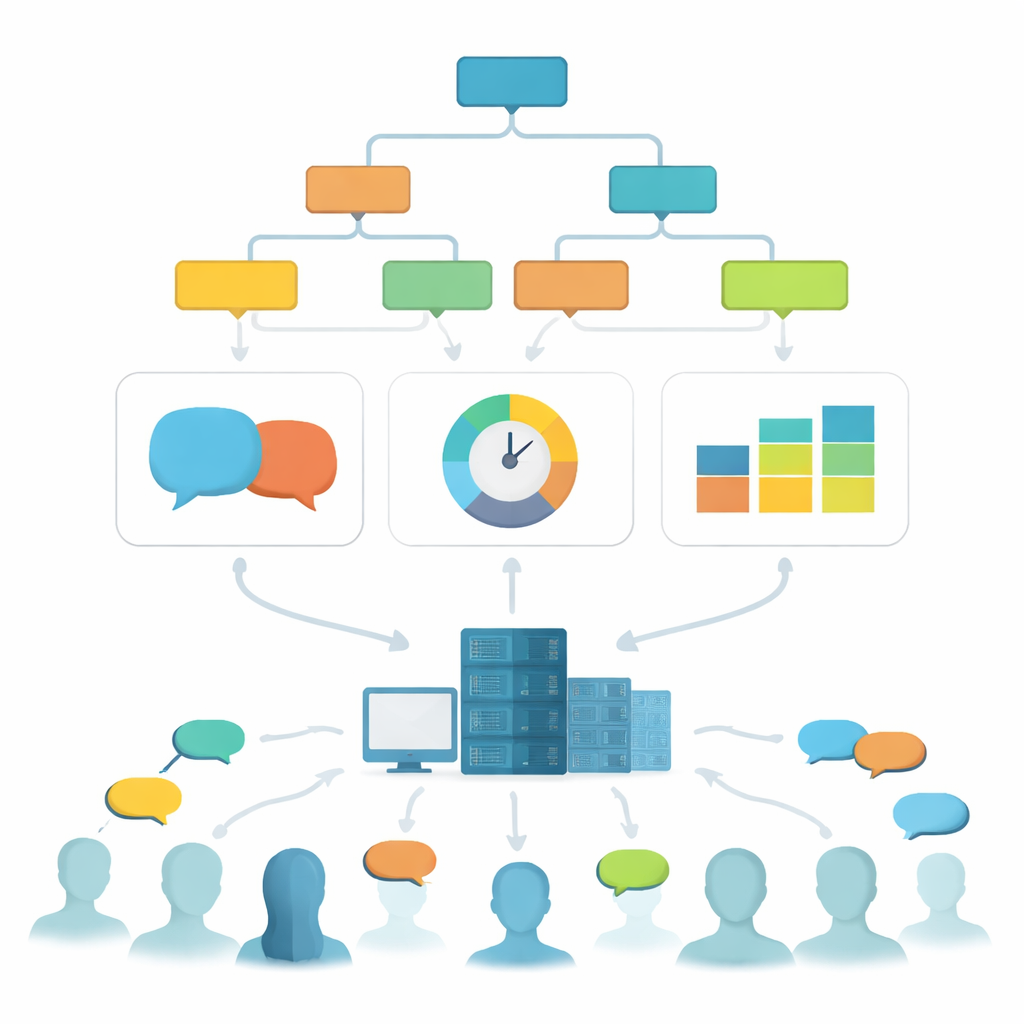
The authors propose a step-by-step framework—essentially a decision tree—to help clinicians and researchers decide when and how to factor bilingualism into their work. First, they ask whether language and thinking skills are central to the question at hand; for psychosis, the answer is almost always yes. Second, they ask whether language or cognition is the main outcome being measured—for example, in memory tests or speech analyses. If so, bilingualism must be assessed systematically, not treated as a side note. Ideally, this means gathering detailed information about which languages a person knows, when they learned them, how proficient they feel in each, how often they use them in daily life, and in what contexts. When time is short, even a basic set of questions on these points is better than assuming a patient fits monolingual norms.
How Artificial Intelligence Can Help
Collecting rich language information and evaluating patients in multiple tongues is hard to scale, especially when there are thousands of language combinations and relatively few bilingual clinicians. Here, the authors see promise in modern speech technology. Tools such as automatic speech recognition and natural language processing can analyze how people talk in different languages and pick up patterns linked to psychosis, without needing a human expert for every language pair. Large language models and smart chatbots could one day conduct structured interviews in many languages, score tasks automatically, and help adapt assessments to each person’s linguistic background. However, the article also warns that these tools must themselves be tested across languages to avoid reinforcing new types of bias.
What This Means for People Who Hear Voices
The article concludes that bilingualism is not a minor complication but a key factor in understanding psychosis. Ignoring a person’s language history can skew test scores, cloud diagnosis, and lead to treatment plans that do not fit their lived reality. By treating bilingualism as a central variable—carefully recording language background, adapting assessments, and using technology wisely—psychiatry can move closer to truly personalized care. This shift would not only make the system fairer for bilingual patients, who form a large share of the world’s population, but also sharpen our scientific understanding of psychosis itself.
Citation: Just, S.A., DeLuca, V., Rothman, J. et al. Rethinking language, cognition and assessment in psychosis: How bilingualism challenges psychiatry and how natural language processing can help. Schizophr 12, 41 (2026). https://doi.org/10.1038/s41537-026-00742-1
Keywords: bilingualism, psychosis, schizophrenia, language assessment, natural language processing