Clear Sky Science · en
Gut ecosystem dysfunction in parkinson’s disease: deciphering faecal metabolome-metagenome links for novel diagnostic panels
Why the Gut Matters in a Brain Disease
Parkinson’s disease is usually thought of as a brain disorder that causes tremors, stiffness and slowed movement. Yet this study suggests that important clues to the disease may be hiding in an unexpected place: our stool. By carefully analysing the tiny molecules and microbes in faeces from people with Parkinson’s disease and healthy volunteers, the researchers show that the gut ecosystem is disrupted in Parkinson’s—and that this disruption could be turned into a noninvasive test to help diagnose the condition more accurately.
A Closer Look at the Gut’s Chemical Fingerprint
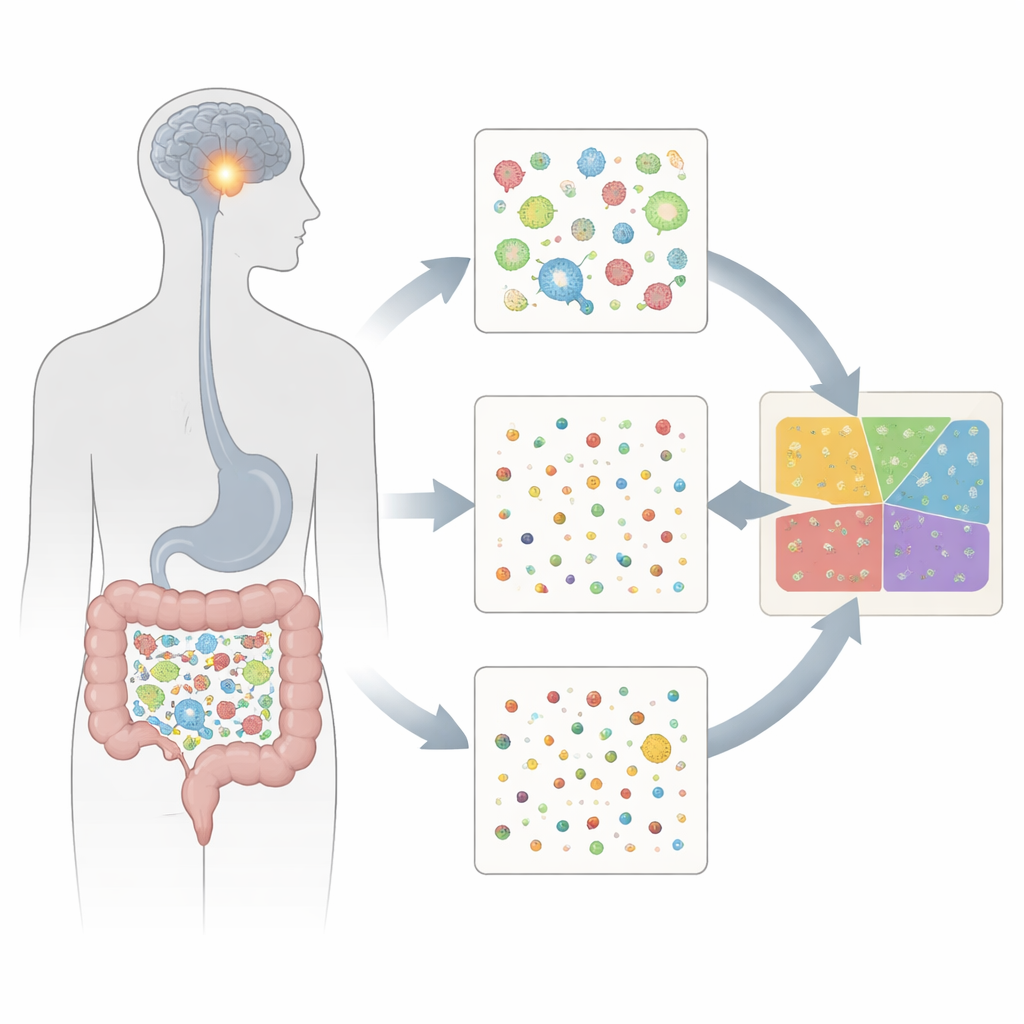
The team collected stool samples from over 130 people with Parkinson’s disease and more than 110 healthy adults in China. Using a sensitive laboratory technique that measures small molecules, they built a detailed “chemical fingerprint” of each sample. They found 33 faecal molecules that differed clearly between the two groups. Most of these were lower in people with Parkinson’s and belonged to families involved in breaking down and using amino acids (the building blocks of proteins), sugars, fats and energy-related compounds. One standout was acetic acid, a short-chain fatty acid made by gut bacteria, which was significantly reduced in Parkinson’s patients.
Links Between Gut Chemistry and Daily Symptoms
The altered molecules were not just abstract measurements; some tracked closely with how sick people were. Higher levels of a fatty acid called pentadecanoic acid were linked to worse movement scores and poorer thinking and memory in standard Parkinson’s rating scales, even after accounting for age, sex and lifestyle. Other molecules related to amino acids, such as tryptophan and methionine, tended to be lower in patients with more severe daily movement problems. These connections suggest that what happens in the gut may echo in the brain and body, potentially influencing both motor and non-motor symptoms.
Building a Stool-Based Test for Parkinson’s
From the 33 altered molecules, the researchers used machine-learning methods to pick out a smaller set that worked best together for diagnosis. They arrived at a panel of 12 faecal metabolites, many tied to energy cycles and amino acid handling. This 12-molecule panel could distinguish Parkinson’s patients from healthy people with good accuracy in a training group, and performed similarly in a separate test group. Because collecting stool is noninvasive and relatively simple, such a panel could one day complement doctors’ exams, reducing misdiagnosis and catching the disease earlier.
When Microbes and Molecules Tell the Same Story
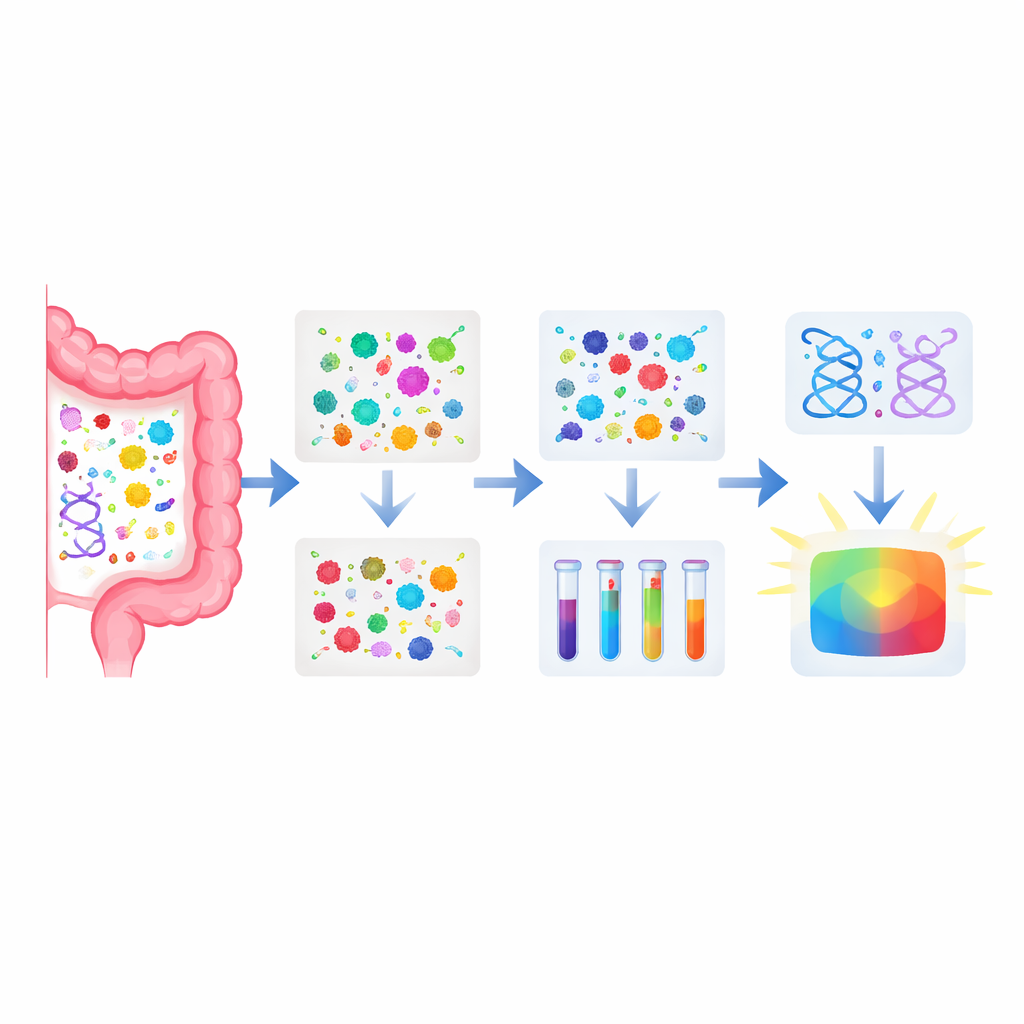
The study went a step further by combining these chemical data with previous deep DNA sequencing of gut microbes from a subset of the same participants. By matching microbial genes with faecal metabolites, the team uncovered more than 200 links between specific bacterial functions and particular molecules. Many of these connections converged on amino acid metabolism, especially pathways involving glycine, serine, threonine, phenylalanine, tyrosine and tryptophan. In people with Parkinson’s, genes that normally help process these amino acids were often reduced, and the related metabolites were also lower, while certain bacterial species tied to these pathways were more abundant, signalling a disturbed but coordinated shift in the gut ecosystem.
Combining Signals for Sharper Detection
Crucially, the authors tested whether joining microbial and chemical information could sharpen diagnosis. They merged their 12-molecule panel with a previously developed “Parkinson’s disease index” based on 25 microbial genes. In the group with both types of data, the combined model distinguished Parkinson’s patients from healthy controls with very high accuracy, outperforming either gut microbes or metabolites alone. This supports the idea that the most powerful insights come from viewing the gut as a whole ecosystem—microbes, their genes and the molecules they produce—rather than studying each layer in isolation.
What This Means for Patients and the Future
To a layperson, the main message is that Parkinson’s disease leaves a clear imprint in the gut, altering both the mix of microbes and the small molecules they generate, especially those linked to amino acids and energy use. While this study cannot prove that these gut changes cause Parkinson’s, it provides strong evidence that they are closely intertwined with the disease and its symptoms. If confirmed and refined in larger and more diverse groups, combined gut-based markers could offer doctors a simple stool test to support diagnosis and perhaps monitor disease progression. In the long run, understanding this gut–brain connection may also open doors to new treatments that work by restoring a healthier gut ecosystem.
Citation: Qian, Y., Xu, S., He, X. et al. Gut ecosystem dysfunction in parkinson’s disease: deciphering faecal metabolome-metagenome links for novel diagnostic panels. npj Parkinsons Dis. 12, 91 (2026). https://doi.org/10.1038/s41531-026-01299-7
Keywords: Parkinson’s disease, gut microbiome, faecal metabolomics, amino acid metabolism, noninvasive biomarkers