Clear Sky Science · en
The role of a melanin-like polymer in carbon steel corrosion by Amorphotheca resinae
Why fuel tanks can quietly rust away
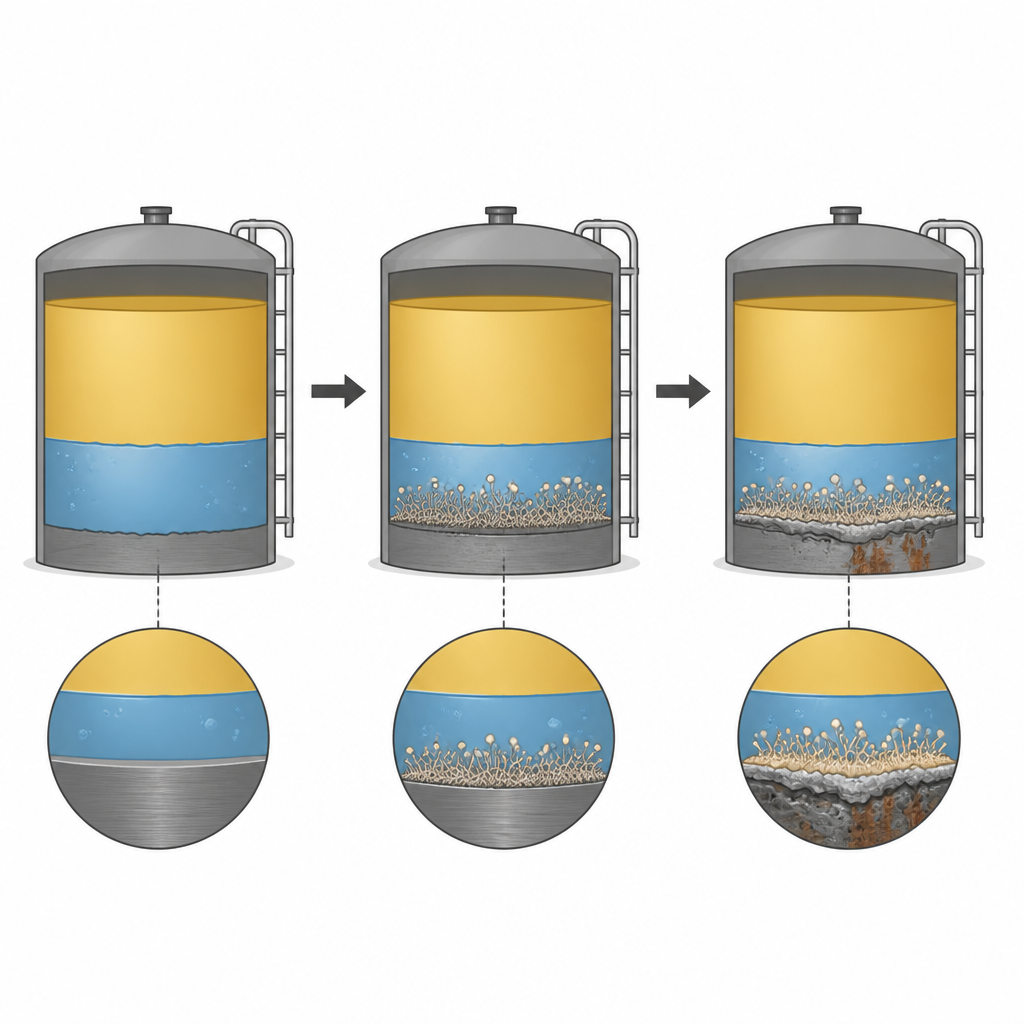
Modern fuels do not just feed engines; they also feed microbes. This study looks at a common “diesel fungus” and asks a simple question with big practical consequences: when this fungus grows on carbon steel in fuel systems, does it make the metal rot faster or slower? The answer turns out to be nuanced and depends on both the fungus’s dark pigment and on what it is eating.
A stubborn fungus in fuel systems
Underground tanks, trucks and planes often suffer from slimy growths that clog filters, spoil fuel and damage metal. One of the main culprits is a fungus called Amorphotheca resinae, sometimes nicknamed “kerosene fungus.” It thrives on both regular diesel and biodiesel, using the fuel itself as food. The researchers collected six versions of this fungus from different places, including a 30 year old diesel tank, soil and aviation fuel, and compared how they grew on steel in the lab.
How food and pigment change corrosion
The team gave the fungi two different food sources: simple sugar (glucose) and a standard biodiesel blend. With glucose, all strains clearly increased the overall thinning of the steel surface, known as uniform corrosion. At the same time, the fungus only produced a dark, melanin like polymer when steel and glucose were both present, turning the liquid brown and forming a solid that could be measured. With biodiesel instead of sugar, the picture changed: the fungi still grew, but they no longer sped up uniform corrosion of the steel.
Biofilms that can shield the metal
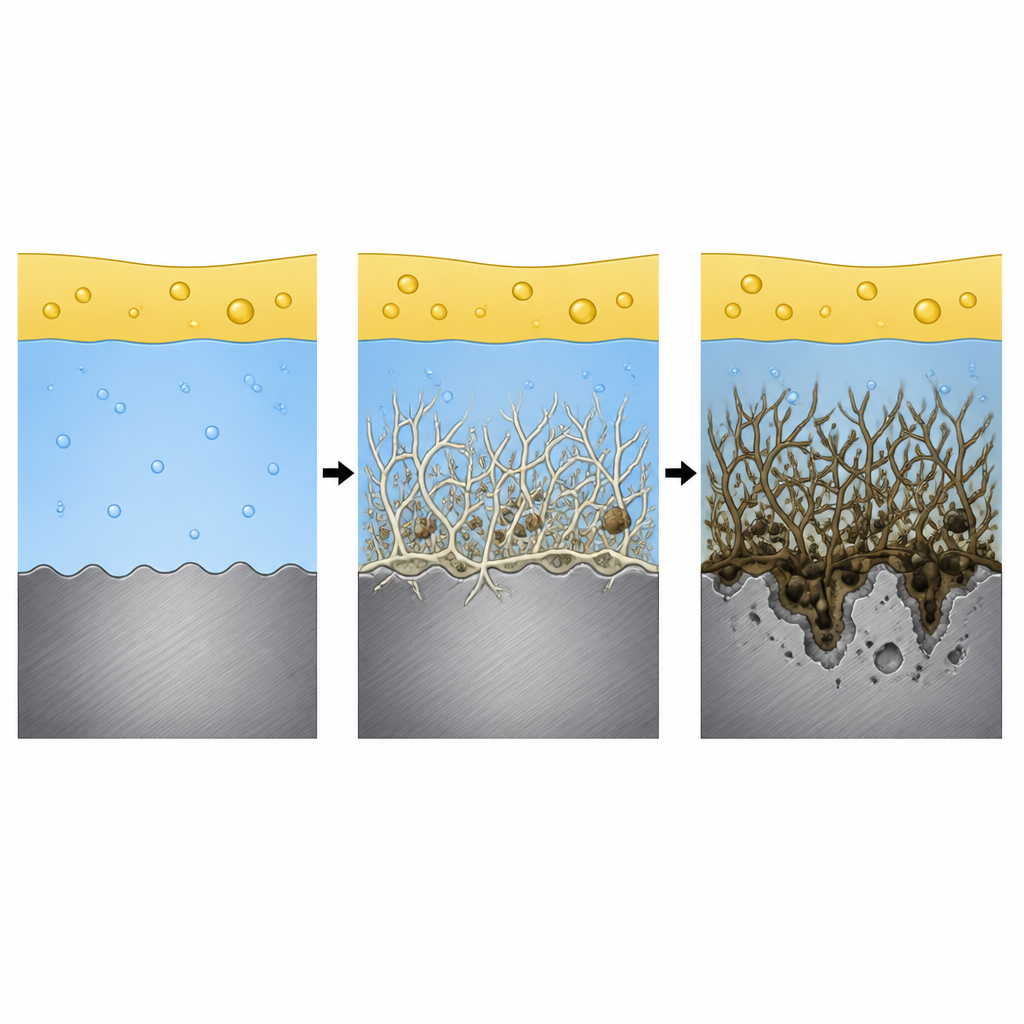
When steel sat partly in water and partly in biodiesel, corrosion normally attacked specific spots near the fuel water boundary, creating deep pits. Surprisingly, when the fungus was present under these biodiesel conditions, this localised pitting became much milder. Microscopy showed why: the steel was covered by a dense network of fungal threads coated with tiny iron rich mineral grains. These layers trapped iron compounds that tend to block oxygen from reaching the metal, and in some places formed crystals of an iron phosphate mineral linked to corrosion protection. In effect, the fungal film acted like a patchy, living barrier that calmed the most aggressive rusting.
The double role of a dark pigment
To probe the role of the dark pigment, the scientists used gene editing to create fungal strains that could not make melanin and others that made it continuously. When these modified fungi grew with glucose on steel, strains lacking melanin caused fewer deep pits than the normal strain, even though the overall thinning was similar. In separate tests without living cells, purified pigment added to steel in a chemical solution sped up uniform corrosion in a dose dependent way. Pigment made in direct contact with steel was even more corrosive than pigment produced in a rich broth, suggesting that its exact form and structure near the metal matters for how strongly it drives rust.
What this means for fuel infrastructure
Taken together, the work shows that the diesel fungus plays a complicated, almost two faced role in the decay of carbon steel. Its fuzzy growth can protect steel surfaces from the worst local attack in biodiesel tanks by building mineral rich films that limit oxygen at the metal surface. At the same time, its melanin like pigment, whether in the cell wall or released into the liquid, tends to enhance corrosion under the right chemical conditions. For engineers and fuel managers, this means that managing microbial growth is not simply a matter of killing all fungi, but of understanding how fuel type, water, biofilms and fungal pigments interact to tip the balance between protection and damage.
Citation: Gerrits, R., Schumacher, J., Prate, R. et al. The role of a melanin-like polymer in carbon steel corrosion by Amorphotheca resinae. npj Mater Degrad 10, 59 (2026). https://doi.org/10.1038/s41529-026-00808-6
Keywords: fuel tank corrosion, diesel fungus, biodiesel, melanin pigment, carbon steel