Clear Sky Science · en
Tracking response to neoadjuvant systemic therapy through circulating tumor DNA analysis in breast cancer
Why a Blood Test for Breast Cancer Treatment Matters
For people facing breast cancer, one of the biggest questions is whether powerful pre-surgery treatments are truly working—and whether hidden cancer might linger afterward. Today doctors mainly rely on scans and surgical tissue samples to gauge response, but these approaches can be invasive or miss tiny traces of disease. This study explores whether fragments of tumor DNA that drift in the bloodstream could offer a simple blood test to track how a breast tumor responds to treatment and to estimate future risk of relapse.
A New Window into Tumors from a Simple Blood Draw
The researchers focused on patients with stage II–III breast cancer who received strong drug treatment before surgery, known as neoadjuvant systemic therapy. This approach is standard for more aggressive tumor types because it can shrink the tumor, improve the chances of breast-conserving surgery, and reveal how sensitive the cancer is to drugs. The team asked whether circulating tumor DNA—tiny pieces of genetic material shed by cancer cells into the blood—could stand in for some invasive biopsies and provide a running, real-time picture of how treatment was working.
Who Was Studied and What Was Measured
Twenty patients were followed through three key moments: before starting treatment, mid-treatment, and just before surgery. Most had hormone receptor–positive, HER2-negative tumors; the rest had HER2-positive or triple-negative disease, which tend to behave more aggressively. At each timepoint, the scientists measured total cell-free DNA in the blood and then zoomed in on tumor-specific DNA changes that had first been identified in the patients’ tumor biopsies. Using high-depth sequencing and highly sensitive droplet digital PCR, they could detect very low levels of tumor DNA and track how those levels changed over time.
What Tumor DNA in Blood Revealed
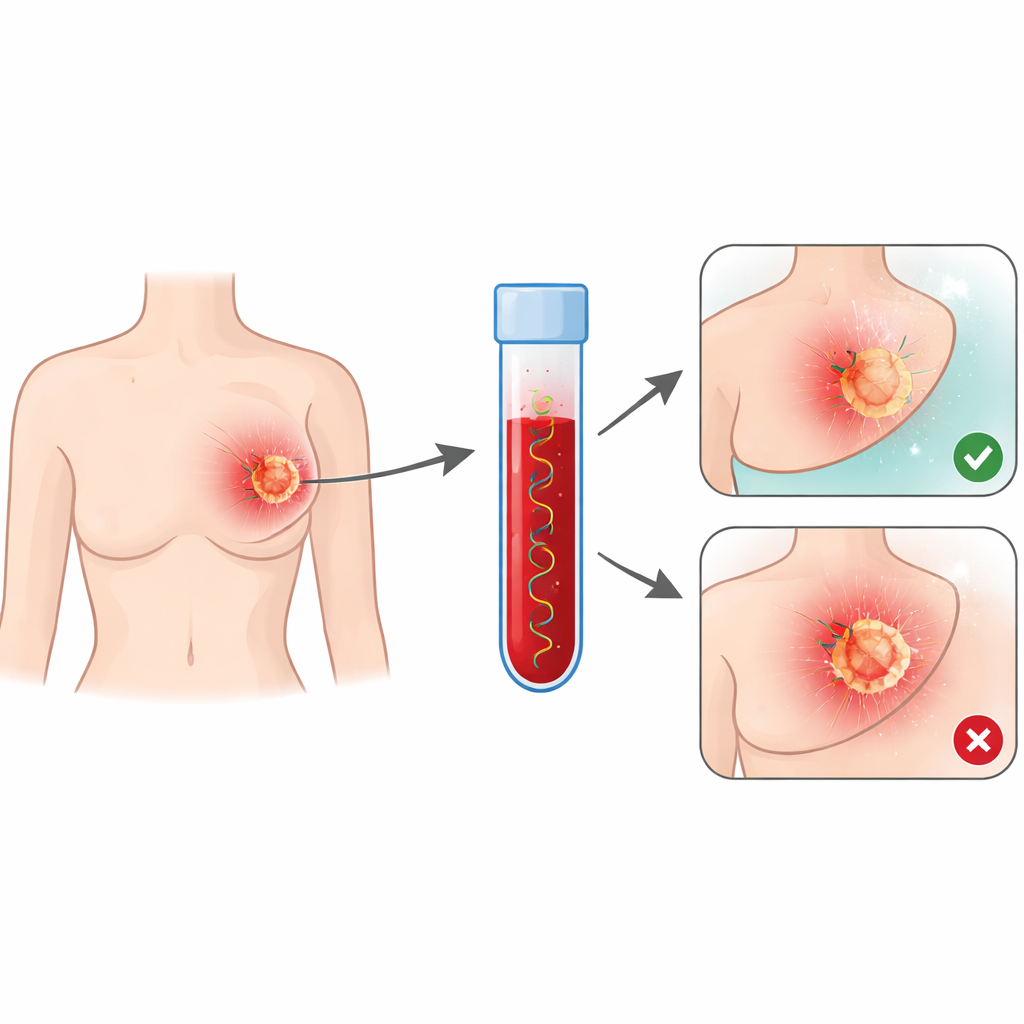
At the start of treatment, tumor DNA was detectable in the blood of most patients. Levels tended to be higher in cancers that looked more aggressive under the microscope and in triple-negative tumors, suggesting that faster-growing cancers shed more DNA into the bloodstream. As drug treatment progressed, overall cell-free DNA in the blood actually rose, likely reflecting dying tumor and normal cells. But the key signal was tumor-specific DNA: every patient with detectable tumor DNA at baseline had complete clearance of this signal by the end of therapy, regardless of whether their surgical specimens showed a full response or some remaining cancer.
Links to Relapse Risk and Tumor Biology
Although the number of patients was small, an intriguing pattern emerged. None of the three patients who started with no detectable tumor DNA in their blood went on to develop distant metastases, even if their tumors did not completely vanish at surgery. In contrast, some patients who began with detectable tumor DNA later experienced relapse. These findings hint that baseline tumor DNA in blood carries prognostic information about long-term risk, above and beyond what is seen under the microscope. The study also reinforced the idea that tumor DNA shedding is shaped by the cancer’s inherent biology—its grade, subtype, and growth behavior—not just by tumor size.
Promise and Next Steps for Personalized Care
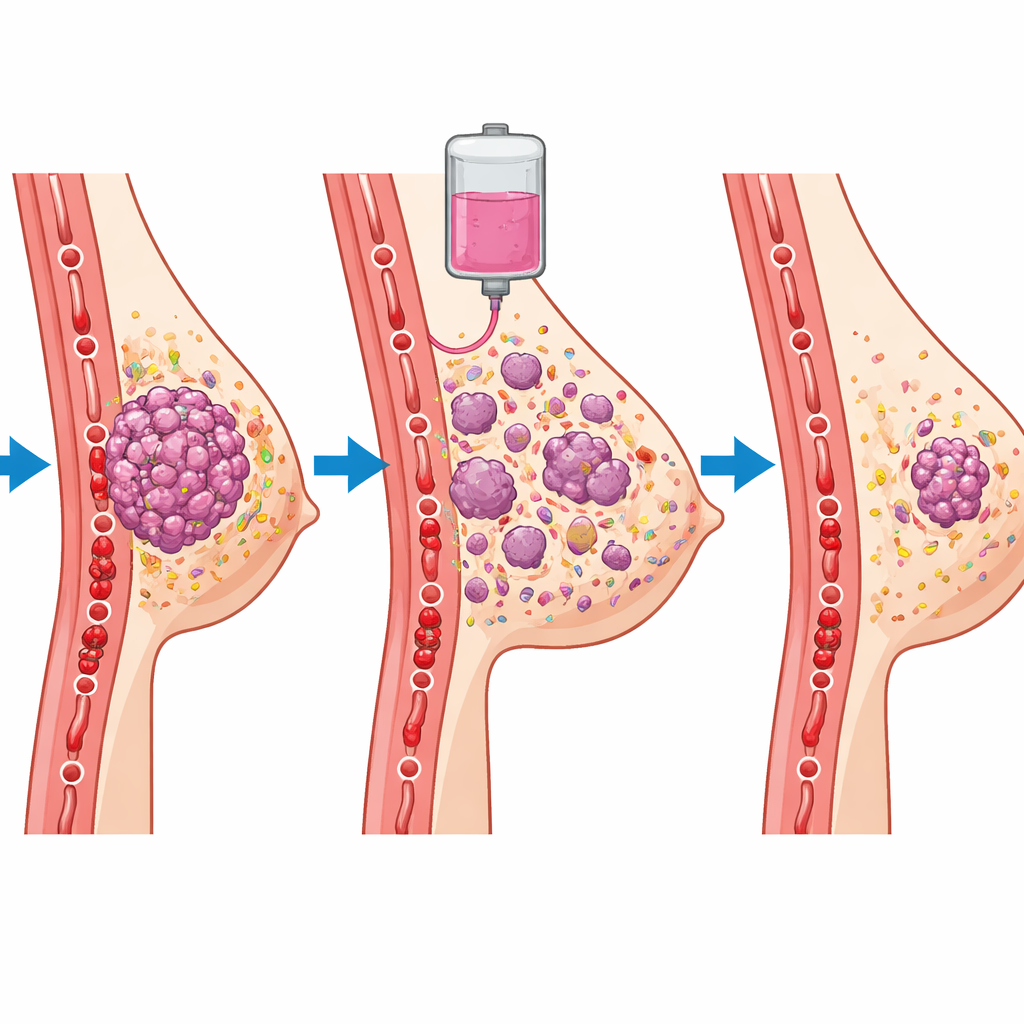
For patients and clinicians, the study suggests that a blood test measuring tumor DNA could one day help personalize breast cancer care: offering a non-invasive way to profile tumor genetics, to follow response to pre-surgery treatment, and to estimate who is at higher or lower risk after therapy. However, the researchers caution that their study is small and that newer drugs and more sensitive DNA tests are already changing the landscape. Larger trials are needed to confirm how best to use these assays, especially to detect tiny amounts of residual disease that current methods may miss. Still, the work adds to growing evidence that a simple blood draw could become a powerful guide in tailoring treatment intensity and improving outcomes for people with early breast cancer.
Citation: Marra, A., Kim, S.H., Pareja, F. et al. Tracking response to neoadjuvant systemic therapy through circulating tumor DNA analysis in breast cancer. npj Breast Cancer 12, 57 (2026). https://doi.org/10.1038/s41523-026-00921-4
Keywords: circulating tumor DNA, liquid biopsy, neoadjuvant breast cancer, treatment response monitoring, minimal residual disease