Clear Sky Science · en
Challenges and opportunities of the full phase-out of fossil fuels under the 1.5 °C goal
Why this study matters now
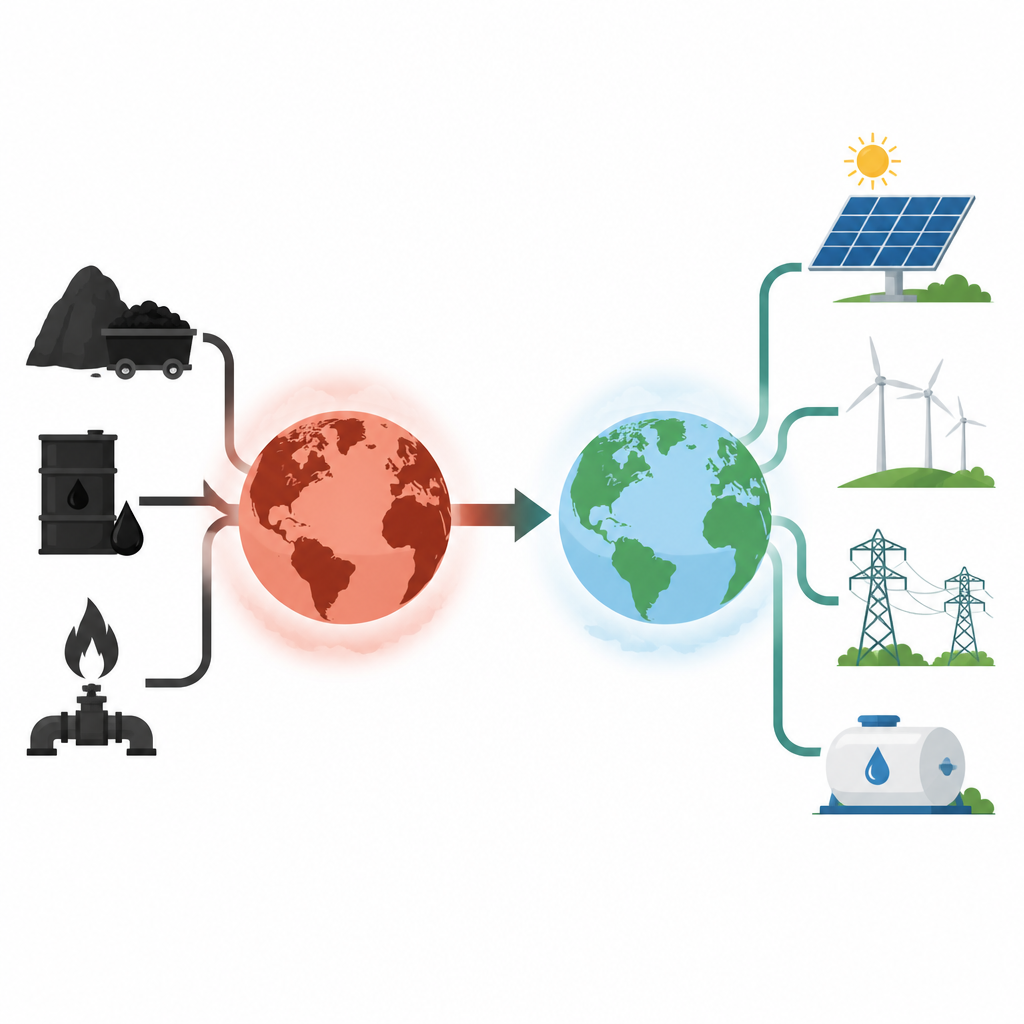
As governments debate how fast to move away from coal, oil, and gas, a sharper question is emerging: should the world aim not just to cut emissions, but to eliminate fossil fuels entirely? This study explores what a full phase-out of fossil fuels would mean for our energy systems, our reliance on technologies that pull carbon dioxide from the air, and the scale of change societies would need to accept to keep global warming near 1.5 degrees Celsius.
Different paths to the same climate goal
Scientists have long studied “cost effective” routes to limit warming to 1.5 degrees. These usual pathways still use some fossil fuels in hard-to-clean sectors, balancing the remaining emissions with carbon capture and removal. The authors of this paper instead examine “zero fossil” futures, where coal, oil, and gas disappear entirely from the global energy mix sometime between 2050 and 2100. Using two detailed global energy models, they compare these fossil-free pathways to the more familiar 1.5 degree scenarios to see how they differ in timing, technology choices, and overall effort.
What a world without fossil fuels looks like
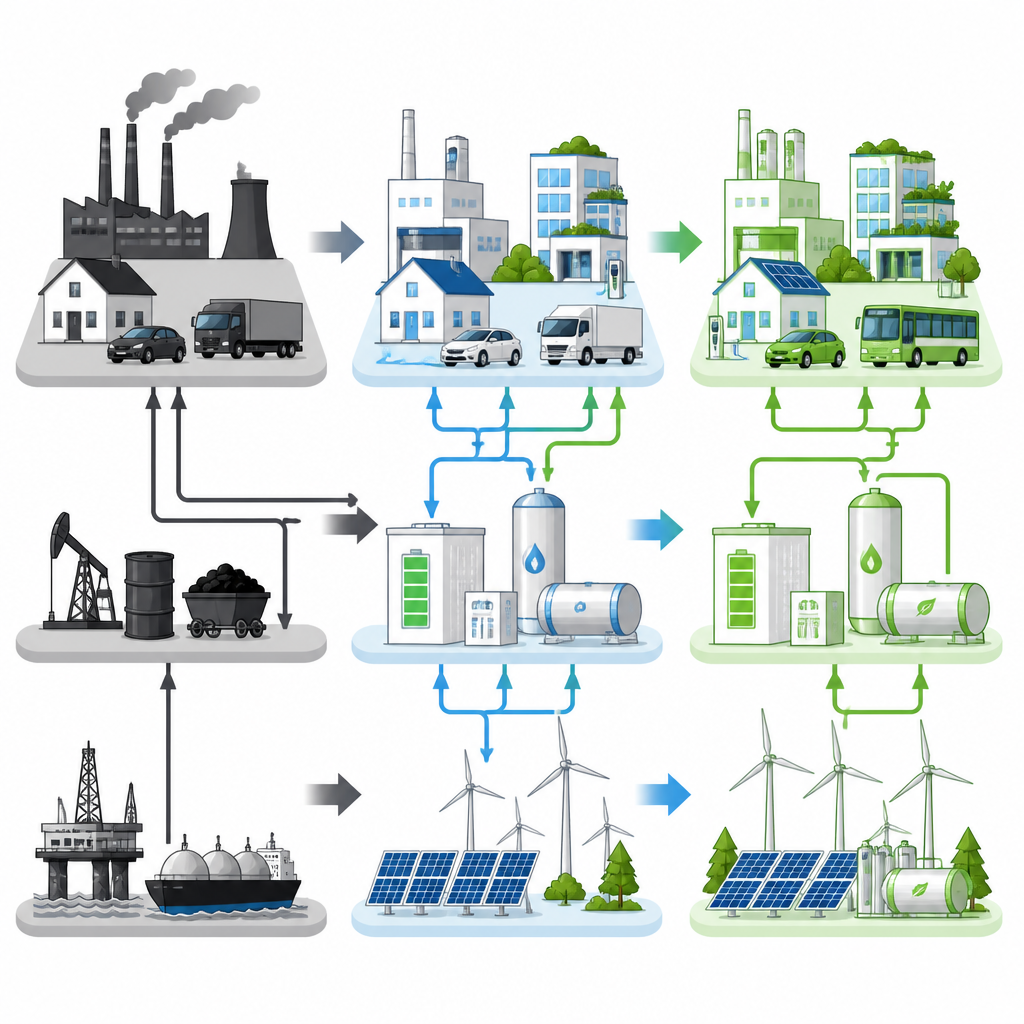
In the fossil-free scenarios, the global energy system shifts dramatically toward electricity and hydrogen by mid-century. By 2050, non-fossil energy sources, especially solar and wind, expand so much that total power generation must grow to about 1.6 to 1.8 times the level in regular 1.5 degree pathways. Final energy use relies far less on liquid and gaseous fuels and much more on electricity, hydrogen, and a limited share of bio-based or synthetic fuels. Direct electrification of buildings and industry, together with indirect electrification via hydrogen and other hydrogen-based fuels, plays a central role in replacing remaining fossil use.
How the transition would unfold
Phasing out fossil fuels quickly requires not only cleaner power plants but also deep changes in how energy is used in transport, homes, and factories. The models show that ending fossil use by 2050 forces an earlier and steeper ramp-up in renewable power, energy storage, and electrolysers that make hydrogen from water. This creates sharp peaks in annual construction of solar panels, wind turbines, storage facilities, and hydrogen plants, especially in the first half of the century. Energy investments in supply and demand equipment rise by up to roughly one third over the century compared with typical 1.5 degree pathways. If the phase-out is delayed toward the end of the century, these surges become milder, but so do the climate benefits.
Less carbon removal, more pressure on land and lifestyles
One of the strongest advantages of a full fossil phase-out is that it greatly reduces the need to store carbon dioxide underground or to rely on large-scale carbon removal technologies later in the century. Cumulative geological storage and engineered carbon removal fall by roughly half in many of the zero-fossil cases. At the same time, the scenarios lean more heavily on bioenergy and biofuels around mid-century, which can increase pressure on land, food systems, and ecosystems. The shift to electricity- and hydrogen-based transport and industry also implies major changes in vehicles, infrastructure, and everyday habits, which may be difficult for societies to accept without clear policies and support.
Choosing between lower cost and simpler goals
For a layperson, the main takeaway is that cutting fossil fuels to zero is technically possible but not the cheapest way to meet the 1.5 degree temperature goal. Keeping some fossil fuels while capturing or offsetting their emissions costs less in the models, but it leaves the world more dependent on controversial carbon removal and storage. A full phase-out demands faster build-out of clean power and hydrogen, higher investments, and lifestyle shifts, yet offers simpler messaging, less long-term reliance on carbon removal, and a better chance of bringing temperatures back toward 1.5 degrees after any overshoot. The authors conclude that decarbonising and defossilising are not the same choice, and that societies will need to weigh extra costs and changes against the clarity and climate benefits of aiming for a truly zero-fossil future.
Citation: Mori, S., Joshi, S., Krey, V. et al. Challenges and opportunities of the full phase-out of fossil fuels under the 1.5 °C goal. Nat Commun 17, 4379 (2026). https://doi.org/10.1038/s41467-026-72841-7
Keywords: fossil fuel phase-out, 1.5 degree pathways, renewable energy, electrification, hydrogen energy