Clear Sky Science · en
Quantifying and categorising the animal welfare impacts caused by biological invasions
Why this matters for animals and ecosystems
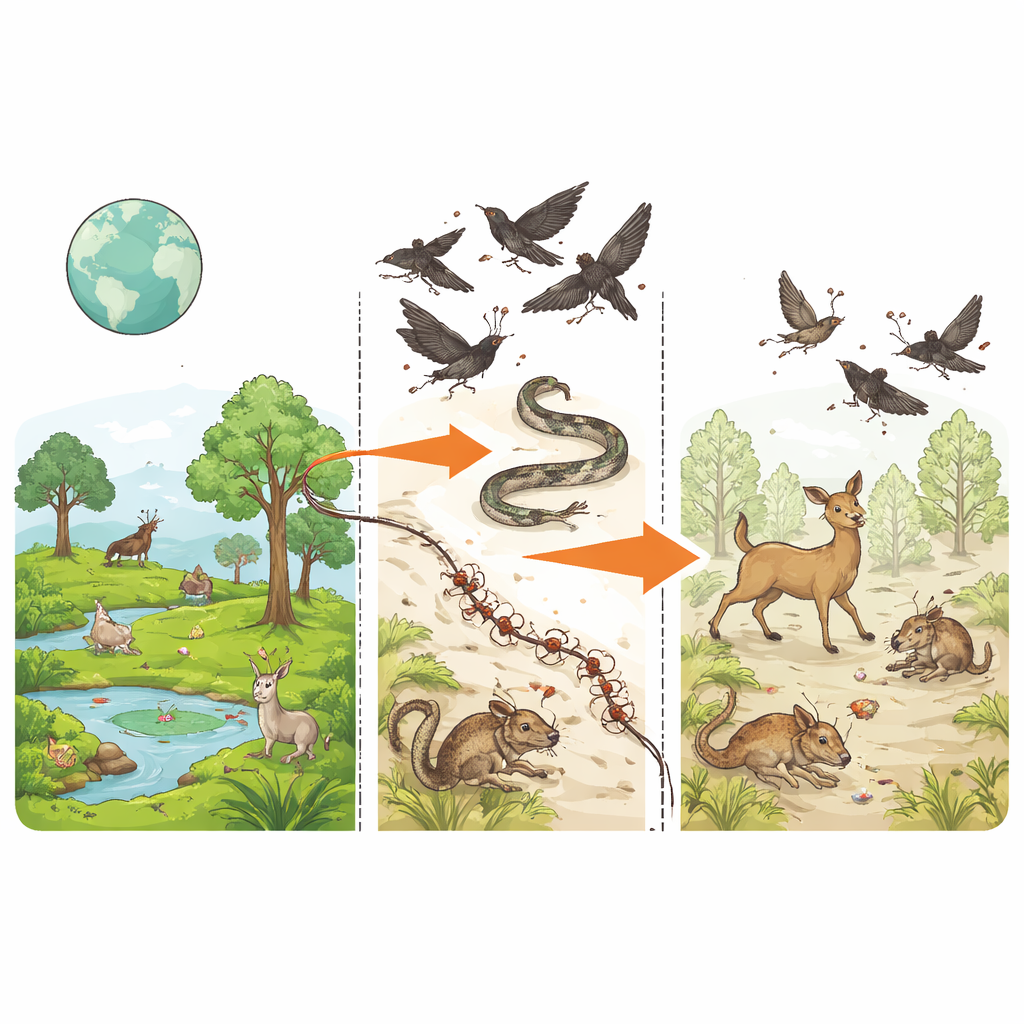
When a new species arrives in a place where it doesn’t naturally belong, we usually worry about extinctions and damaged ecosystems. This study asks a different question: what does that invasion actually feel like for the individual animals involved? The authors develop a way to measure how much suffering biological invasions cause to animals, then apply it to two very different invaders—birds and ants—around the world.
A new lens on harm in nature
Most research on invasive species focuses on biodiversity: whether native species decline or disappear. But animals are not just numbers in a population; they are sentient beings capable of pain, fear and stress. Evans and Mendl introduce a framework called the Animal Welfare Impact Classification for Invasion Science (AWICIS). Instead of asking whether an invasion threatens a species with extinction, AWICIS asks how much it changes the physical and mental state of individual animals, whether they are native or introduced, wild or domesticated. The method classifies the way invasions cause harm—through competition, predation, disease, parasitism, poisoning, and various changes to habitats—and ranks how severe and how long-lasting the resulting suffering is.
Turning scattered reports into a clear picture
To show what AWICIS can do, the authors mine a large, existing trove of invasion studies. Many of these papers were written to document biodiversity impacts, but they also describe injuries, abnormal behavior or illness in individual animals—exactly the kind of evidence needed to judge welfare. The researchers translated hundreds of such reports into AWICIS scores, distinguishing between short bursts of suffering and prolonged or repeated distress. They also trained independent scientists to use the framework, refining the guidance until different assessors reached similar conclusions and could express how confident they were in each rating.
What invading birds are doing to other animals
When the team examined bird invasions, they found welfare impacts across three major animal groups—birds, mammals and reptiles—spread over many continents and especially on islands. Most harm came from familiar ecological processes: competition for food or nest sites and direct predation. In many cases, the suffering caused by introduced birds looked similar to what native predators and rivals already impose. The most severe problems arose where the local fauna lacked comparable native enemies, such as seabirds and shorebirds on small islands that suddenly faced introduced owls or other raptors. Some interactions, like hybridisation between bird species or brood parasitism where one bird lays eggs in another’s nest, were usually rated as causing little or no extra suffering, although the authors note that subtle long-term costs may be missed without detailed physiological studies.
Why invasive ants stand out as especially harmful
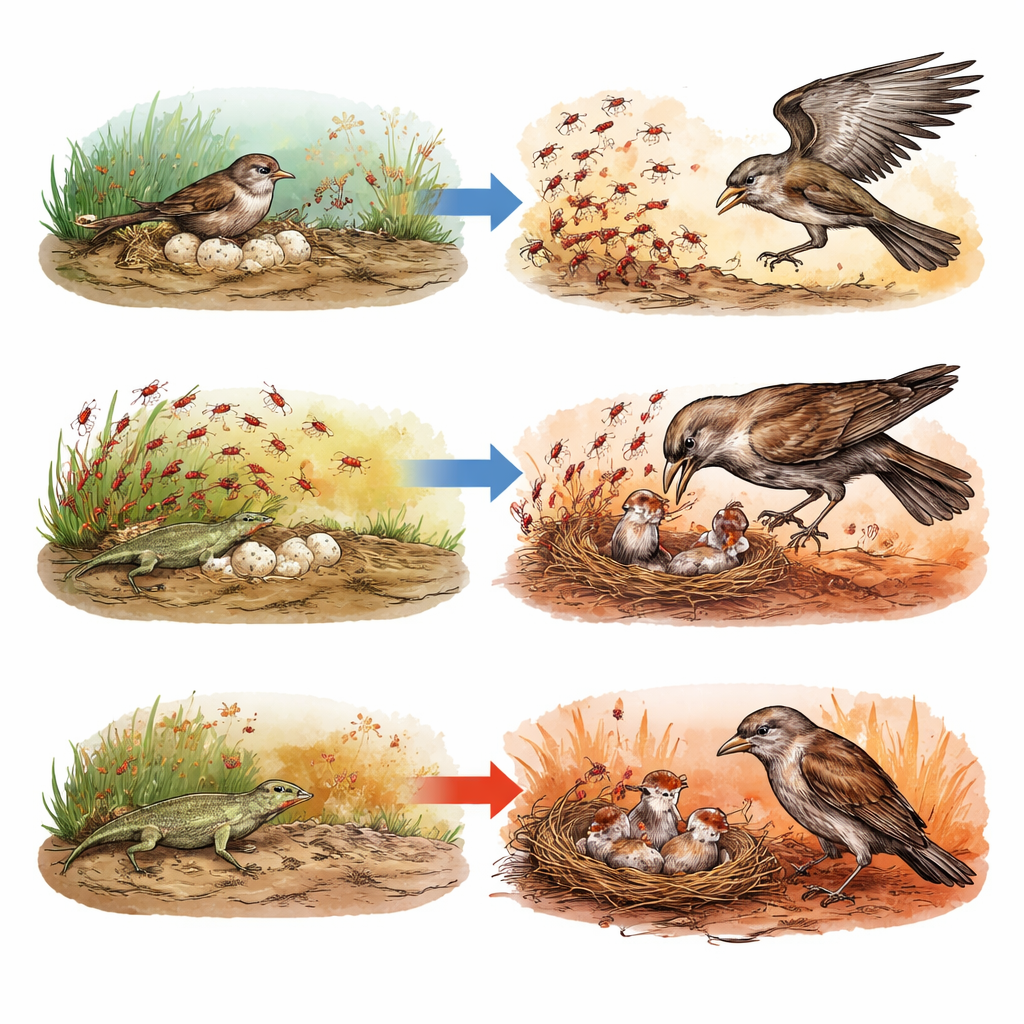
In sharp contrast, invasive ants almost always caused more severe welfare impacts than animals would face in their absence. The study documents attacks on a broad variety of victims, from ground-nesting birds and turtles to lizards, crabs, mammals and even large animals such as crocodiles and elephants. Most of these harms came from predation: ants swarming nestlings and hatchlings, or repeatedly stinging and biting larger animals. Many victims showed clear physical damage—swollen heads, injured eyes, missing toes, or malnourishment—and distressed behavior such as frantic foot-shaking, excessive grooming, nest abandonment and reduced resting. Unlike introduced birds, harmful ant species caused intense suffering in many regions, not just on isolated islands, reflecting their aggressive behavior and use of venom or acid that can prolong the dying process.
Reading suffering from bodies and behavior
The information underpinning these assessments was mainly visual: carcasses, open wounds, deformities, and obvious shifts in behavior like lethargy, panic or changes in parenting. Only rarely did studies measure internal signs such as stress hormones, even though such measurements could reveal less visible but serious strain. The authors argue that existing biodiversity records are an underused resource for understanding welfare: they already contain rich descriptions of injuries and behavior that can be systematically reinterpreted through AWICIS. At the same time, they highlight important blind spots, including a lack of data from low-income regions and a near-total neglect of welfare impacts on introduced animals themselves.
What this means for protecting animals
By reframing biological invasions through the eyes—and nerves—of the affected animals, this work shows that some invaders are not only ecological threats but also major sources of suffering. For birds, the extra harm is often context-dependent and especially serious on vulnerable islands. For certain ant species, severe welfare impacts are widespread and consistent, adding to their economic costs and risks to human health. The authors propose AWICIS as a practical tool for researchers and policymakers to weigh animal welfare alongside biodiversity, helping to prioritize prevention and control efforts that reduce not just species loss but also the hidden pain and distress invasions inflict on individual animals.
Citation: Evans, T., Mendl, M. Quantifying and categorising the animal welfare impacts caused by biological invasions. Nat Commun 17, 3899 (2026). https://doi.org/10.1038/s41467-026-72154-9
Keywords: biological invasions, animal welfare, invasive species, invasive ants, introduced birds