Clear Sky Science · en
A digital archive reveals how a funding agency cooperated with academics to support the nascent field of genomics
How a Hidden Archive Shaped Modern Genetics
Today, we routinely hear about DNA tests, personalized medicine, and discoveries linking genes to disease. Behind these breakthroughs lies an enormous amount of planning, funding, and quiet coordination. This paper opens a window into that backstage world by analyzing a unique digital archive from the U.S. National Human Genome Research Institute (NHGRI). It shows, in unprecedented detail, how one public funding agency worked hand-in-hand with university scientists to turn genomics from a bold idea into a central pillar of modern biomedicine. 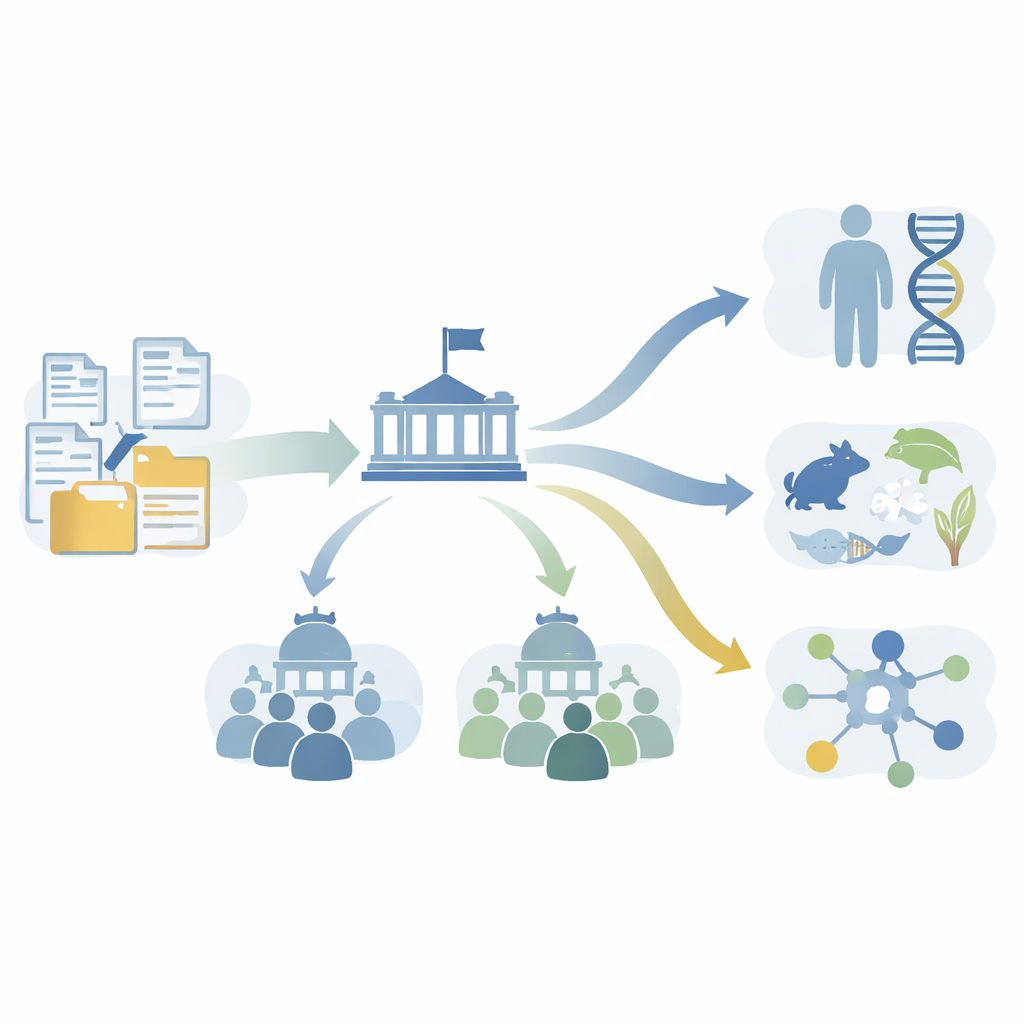
Turning Boxes of Papers into a Digital Treasure
The story begins with an archive that might sound mundane: more than two million pages of emails, reports, memos, and meeting notes preserved at NHGRI. These materials document the Human Genome Project and the genomics initiatives that followed it. The authors converted a carefully curated subset, called the Core Collection, into a fully digital resource. They used high-speed scanning, computer vision to strip away handwritten notes, and optical character recognition to pull out the printed text. Then, they applied artificial-intelligence methods to detect names, organizations, key scientific terms, and dates, while coding or masking personal details to protect privacy. This pipeline turned dusty stacks of paper into searchable, analyzable data about how genomics was actually built.
Finding the Birth of a New Way to Study Disease
With this digital trove in hand, the researchers asked: could they recover the early steps of major scientific ideas before they became famous? They focused on genome-wide association studies (GWAS), now a standard way to search entire genomes for tiny differences linked to common diseases. Bibliometric data show that GWAS has been one of the most influential techniques in modern biomedicine, both in citations and in bringing previously unknown genes into the literature. By scanning the archive, the authors found that GWAS appears in NHGRI documents years before the first landmark GWAS papers were published. Internal workshop agendas and planning documents show NHGRI leaders and outside experts recognizing the promise of GWAS, debating what data resources would be needed, and then launching the International HapMap Project to build those resources. In other words, the agency and academics jointly laid the groundwork for GWAS before individual laboratories could realistically perform it.
Behind the Scenes of Big International Projects
The archive also exposes the day-to-day social machinery of large collaborations. By reconstructing networks from more than 47,000 email exchanges, the authors mapped who talked to whom during the Human Genome Project and the subsequent HapMap project. Rather than a single command center, they found multiple overlapping groups of government staff and outside scientists. A small, previously underappreciated circle of senior figures—nicknamed the “Kitchen Cabinet” in some messages—linked internal leaders, advisory councils, and international steering committees. Network analysis suggests this group often played broker roles: translating technical concerns, preparing complex issues before formal meetings, and preserving continuity as projects evolved and new participants arrived. 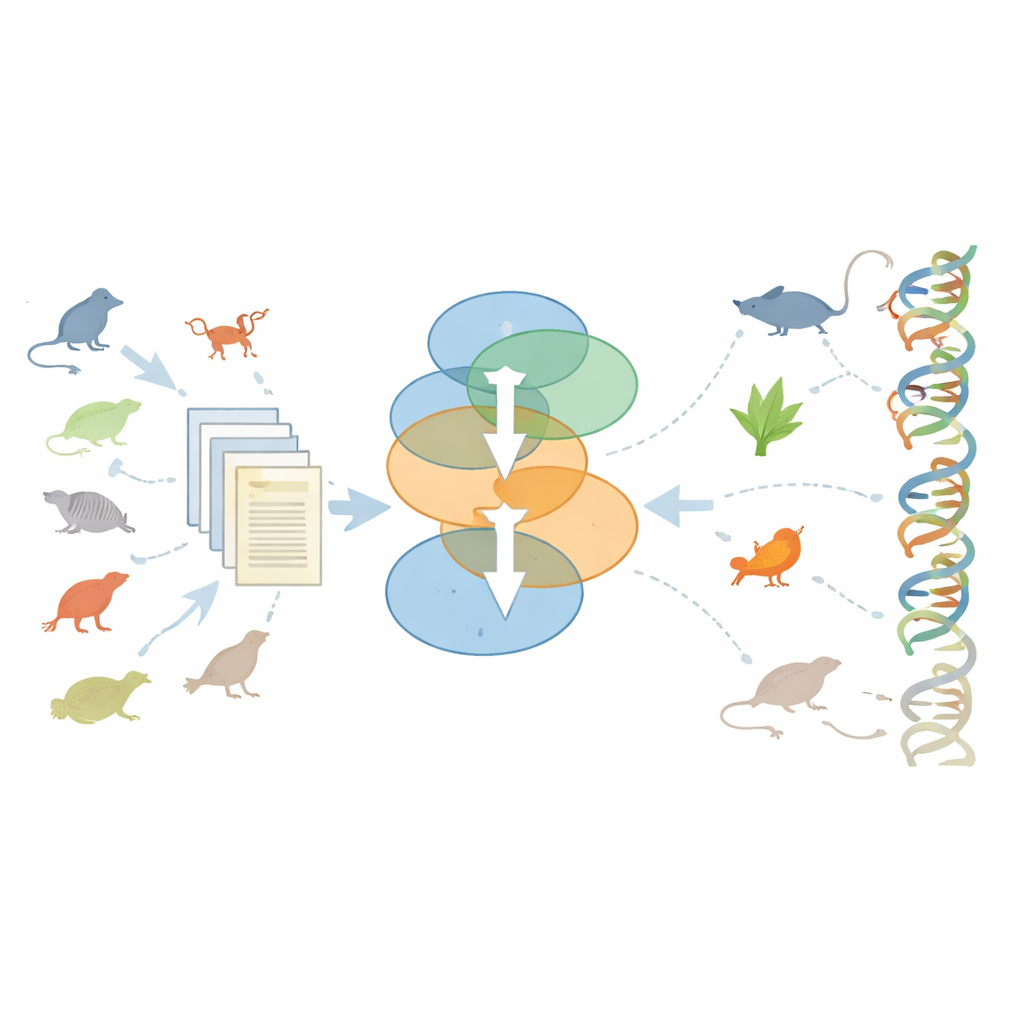
Choosing Which Creatures Get Their Genomes Sequenced
Another major question was how NHGRI and the research community decided which non-human species should have their genomes sequenced after the Human Genome Project. Proposals came from both internal working groups and outside scientists, arguing for particular animals—from familiar vertebrates to obscure invertebrates. The authors manually reconstructed this selection process and then built machine-learning models to see whether they could mimic the advisory council’s decisions using features like the size of the research community around an organism, the diversity and persuasiveness of the proposal’s language, and simple biological facts such as genome size. Their models predicted approval decisions with high accuracy, indicating that these factors together captured much of the real reasoning. Crucially, organisms that were approved did not necessarily attract more total papers later, but research on them shifted decisively toward genomics methods once their genomes became available.
Why This Hidden History Matters Today
By weaving together text-mining, network analysis, and careful ethical safeguards, the study shows that innovation in genomics was not just the result of lone geniuses or chance discoveries. Instead, NHGRI acted as a collaborative hub that listened to outside experts, assembled shared data resources, and strategically backed species and technologies that could move entire fields forward. The digital archive reveals that some of the most important steps—like planning GWAS or prioritizing which organisms to sequence—happened before grant numbers or citation counts appeared in public databases. For a general reader, the key message is that thoughtful public funding, guided by ongoing dialogue with scientists and grounded in responsible data stewardship, can quietly shape the direction of science for decades.
Citation: Hong, S.S., Utz, Z., Hosseini, M. et al. A digital archive reveals how a funding agency cooperated with academics to support the nascent field of genomics. Nat Commun 17, 3621 (2026). https://doi.org/10.1038/s41467-026-71700-9
Keywords: genomics, research funding, Human Genome Project, digital archives, genome sequencing