Clear Sky Science · en
An ancient genome of Streptococcus pyogenes from a pre-Columbian Bolivian mummy
Why an ancient sore throat matters today
Most of us know Streptococcus pyogenes as the germ behind strep throat and, in rare cases, flesh-eating disease or toxic shock. This study asks a surprisingly simple question with far-reaching implications: how long has this microbe been living with us, and what did it look like before modern medicine and global travel changed our world? By reading DNA preserved in a pre-Columbian Bolivian mummy, researchers reconstruct one of the oldest known genomes of this pathogen, shedding light on ancient health, human migrations, and the deep roots of infectious disease.
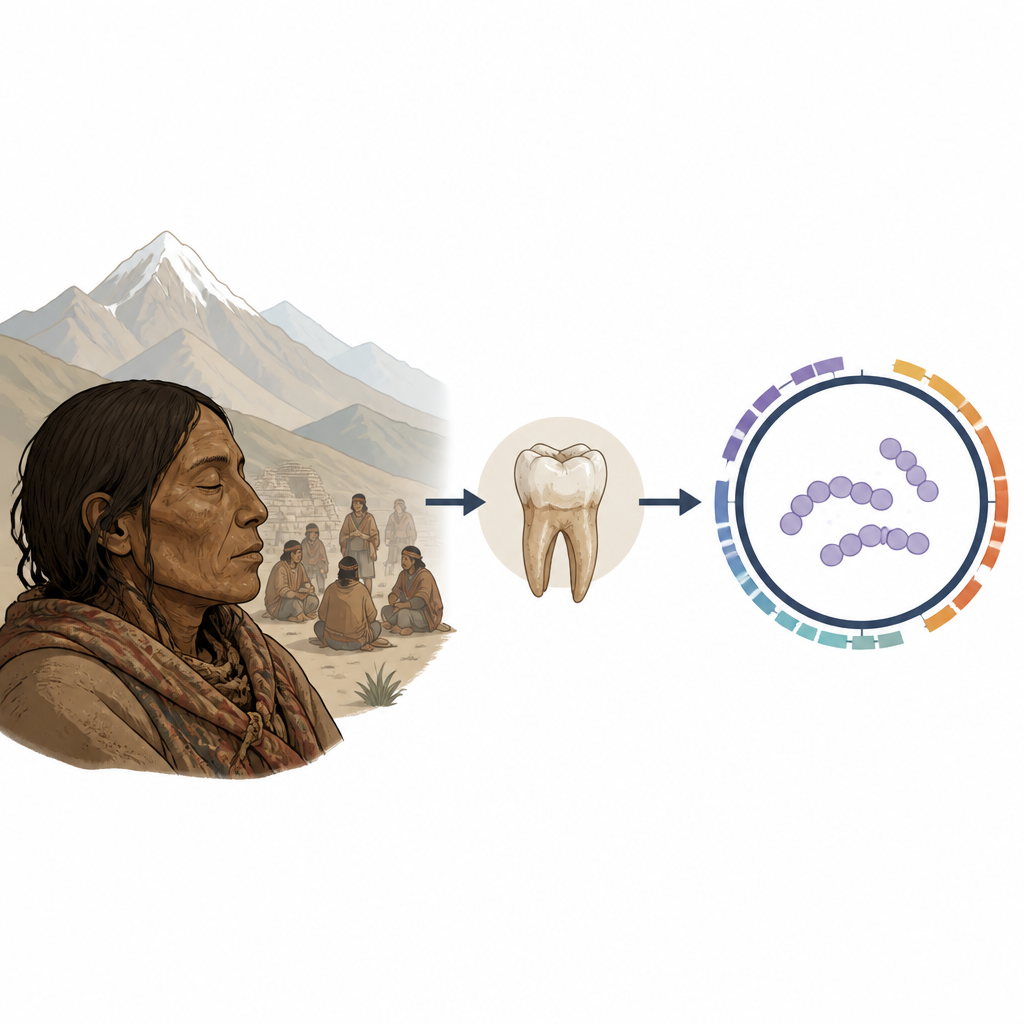
A mummy, a tooth, and a hidden infection
The story begins with a naturally mummified young man from the Bolivian highlands, buried between 1283 and 1383 AD, centuries before Europeans reached the Americas. His remains are part of a museum collection in La Paz. Radiocarbon dating fixed his age, while chemical signals in his tooth showed a maize-heavy diet and little meat, consistent with a settled farming life at high altitude. Scientists carefully drilled into one of his teeth, targeting the inner pulp where blood once flowed and where microbes circulating in his body could have been trapped and preserved.
Reconstructing a long-lost microbe
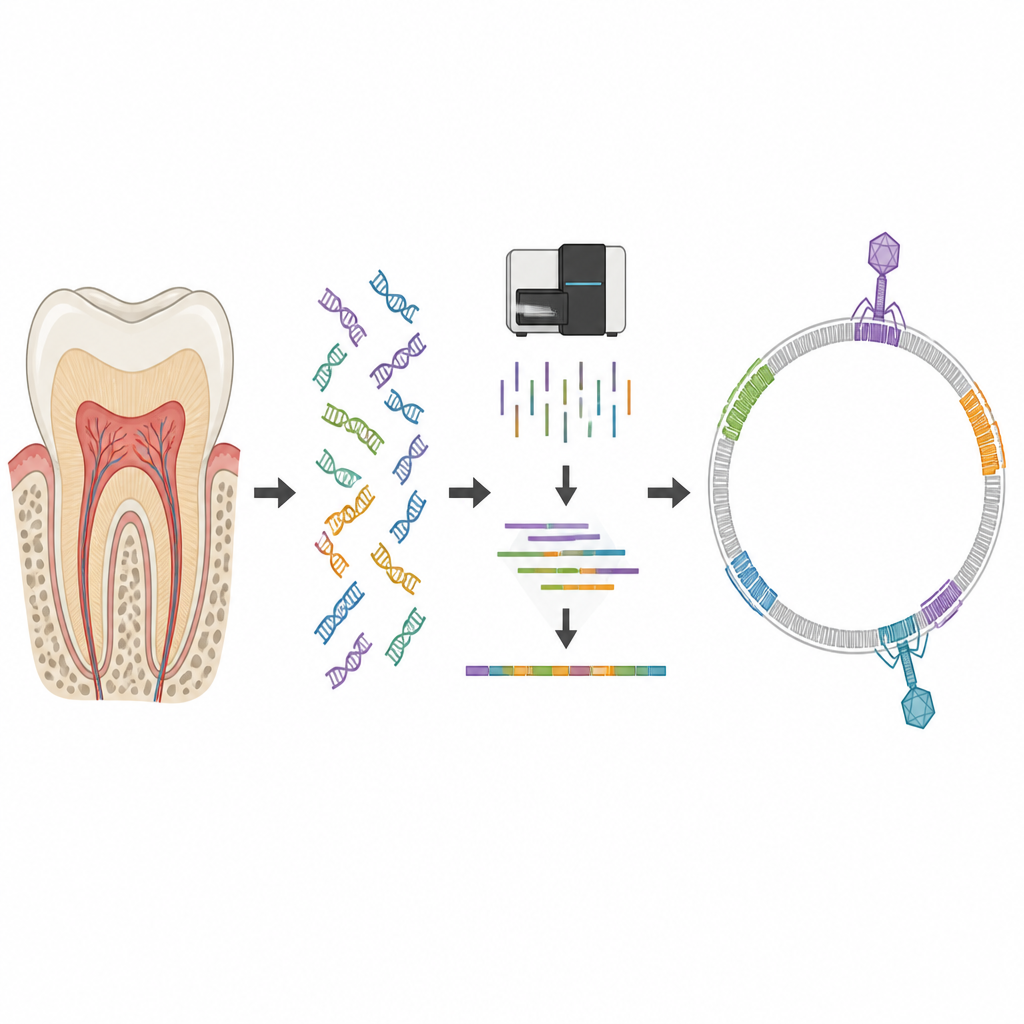
From this tiny sample, the team extracted all DNA present and sequenced it without targeting any specific organism. Most of the genetic material came from bacteria, including several species that can cause disease. Among them was Streptococcus pyogenes, detected at an unusually high level for an ancient sample. Using advanced assembly methods, the researchers pieced together a nearly complete genome of this bacterium, with quality standards similar to those applied to modern microbial genomes. They confirmed that the DNA carried subtle chemical damage patterns expected from centuries of burial, supporting its authenticity as truly ancient.
What the ancient strain could do
With the genome in hand, the authors compared it to a large global collection of modern S. pyogenes strains. The ancient microbe carries many of the same genetic tools that allow today’s strains to stick to the throat, evade the immune system, and damage host tissues, including the characteristic M and T surface proteins, a slippery sugar capsule, and powerful cell-lysing toxins. Its genetic profile suggests it was a “throat specialist,” more likely to cause pharyngitis than skin infections, which fits the cold, dry, crowded conditions of the Andean highlands that favor strep throat outbreaks. Intriguingly, the strain also harbors genes that can pump out certain antibiotics, indicating that resistance machinery existed long before modern drug use, probably shaped by natural competition among microbes.
Missing toxins and quieter epidemics
Despite its broad arsenal, this ancient strain lacks several supercharged toxins that in modern times are associated with scarlet fever and severe invasive disease. Those toxins are usually carried by viruses that splice themselves into the bacterial genome. The Bolivian strain does contain such viral elements, but they appear to lack those particular toxin genes. This suggests that while the bacterium was clearly capable of causing disease, the most explosive, toxin-driven forms of illness we fear today may have become common only after later genetic exchanges between bacteria and viruses.
A deep history for a familiar pathogen
By building a family tree that includes the ancient strain, its closest relatives, and related species, the researchers estimate that all known S. pyogenes share a common ancestor around 10,000 years ago, with most modern lineages diversifying in just the last 5,500 years as human populations grew, clustered, and connected. The Bolivian strain sits at the base of today’s diversity, hinting at lineages that may have gone extinct or remain unsampled. For non-specialists, the take-home message is that strep throat and related diseases have deep roots in human history, long before colonial contact, and that ancient DNA can reveal how familiar microbes have evolved alongside us, shaping and being shaped by our changing ways of life.
Citation: Valverde, G., Sarhan, M.S., Cook, R. et al. An ancient genome of Streptococcus pyogenes from a pre-Columbian Bolivian mummy. Nat Commun 17, 4516 (2026). https://doi.org/10.1038/s41467-026-71603-9
Keywords: ancient DNA, Streptococcus pyogenes, pre-Columbian Americas, mummy microbiome, pathogen evolution